


What to Do When Your AC Keeps Tripping the Breaker


Discover the Essential Benefits of Regular Air Conditioning Maintenance
Regular maintenance of your air conditioning system ensures optimal performance and longevity. It helps prevent costly repairs while improving energy efficiency, keeping your home comfortable year-round.

Routine checks can significantly reduce energy bills and extend the life of your unit.


What It Means When Your AC Circuit Breaker Keeps Tripping
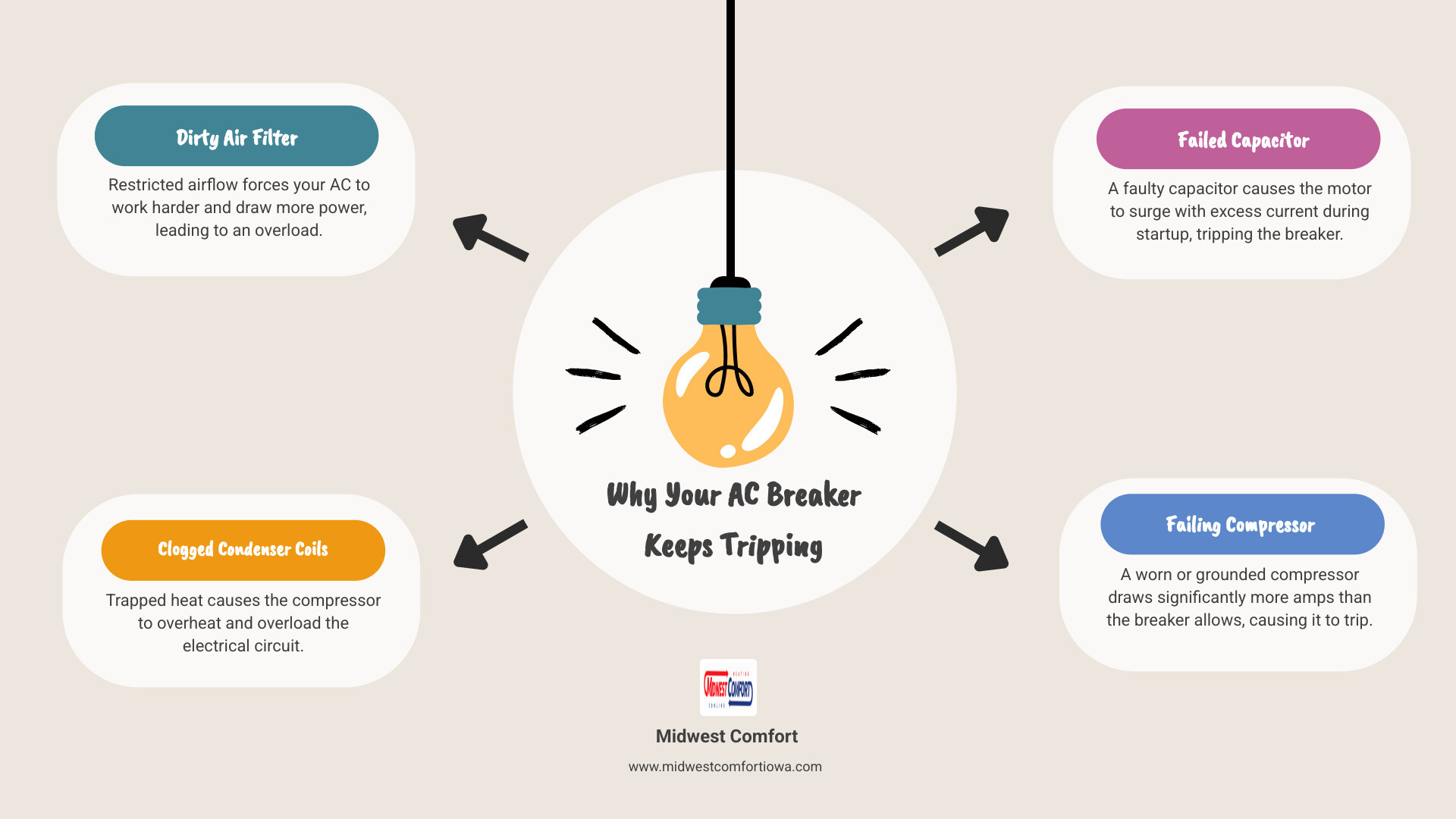
AC circuit breaker keeps tripping what it means is simple: your air conditioner is pulling more electricity than the circuit can safely handle, and the breaker is doing its job by shutting the power off to protect your home's wiring from overheating or catching fire.
Here are the most common reasons it happens:
- Dirty air filter - restricted airflow forces your AC to work harder and draw more power
- Clogged condenser coils - trapped heat causes the compressor to overheat and overload the circuit
- Failed capacitor - a bad capacitor causes the motor to surge with excess current on startup
- Failing compressor - a worn or grounded compressor draws far more amps than the breaker allows
- Loose or damaged wiring - faulty connections create shorts or ground faults that trip the breaker instantly
- Overloaded circuit - your AC sharing a circuit with other appliances pushes it past its limit
- Worn-out breaker - an aging breaker may trip even when the electrical load is within normal range
If your breaker trips once and doesn't trip again, it may have been a one-time fluke. But if it keeps happening, that's a warning sign you need to address right away — not just reset and ignore.
For Des Moines, IA homeowners dealing with a hot summer and an AC that won't stay on, a repeatedly tripping breaker is one of the most frustrating and potentially dangerous problems you can face. The good news is that many of the causes are fixable, and knowing what's behind the problem is the first step toward getting your home cool and safe again.
Understanding Your AC Circuit Breaker and How It Works
Before we dive into the "why," it helps to understand the "what." A circuit breaker is essentially a high-tech safety switch. Think of it as the "smoke alarm" for your home’s electrical wiring. Its primary job is to monitor the flow of electricity (measured in amps) through a specific circuit. If that flow exceeds a safe level, the breaker "trips," physically snapping to the "off" position to break the connection.
Most modern central air conditioning systems in Des Moines use a double-pole breaker. Because AC units require a lot of power to move heat out of your home, they typically run on a 240-volt circuit, which requires two slots in your electrical panel. Each breaker is given an amperage rating — usually 30 to 50 amps for a central AC. If your unit tries to pull 60 amps through a 50-amp breaker, the internal mechanism heats up and flips the switch.
This overcurrent protection is vital. Without it, the excess electricity would heat the copper wires inside your walls until the insulation melted, which is a leading cause of residential fires. If you find yourself constantly resetting the switch, you are essentially bypassing a safety feature that is trying to tell you something is wrong. For a deeper look at this process, check out our guide on Solving Ac Circuit Breaker Trips In Your Home.
Understanding Why Your AC Circuit Breaker Keeps Tripping What It Means
When we talk about ac circuit breaker keeps tripping what it means, we are looking at a system under duress. In April 2026, as we see more extreme temperature swings in the Midwest, our cooling systems are working harder than ever. A tripping breaker is a symptom, not the disease. It means there is an imbalance between the power the unit needs and the power the circuit can provide.
Electrical safety is the number one priority here. If your breaker trips, it means the system is drawing too much current. This could be due to a mechanical failure making a motor work too hard, or an electrical failure where power is escaping its intended path. Ignoring these Signs You Need Hvac Repair can lead to a total system burnout, which is a much more expensive problem than a simple repair.
Electrical Overloads and Why Your AC Circuit Breaker Keeps Tripping What It Means
An electrical overload is the most common reason for a trip. This happens when the total demand for electricity on a circuit exceeds the breaker's limit. For example, if you have a 20-amp breaker but your AC unit is suddenly pulling 30 amps, the breaker will snap open.
Why would an AC suddenly pull more amps? It usually comes down to friction or resistance. If a motor is struggling to turn because it’s old or dirty, it requires more "juice" to get moving. Additionally, if your AC shares a circuit with other high-draw appliances — like a space heater in the garage or a heavy-duty vacuum — the combined load can push the breaker over the edge. If you notice your lights flickering when the AC kicks on, you are likely seeing Signs You Need Hvac Repairs related to circuit capacity.
Short Circuits and Ground Fault Risks
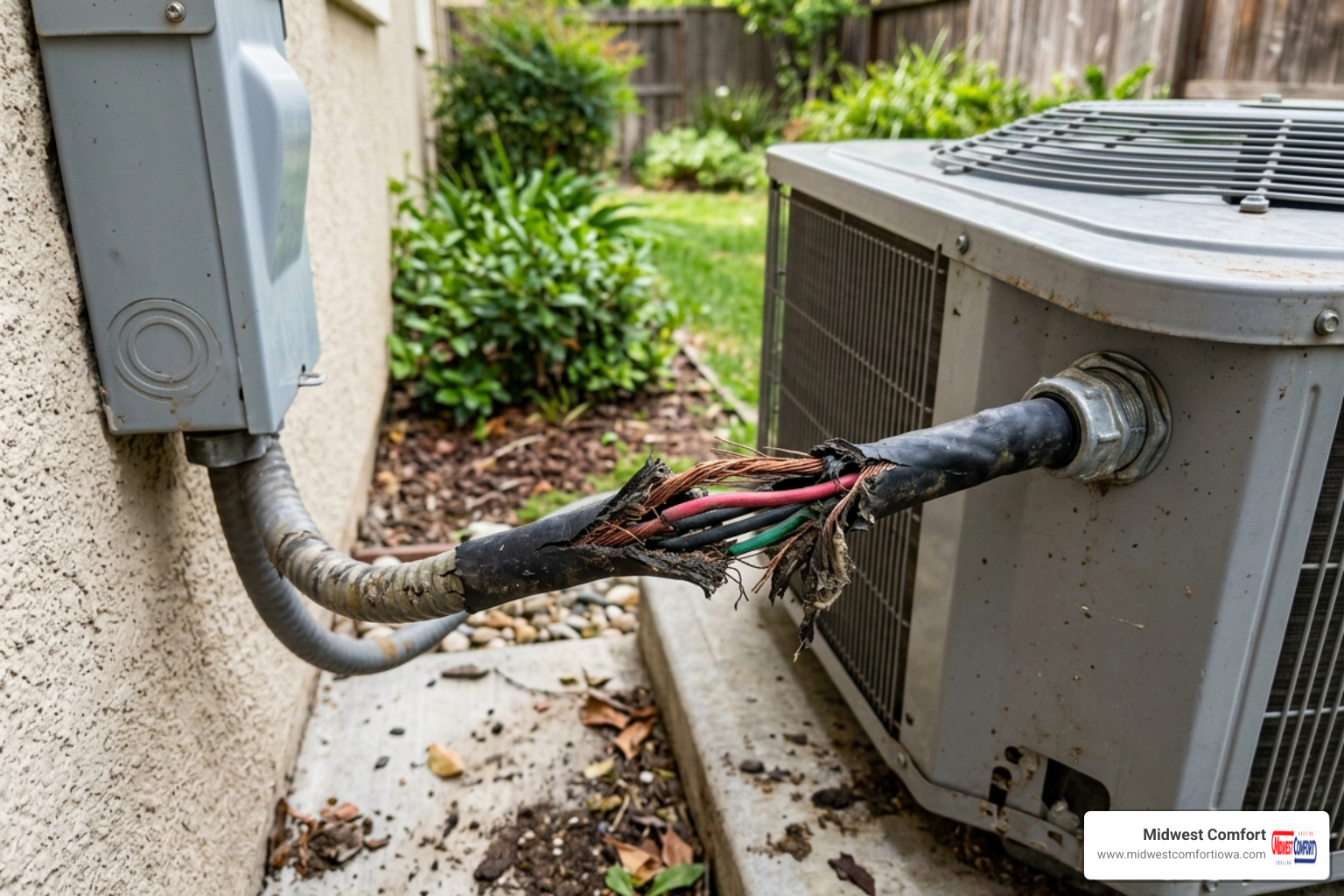
While overloads are about "too much" power, short circuits and ground faults are about power going to the "wrong place."
- Short Circuits: This happens when a "hot" wire touches a "neutral" wire. This creates a path of least resistance, causing a massive, instant surge of electricity that trips the breaker immediately. You might smell something burning or see black scorch marks near the unit or the panel.
- Ground Faults: Statistics show that ground faults make up 98% of all electrical faults. A ground fault occurs when the "hot" wire touches the ground wire or a grounded part of the system, such as the metal casing of the AC unit. This often happens due to insulation breakdown or moisture getting into the electrical components.
If your breaker trips the instant you reset it, you are likely dealing with one of these serious electrical faults. These are 7 Signs Your Hvac System Needs Repair that should never be handled as a DIY project.
Common Reasons Your AC Unit Trips the Breaker
Often, the reason for a trip isn't a "broken" part, but a "neglected" one. Mechanical issues often masquerade as electrical ones. Here are the most frequent culprits we see in the field:
- Dirty Air Filters: This is the #1 cause of AC issues. When a filter is clogged with dust and pet hair, the blower motor has to work twice as hard to pull air through it. This extra work increases the amperage draw. Furthermore, restricted airflow can cause the evaporator coils to freeze, leading to a "slugging" compressor that draws massive amounts of power.
- Frozen Evaporator Coils: If your indoor unit looks like a block of ice, the system is under extreme stress. This is one of the Most Common Hvac Issues And How To Fix Them.
- Dirty Condenser Coils: The outdoor unit (the condenser) is responsible for releasing the heat collected from your home. If the coils are covered in mud, grass clippings, or cottonwood seeds, the heat stays trapped. This causes the system to run hotter and longer, eventually overheating the compressor and tripping the breaker.
Component Failure and Why Your AC Circuit Breaker Keeps Tripping What It Means
If your filters are clean and your coils are clear, you might be looking at a failing internal component.
- Failed Start Capacitor: The capacitor is like a battery that gives your compressor a "kick-start." If it fails, the compressor struggles to start and draws a massive surge of electricity known as Locked Rotor Amps (LRA). This will trip the breaker almost immediately upon startup.
- Grounded Compressor: This is the "worst-case scenario." It means an electrical winding inside the compressor has broken and hit the side of the metal housing, causing a direct short to ground. This often results in a total system burnout.
- Outdoor Fan Motor Failure: If the fan on your outdoor unit isn't spinning, the refrigerant cannot cool down. The pressure inside the lines will skyrocket, forcing the compressor to work against extreme resistance until the breaker trips to prevent an explosion or fire.
For a deeper dive into these technical failures, see our Ac Repair Des Moines Ia Complete Guide.
Troubleshooting and Preventing Future Electrical Issues
If you find yourself standing in front of your electrical panel in the dark, don't panic. There are a few safe steps you can take before calling in the pros.
The Hard Reset Procedure:
- Turn off the AC at the thermostat. This prevents the unit from trying to start the moment you flip the breaker.
- Go to your electrical panel. Find the breaker labeled "AC" or "HVAC."
- Flip it fully to the "OFF" position, then back to "ON."
- Wait 30 minutes. This allows the internal components to cool down and the refrigerant pressures to equalize.
- Turn the thermostat back to "Cool."
Maintenance Comparison Table:
| Task | DIY or Professional? | Frequency | Why it Matters |
|---|---|---|---|
| Filter Replacement | DIY | Every 1-3 Months | Prevents blower motor overload |
| Clear Outdoor Debris | DIY | Monthly | Ensures proper heat dissipation |
| Coil Cleaning | Professional | Annually | Prevents compressor overheating |
| Capacitor Testing | Professional | Annually | Prevents "hard starting" |
| Wiring Inspection | Professional | Every 2-3 Years | Finds loose connections before they short |
When to Call a Professional for AC Breaker Issues
While we love a proactive homeowner, electrical work is dangerous. There are specific "red flags" that mean you should leave the breaker OFF and call us immediately:
- The Burning Smell: If you smell ozone, burning plastic, or "fishy" odors (a sign of melting wire insulation), shut the power off.
- Immediate Tripping: If the breaker trips the second you flip it back on, there is a direct short. Repeatedly trying to reset it can cause an explosion.
- Buzzing or Hissing: If the electrical panel is making noise or feels warm to the touch, the breaker itself may be failing.
- Visible Smoke: If you see "the magic smoke" escaping your outdoor unit, the compressor or fan motor has likely burned out.
If you are in the Des Moines metro area, we are here to help. Whether you need Hvac Repair Des Moines Ia, Hvac Repair Urbandale Ia, or Hvac Repair Ankeny Ia, our family-owned team can diagnose the issue safely and get your comfort back on track.
Frequently Asked Questions
Is it safe to repeatedly reset my AC breaker?
No. A circuit breaker is a safety device. If it trips more than once, it is doing so because of a legitimate electrical or mechanical fault. Repeatedly resetting it can damage your AC’s compressor and increases the risk of an electrical fire.
Can a dirty air filter really cause a breaker to trip?
Absolutely. A clogged filter restricts airflow, which causes the blower motor to draw more current. It also causes the system to run for much longer cycles, which can lead to overheating. This is the most common "simple" fix for a tripping breaker.
How do I know if my AC compressor is grounded?
A grounded compressor usually trips the breaker instantly. To confirm this, a technician uses a specialized tool called a megohmmeter to check the resistance between the motor windings and the compressor's outer shell. If there is "continuity" between them, the compressor is grounded and typically needs replacement.
Conclusion
At Midwest Comfort, we understand that a broken AC is more than just an inconvenience — it's a disruption to your family's peace of mind. As a family-owned business serving the greater Des Moines area, from Polk City to Norwalk and everywhere in between, we pride ourselves on honest, high-quality service.
Understanding ac circuit breaker keeps tripping what it means is the first step toward a safer, more efficient home. In April 2026, don't let a small electrical glitch turn into a major system failure. By staying on top of your filter changes and scheduling annual maintenance, you can keep your breaker in the "ON" position and your family cool all summer long.
If your breaker is acting up, don't risk a DIY electrical disaster. Schedule your professional air conditioning service today and let our family take care of yours.


Get Your HVAC Serviced Today


