


Breathe Easy: A Comprehensive Look at Ductwork & Ventilation


Discover the Essential Benefits of Regular Air Conditioning Maintenance
Regular maintenance of your air conditioning system ensures optimal performance and longevity. It helps prevent costly repairs while improving energy efficiency, keeping your home comfortable year-round.

Routine checks can significantly reduce energy bills and extend the life of your unit.


Why Ductwork & Ventilation Matter for Your Home's Health and Comfort
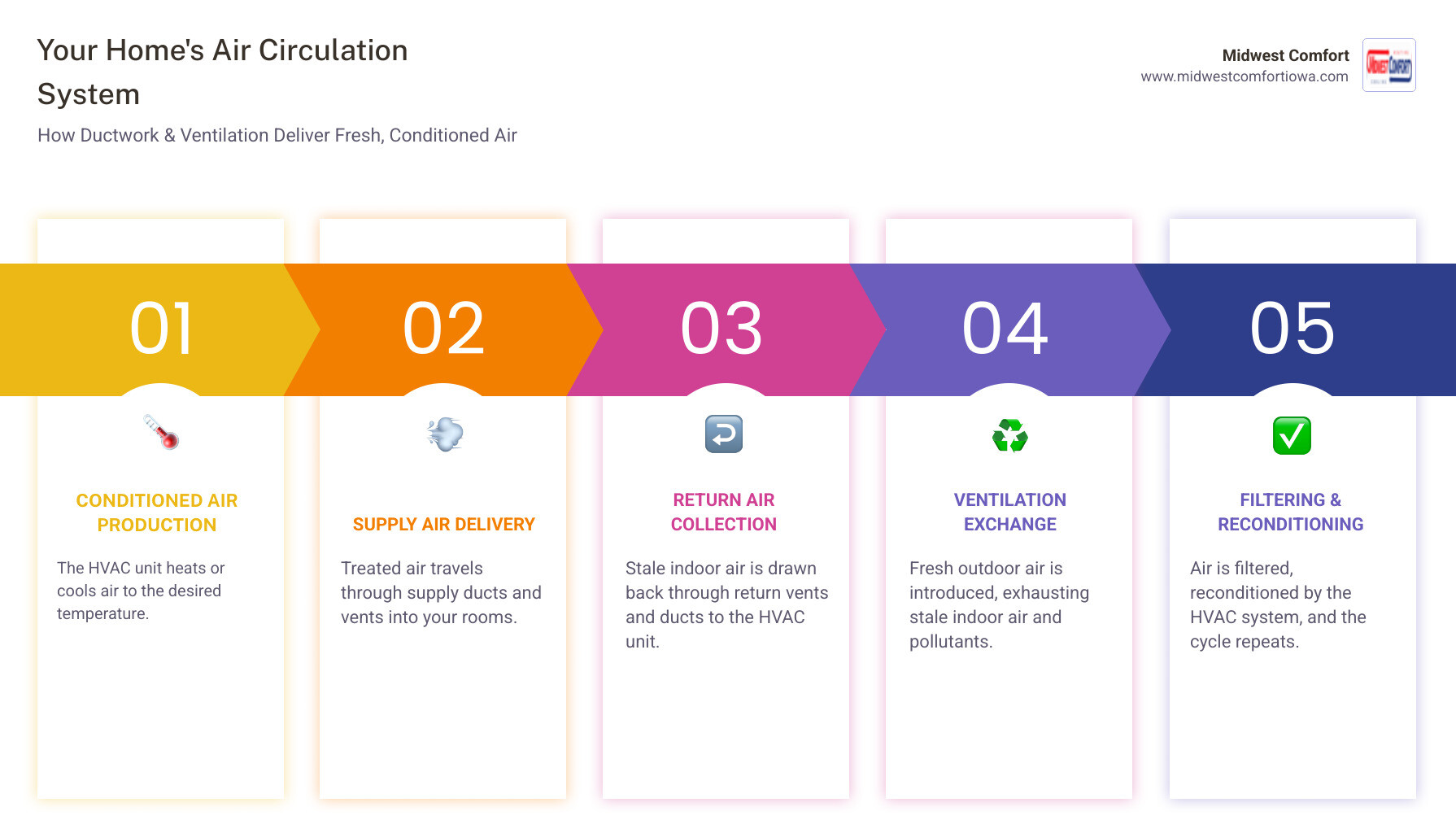
Ductwork & ventilation form the respiratory system of your home, quietly working behind the walls and ceilings to circulate air, maintain comfortable temperatures, and protect your family's health. Your ductwork carries heated or cooled air from your HVAC system to every room, while ventilation systems ensure fresh outdoor air replaces stale indoor air and removes pollutants. When these systems work properly, you enjoy consistent comfort, lower energy bills, and cleaner air. When they don't, you face uneven temperatures, high utility costs, poor indoor air quality, and potential health issues from accumulated allergens, mold, and other contaminants.
Key components of a well-functioning system:
- Supply ducts - Deliver conditioned air to rooms
- Return ducts - Pull air back to the HVAC unit for reconditioning
- Ventilation systems - Exchange stale indoor air with fresh outdoor air
- Proper sealing - Prevents 20-30% energy loss from leaks
- Regular maintenance - Ensures efficiency and air quality
Many Des Moines homeowners find their ductwork issues only after experiencing soaring energy bills or persistent dust problems. The average home loses 20-30% of conditioned air through duct leaks, forcing your HVAC system to work harder and costing you hundreds of dollars annually. Poor ventilation compounds these problems by trapping pollutants, excess humidity, and allergens inside your home.
Whether you're concerned about indoor air quality, want to understand why some rooms stay too hot or cold, or simply need to know when professional help is necessary, understanding your home's ductwork and ventilation systems empowers you to make informed decisions about your comfort and health.
Need help with your home's air circulation? Learn more about our complete HVAC services or schedule a ductwork inspection today.
Ductwork & ventilation terms explained:
Understanding Your Ductwork: The Arteries of Your Home
Just like arteries carry blood, your home's ductwork carries conditioned air to every nook and cranny. This network is the backbone of your HVAC system, distributing heated or cooled air. Without properly functioning ductwork, your heating and cooling system can't perform efficiently, leading to wasted energy and uneven temperatures. It's the hidden component that dictates much of your indoor comfort and air quality. If you're in Des Moines or surrounding areas like Johnston or Waukee, understanding your ductwork is key to a comfortable home. For more information, visit our page on Ductwork Des Moines, IA.
What Are the Primary Components of a Duct System?
A typical duct system has several key components, each vital for air distribution:
- Air Handler/Furnace: The heart of the system; it heats or cools air, and a fan pushes it through the ducts.
- Supply Ducts: The "arteries" that carry conditioned air from the air handler to individual rooms.
- Supply Vents/Registers: Openings in walls, ceilings, or floors that release conditioned air into your living spaces.
- Return Ducts: The "veins" that draw stale air from your rooms back to the air handler for reconditioning, ensuring efficient circulation.
- Return Air Vents/Grilles: Openings through which air is pulled back into the return ducts.
- Plenums: Large boxes connecting the main ducts to the air handler, distributing and collecting air.
- Dampers: Adjustable plates inside ducts that control airflow to specific areas, helping to balance temperatures.
- Air Filters: Located near the return plenum, they trap airborne particles, protecting the HVAC system and improving indoor air quality.
What Are the Different Types of Ductwork Materials?
When it comes to ductwork, not all materials are created equal. Each type offers specific advantages, making the choice dependent on the application, budget, and desired performance. Here's a comparison of common ductwork materials you might find in homes across Des Moines:
| Material Type | Pros | Cons | Best Use Cases |
|---|---|---|---|
| Galvanized Steel | - Highly durable and robust | - Heavier and more expensive | - Main trunk lines |
| - Resistant to corrosion | - Requires professional installation | - Commercial applications | |
| - Excellent airflow | - Less flexible for complex layouts | ||
| Aluminum | - Lightweight and rust-resistant | - Prone to dents and damage | - Residential applications |
| - Easier to install than steel | - Can be noisy if not properly secured | - Flexible connections | |
| - Good for custom fabrication | |||
| Flexible Ducts | - Highly pliable, easy to install in tight spaces | - Can restrict airflow if bent too sharply | - Short runs, connecting rigid ducts to vents |
| - Well-insulated options available | - Easily damaged or punctured | - Navigating obstacles | |
| - Reduces noise transmission | - Less durable than rigid ducts | ||
| Fiberglass Duct Board | - Excellent thermal insulation | - Can degrade over time, releasing fibers | - Areas needing thermal and acoustic insulation |
| - Good noise absorption | - Not suitable for wet environments | - Commercial and institutional buildings | |
| - Lightweight | - Requires careful sealing to prevent moisture issues |
How Ductwork Sizing and Layout Impact Performance
The performance of your HVAC system hinges on the correct sizing and layout of your ductwork. It's about efficiently delivering the right amount of air at the right temperature to the right places.
Proper sizing is critical. Ducts that are too small restrict airflow, forcing your HVAC system to work harder, increasing energy use, and causing premature wear. This can also lead to noise and poor heating or cooling. Conversely, oversized ducts cause low air velocity, leading to uneven temperatures and poor dehumidification. Professionals use industry guidelines like ACCA Manual D to calculate correct duct sizes based on your home's layout, HVAC capacity, and climate, ensuring optimal airflow.
The ductwork layout is also critical. Minimizing duct run length, sharp turns, and kinks promotes smoother airflow and reduces pressure loss. A well-designed layout ensures conditioned air reaches every room with minimal resistance, preventing hot and cold spots. For expert guidance, our Complete Guide Ductwork Installation Des Moines offers valuable insights.
The Critical Role of Ventilation for a Healthy Home
While ductwork distributes conditioned air, ventilation is the process of exchanging indoor air with outdoor air to maintain healthy living conditions. It's the essential component that ensures your home can "breathe." In today's energy-efficient, tightly sealed homes in places like Clive and Grimes, proper ventilation is more critical than ever. It impacts indoor air quality (IAQ), controls humidity, and directly affects your family's health. Without adequate ventilation, pollutants, allergens, and moisture can accumulate. For more on optimizing your home's air, explore how to Optimize your home's ventilation system.
Why Proper Ventilation is Non-Negotiable
Proper ventilation is a non-negotiable aspect of a healthy home. Here’s why:
- Removes Indoor Air Pollutants: Ventilation helps flush out common irritants like:
- Volatile Organic Compounds (VOCs) from paints, cleaning supplies, and furnishings.
- Allergens like pet dander, dust mites, and pollen.
- Dust that constantly accumulates.
- Mold Spores that thrive in damp conditions.
- Other Pollutants such as fumes from cooking or combustion appliances.
- Prevents Mold Growth: Ventilation systems, especially exhaust fans in bathrooms and kitchens, remove moisture-laden air before it can condense on surfaces and allow mold to flourish.
- Reduces Airborne Diseases: By continuously replacing stale indoor air with fresh outdoor air, ventilation helps dilute airborne pathogens, reducing the risk of transmitting colds, flu, and other respiratory illnesses.
- Controls Humidity Levels: Balanced humidity improves comfort. Too much humidity feels sticky, while too little can cause dry skin and respiratory irritation.
Poor IAQ from inadequate ventilation can lead to headaches, fatigue, and irritated eyes, nose, and throat, and can worsen conditions like asthma and allergies. Long-term exposure to certain pollutants can have more serious health consequences.
What Are the Various Types of Ventilation Systems?
Ventilation systems come in various forms, each designed to achieve air exchange in different ways:
- Natural Ventilation: This relies on natural forces like wind and temperature differences. Opening windows and doors allows fresh air in and stale air out. While simple, it's not always reliable and can lead to energy loss.
- Exhaust-Only Systems: These use fans (in bathrooms or kitchens) to pull air out of the house, creating negative pressure that draws outdoor air in through leaks and passive vents. They are good for removing specific pollutants at the source.
- Supply-Only Systems: These use a fan to force outdoor air into the house, creating positive pressure that pushes stale air out through leaks and vents. They can help prevent infiltration of unconditioned air but offer little control over incoming air quality.
- Balanced Systems (HRV/ERV): These are the most comprehensive and energy-efficient options.
- Heat Recovery Ventilators (HRVs): These systems bring in fresh air and exhaust stale air at equal rates. They transfer heat from the outgoing air to the incoming fresh air, recovering heating energy in colder months.
- Energy Recovery Ventilators (ERVs): Similar to HRVs, ERVs also transfer heat and moisture. This makes them ideal for Iowa's climate, as they help manage indoor humidity year-round, recovering coolness in summer and warmth in winter. ERVs significantly reduce the energy penalty of bringing in fresh air.
Choosing the right ventilation system is essential for both your indoor air quality and energy efficiency. We can help you find the right solution for your home in areas like Waukee or Windsor Heights, ensuring Energy efficiency through ventilation.
Common Problems and Essential Maintenance for Ductwork & Ventilation
Even the most robust ductwork & ventilation systems can encounter issues over time. These problems often go unnoticed because much of the system is hidden, but their impact on your comfort, health, and wallet can be substantial. The average home, for instance, loses 20-30% of its conditioned air due to leaks, holes, poorly installed ducts, and disconnected HVAC ductwork. This isn't just a minor inconvenience; it forces your HVAC system to work overtime, leading to significantly increased utility bills and uneven temperatures throughout your home.
Typical duct systems can lose up to 40% of your heating or cooling energy. Consider this: ducts leaking just 20% of the conditioned air passing through them cause your system to work 50% harder. This constant struggle translates directly into higher energy bills and a shorter lifespan for your HVAC equipment. Moreover, leaky ducts can lead to mold problems and potential health and safety issues by drawing in contaminants from unconditioned spaces like attics or crawl spaces.
Identifying and Solving Leaky Air Ducts
Leaky air ducts are a pervasive problem, often unseen but always felt in your home and on your energy bill. Knowing the signs can help you address them promptly:
- Uneven Temperatures: If some rooms are consistently too hot or too cold, it's a classic sign of air escaping before it reaches its destination, or returning inefficiently.
- High Energy Bills: A sudden or consistent increase in your heating and cooling costs, without a corresponding change in usage or weather, often points to your HVAC system working harder to compensate for lost air.
- Excessive Dust Levels: Leaks can draw in dust, dirt, and allergens from unconditioned areas (like attics or crawl spaces) into your living spaces, leading to a noticeable increase in household dust.
- Weak or Inconsistent Airflow: Stand near your vents; if the airflow feels weak or varies significantly between rooms, it could indicate leaks or blockages in the ductwork.
- Strange Noises: Whistling or banging sounds can sometimes be caused by air escaping through small gaps or by ductwork rattling due to pressure imbalances.
Addressing leaky ducts is critical. For small gaps and seams, mastic sealant (a thick, paint-like substance) or UL 181 approved metal tape are highly effective solutions. These materials create a durable, airtight seal that outperforms standard duct tape, which tends to degrade over time. For more significant damage, such as disconnected sections or large holes, professional duct repair is necessary. Sealing leaky ducts can save you hundreds of dollars annually, improve comfort, and improve indoor air quality. We offer comprehensive solutions for Duct Sealing for Efficiency Milwaukee (the principles of which apply to our service areas in Iowa) and Air Duct Repair Des Moines Guide.
Is Regular Air Duct Cleaning Necessary?
The question of whether regular air duct cleaning is necessary is a common one, and the answer often depends on specific circumstances. The U.S. Environmental Protection Agency (EPA) suggests that duct cleaning is only essential in specific cases, and we agree.
You should consider professional air duct cleaning if:
- Visible Mold Growth: There is visible mold growth inside your hard surface ducts or on other components of your heating and cooling system. Important: If mold is found, the source of moisture causing the mold must be addressed first.
- Insect or Rodent Infestations: Evidence of insect or rodent infestations in your ducts. These pests can leave behind droppings and debris that affect air quality.
- Excessive Dust Buildup Affecting Airflow: If your ducts are clogged with an excessive amount of dust and debris that is visibly discharged into the home from supply registers and is affecting the airflow.
- Unexplained Allergies or Illnesses: If you or family members are experiencing unusual or unexplained allergies or illnesses that you suspect are related to dust or contaminants in your duct system.
For general dust and allergens, simply changing your air filters regularly and ensuring your ducts are properly sealed and insulated can often be more effective and cost-efficient than frequent cleanings. When cleaning is necessary, it's crucial to hire a qualified professional who follows best practices, such as those outlined by the National Air Duct Cleaners Association (NADCA). Our team provides expert Air Duct Cleaning Des Moines services when needed.
Essential Maintenance and When to Call a Professional
Maintaining your ductwork & ventilation systems is crucial for their longevity, efficiency, and your home's indoor air quality. While some tasks are simple DIY, others require the expertise of a professional.
Essential DIY Maintenance:
- Regular Filter Changes: This is perhaps the easiest and most impactful task. Check your HVAC air filter monthly and change it every 1-3 months, or more frequently if you have pets or allergies. A clean filter ensures good airflow and prevents dust buildup in your ducts and HVAC unit.
- Clean Registers and Vents: Periodically vacuum or wipe down your supply registers and return grilles to remove dust and debris. Ensure they are not blocked by furniture or rugs, which can restrict airflow.
- Visual Inspection: Occasionally, visually inspect accessible sections of your ductwork (e.g., in basements, attics, or utility closets) for obvious signs of damage, leaks, or disconnections.
When to Call a Professional:While DIY efforts can go a long way, certain issues necessitate professional intervention. Don't hesitate to call us if you experience:
- Persistent Uneven Temperatures: Despite changing filters and checking for blockages, some rooms remain uncomfortably hot or cold. This could indicate significant duct leaks, blockages, or improper sizing that requires professional diagnosis and airflow balancing.
- Unexplained High Energy Bills: If your utility bills are consistently higher than expected without a clear reason, it's a strong indicator that your HVAC system is working too hard due to inefficiencies in your ductwork & ventilation.
- Strange Noises or Smells: Banging, whistling, or rattling from your ducts, or persistent musty/moldy smells, warrant a professional inspection.
- Visible Mold or Infestations: If you suspect mold or pests in your inaccessible ductwork, a professional can safely inspect, clean, and remediate the issue.
- Poor Indoor Air Quality: If family members are experiencing unexplained allergies, respiratory issues, or constant stuffiness, your ventilation system might be inadequate or your ducts might be compromised.
- System Malfunctions: Any issues with your HVAC system's operation that you can't resolve with basic troubleshooting.
Addressing issues like poor airflow from AC vents can often require professional tools and expertise to properly diagnose and correct. Our team is ready to help Address Poor Airflow from AC Vents and other complex ductwork & ventilation problems.
Designing for Efficiency and Sustainability
The design and installation of your ductwork & ventilation systems are critical factors that influence not only your immediate comfort but also the long-term energy efficiency and environmental impact of your home. It's a complex process that goes beyond simply running pipes; it involves careful planning and adherence to best practices.
Building codes, for instance, play a significant role. They are in place to ensure safety, health, and increasingly, energy efficiency. These codes influence everything from the materials used to the sealing techniques required and the minimum ventilation rates for residential buildings in Des Moines, Ankeny, and across Iowa. When designing or upgrading systems, factors like building size and layout, the type of HVAC system, local climate conditions, and insulation levels must all be considered. Our team provides comprehensive Ductwork Services Johnston for new constructions and existing homes.
How Ductwork & Ventilation Contribute to Energy Efficiency
Efficient ductwork & ventilation are cornerstones of an energy-efficient home:
- Reducing HVAC Workload: When ducts are properly sealed and insulated, your HVAC system doesn't have to work as hard to maintain desired temperatures. It delivers conditioned air effectively, without losing it to unconditioned spaces. This reduced workload means less energy consumption and extended equipment lifespan.
- Proper Insulation: Insulating ducts, especially those running through unconditioned areas like attics, crawl spaces, or garages, is crucial. Without insulation, ducts can lose a significant amount of heat in winter or gain heat in summer, forcing your system to overcompensate. Insulation acts as a thermal barrier, maintaining air temperature and saving energy.
- Duct Placement in Conditioned Space: One of the most effective energy-saving strategies is to locate ductwork entirely within the conditioned envelope of your home. This means placing ducts in areas that are heated or cooled, rather than in hot attics or cold crawl spaces. If leaks occur in conditioned spaces, the lost air remains within the home's thermal boundary, minimizing energy waste.
- Sealing Leaks to Save Energy: As we've discussed, leaky ducts can lead to 20-30% loss of conditioned air. Sealing these leaks is one of the most cost-effective ways to improve your home's energy efficiency, directly translating into lower heating and cooling bills.
Improving Existing Ductwork & Ventilation Systems
Many homes in our service areas of Polk City, Grimes, and Clive, particularly older ones, may have outdated or inefficient ductwork & ventilation systems. The good news is that these systems can often be significantly improved without a full replacement:
- Airflow Balancing: An unbalanced system can lead to uneven heating or cooling. Professional airflow balancing involves adjusting dampers and optimizing airflow to ensure each room receives the correct amount of conditioned air, maximizing comfort and efficiency. Learn more about Airflow Balancing Windsor Heights.
- Adding or Improving Insulation: If your ducts are uninsulated or poorly insulated, especially in unconditioned areas, adding or upgrading insulation can drastically reduce energy loss and improve system performance.
- Upgrading to ERV/HRV: For homes with inadequate fresh air exchange, installing an Energy Recovery Ventilator (ERV) or Heat Recovery Ventilator (HRV) can dramatically improve indoor air quality and energy efficiency by recovering heat and/or moisture from outgoing air.
- Sealing Connections: A thorough inspection and sealing of all duct connections, seams, and junctions with mastic or appropriate tapes can eliminate significant air leakage, which is often the biggest culprit of energy waste.
Future Trends in Ductwork and Ventilation Technology
The world of ductwork & ventilation is continually evolving, with innovations aimed at further enhancing efficiency, control, and indoor air quality. As technology advances, we anticipate exciting developments:
- Smart Vents: Imagine vents that can dynamically adjust airflow to individual rooms based on occupancy, temperature preferences, or even time of day, all controlled through your smartphone or smart home system. These "smart vents" are already emerging, offering unprecedented zone control and energy savings.
- Demand-Controlled Ventilation: Moving beyond simple on/off switches, demand-controlled ventilation systems use sensors (e.g., CO2, occupancy, humidity) to automatically adjust ventilation rates. This ensures fresh air is brought in only when and where it's needed, optimizing energy use and indoor air quality simultaneously.
- Advanced Composite Materials: Research is ongoing into new materials for ducts that are lighter, more durable, better insulated, and potentially offer antimicrobial properties, further improving efficiency and IAQ.
- Smart Home Integration: Expect more seamless integration of ductwork & ventilation systems into whole-home smart platforms, allowing for centralized control, predictive maintenance, and personalized comfort profiles.
Conclusion: Your Path to Better Air and Efficiency
As we've explored, ductwork & ventilation are far more than just unseen components of your home; they are the unsung heroes of your comfort, health, and energy efficiency. From the intricate network of ducts distributing conditioned air to the vital role of ventilation in maintaining healthy indoor air quality, these systems work tirelessly to create a pleasant living environment. Understanding their function, identifying common problems, and committing to regular maintenance are crucial steps for every homeowner in Des Moines, Altoona, Dallas Center, and beyond.
By ensuring your ducts are properly sized, sealed, and insulated, and that your home benefits from adequate ventilation, you can significantly reduce energy waste, lower your utility bills, and protect your family from the health implications of poor indoor air quality. Whether it's addressing leaky ducts, considering professional cleaning, or exploring advanced ventilation solutions, a proactive approach will lead to a healthier, more comfortable, and energy-efficient home.
At Midwest Comfort, we are committed to providing honest, high-quality, and cost-effective HVAC services across our community. Our family-oriented approach means we're dedicated to helping you breathe easier and live more comfortably in your home. For professional ventilation services in Des Moines and surrounding areas, don't hesitate to contact our team. We're here to assist you with all your ductwork & ventilation needs. Visit our page on Ventilation Des Moines, IA to learn more or schedule a service today.


Get Your HVAC Serviced Today


