


What Are Energy Audits and How Do They Improve Your Home's Efficiency?


Discover the Essential Benefits of Regular Air Conditioning Maintenance
Regular maintenance of your air conditioning system ensures optimal performance and longevity. It helps prevent costly repairs while improving energy efficiency, keeping your home comfortable year-round.

Routine checks can significantly reduce energy bills and extend the life of your unit.


What is a Home Energy Audit and Why is it Important?
Energy efficiency & audits help Des Moines homeowners identify where their homes are wasting energy and money. If you're noticing high utility bills, uncomfortable rooms, or uneven temperatures throughout your home, an energy audit pinpoints exactly where your home is losing energy and provides a clear roadmap for improvements that can reduce your energy costs by 5% to 30% per year.
Quick Answer: What You Need to Know About Energy Audits
- What it is: A professional assessment of your home's energy use, identifying air leaks, insulation gaps, and inefficient systems
- Time required: 2-4 hours for a complete evaluation
- Savings potential: 5-30% reduction in annual energy bills through recommended improvements
- Key benefits: Lower utility costs, improved comfort, better air quality, and increased home value
Many Des Moines families struggle with drafty rooms in winter, sky-high cooling bills in summer, and the uncertainty of not knowing which home improvements will actually make a difference. An energy audit takes the guesswork out of the equation. A certified energy advisor visits your home, uses specialized diagnostic tools like blower door tests and thermal imaging cameras, and creates a customized report showing you exactly where your energy dollars are escaping—and how to stop them.
For more comprehensive strategies on reducing your home's energy consumption, explore our Energy Efficiency Des Moines Guide. Ready to start saving on your energy bills? Contact Midwest Comfort to schedule your professional energy audit today.
The reality is simple: heating and cooling typically account for 43% of your home's utility bill, while water heating adds another 12%. Without an audit, you're essentially guessing which improvements will deliver real savings. With one, you get a data-driven action plan that prioritizes upgrades based on your home's specific needs and your budget.
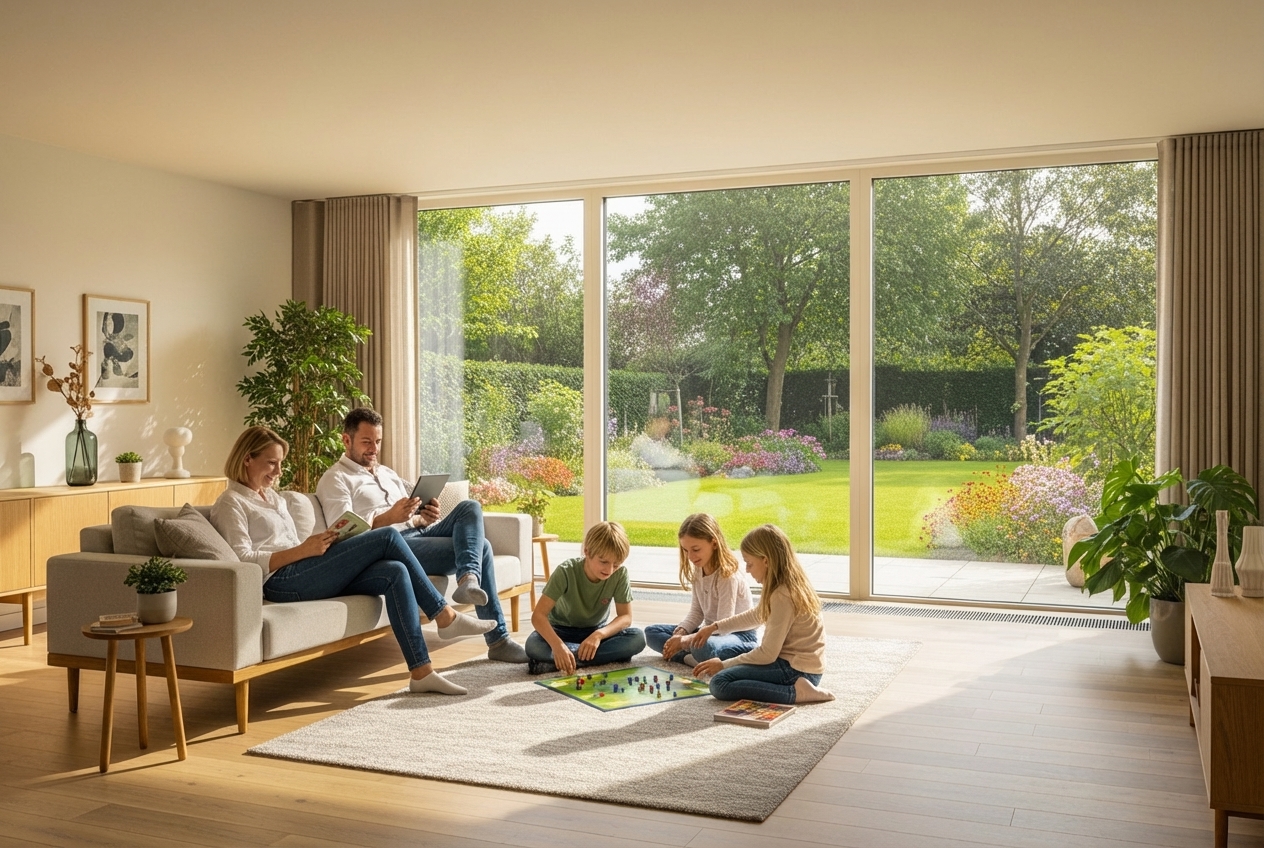
Energy efficiency & audits vocabulary:
A home energy audit is a comprehensive assessment of how your home uses energy. Think of it as a thorough check-up for your house, but instead of focusing on your health, it focuses on your home's energy health! Our expert auditors pinpoint exactly where energy is being wasted, whether it's through hidden air leaks, inadequate insulation, or inefficient heating and cooling systems. It's the essential first step to truly understanding your home's energy performance.
Why is this important? The benefits are numerous and impactful for homeowners in Des Moines and surrounding areas like Waukee, Windsor Heights, and Ankeny.
- Lowering Utility Bills: The most immediate and tangible benefit is the potential for significant savings. By addressing the issues identified in an audit, you can reduce your home’s energy use by 5% to 30% per year. Imagine what you could do with those savings!
- Improving Home Comfort and Indoor Air Quality: No one likes a drafty room in winter or a stuffy one in summer. An audit helps us identify and seal leaks, improve insulation, and ensure your HVAC systems are running optimally. This leads to a more consistent, comfortable temperature throughout your home and can even improve indoor air quality by reducing the entry of outside pollutants and controlling moisture.
- Increasing Resale Value: Homes that are energy efficient are more attractive to potential buyers. Studies show that energy-efficient homes can increase their resale value by up to three percent. It's an investment that pays off!
- Reducing Carbon Footprint: Beyond personal savings, energy efficiency & audits contribute to a healthier planet. By using less energy, your home produces fewer greenhouse gas emissions, helping us all contribute to environmental sustainability. An audit helps pinpoint trouble areas that may be wasting energy, thus reducing your carbon footprint.
DIY Assessment vs. The Role of Professional Energy Efficiency & Audits
When it comes to understanding your home's energy use, you have options. A DIY assessment can be a good starting point, but a professional energy audit provides an unparalleled level of detail and accuracy.
DIY Home Energy Assessment:A do-it-yourself assessment allows you to get a basic understanding of potential issues. You can perform a visual inspection for obvious signs of energy loss, like drafts around windows and doors. You might check insulation levels in accessible areas like the attic, or simply ensure your light bulbs are energy-efficient. Some common DIY checks include:
- Locating Air Leaks: Feel for drafts around windows, baseboards, doors, and electrical outlets. A lit incense stick can help visualize airflow.
- Checking Insulation: Visually inspect accessible insulation in your attic or crawlspace. Is it evenly distributed? Does it meet modern standards?
- Inspecting HVAC Equipment: Ensure filters are clean and check for obvious signs of wear or debris.
- Changing Light Bulbs: Replace inefficient incandescent bulbs with LEDs or CFLs.
While a DIY assessment offers some insights, it often misses the subtler, yet significant, issues that contribute to energy waste. This is where professional energy efficiency & audits shine.
Professional Home Energy Audit:A professional audit is conducted by a certified energy advisor who uses specialized diagnostic tools to uncover hidden problems. They provide an in-depth analysis that goes far beyond what a homeowner can typically achieve.
| Feature | DIY Home Energy Assessment | Professional Home Energy Audit |
|---|---|---|
| Scope | Basic visual inspection, easy-to-access areas, simple checks | Comprehensive, whole-home assessment, including hard-to-reach areas and systems |
| Tools Used | Hands, eyes, flashlight, incense stick, basic thermometer | Blower door test, thermal imaging camera, furnace efficiency meter, surface thermometer, energy usage equipment |
| Accuracy | General indicators, rough estimates | Precise measurements, detailed analysis of air leakage, insulation effectiveness, and system efficiency |
| Output | Personal notes, general observations | Customized report with prioritized recommendations, estimated savings, and often an energy rating (like a HERS Index score) |
| Hidden Issues | Often missed (e.g., wall cavity insulation gaps, duct leaks) | Identified through specialized testing (e.g., hidden air leaks, insufficient insulation behind walls, ductwork issues) |
| Recommendations | General suggestions (e.g., "seal drafts") | Specific, actionable solutions custom to your home, often with projected cost savings and ROI, and eligibility for rebates |
A professional energy audit includes a series of tests designed to pinpoint air leaks, test insulation levels, and gauge the efficiency of your home’s heating and cooling systems. The auditor will inspect insulation, heating and cooling systems, and overall energy use from the basement to the attic. They might even ask about existing problems like drafty rooms or window condensation, and for past utility bills to analyze your energy consumption history.
The Professional Home Energy Audit Process: What to Expect
When you decide to invest in a professional home energy audit, you're taking a significant step toward a more comfortable, efficient, and valuable home. We believe in transparency, so here's what you can expect from the process:
1. Scheduling the Audit:The process begins with a simple phone assessment to discuss your concerns, your home's age, and any specific issues you've noticed. This helps us understand your needs and tailor the audit accordingly.
2. Pre-Audit Preparation:To ensure a smooth and effective audit, a little preparation goes a long way. We'll ask you to:
- Clear Access: Ensure our auditors have clear access to key areas like your attic, crawl space, basement, and mechanical equipment (furnace, water heater, electrical panel).
- Gather Utility Bills: Have your past 12 months of utility bills handy. This data helps us analyze your historical energy consumption patterns.
- List Known Issues: Make a note of any specific problems, such as drafty rooms, cold spots, condensation on windows, or areas of concern.
- Wood-Burning Appliances: If you have wood-burning fireplaces or stoves, please remove all ashes beforehand. This is a safety precaution for specific tests.
- Operational Systems: Ensure all major home systems (heating, cooling, water, power, sewer) are operational.
3. The On-Site Evaluation:On the day of the audit, our certified energy advisor will arrive at your Des Moines home for a thorough basement-to-attic inspection. This typically takes between two to four hours, depending on your home's size and complexity. We encourage you to walk through with the auditor, ask questions, and point out any concerns. Our team will:
- Inspect Insulation: We'll check the type, condition, and R-value of insulation in your attic, walls, basement, and crawl spaces.
- Examine Windows and Doors: We'll assess their condition, sealing, and overall energy performance.
- Evaluate HVAC Systems: We'll look at your heating, ventilation, and air conditioning equipment, including ductwork, to gauge their efficiency and performance.
- Review Water Heating: We'll assess your water heater's type, age, and efficiency.
- Analyze Lighting and Appliances: We'll take stock of your major appliances and lighting to identify opportunities for efficiency upgrades.
4. Data Collection:Throughout the evaluation, our auditor will collect detailed data using specialized tools. This data forms the backbone of your customized energy report.
Key Tools and Techniques Used by Auditors
Our professional energy auditors use a range of advanced tools and techniques to accurately diagnose your home's energy performance. These aren't just gadgets; they're essential for uncovering hidden inefficiencies that a visual inspection alone would miss.
- Blower Door Test: This is one of the most critical tools. A large fan is mounted in an exterior doorway, depressurizing your home. This test precisely measures your home's airtightness and exaggerates air leaks, making them easier to detect (sometimes with smoke pencils or thermal imaging). It's incredibly effective at revealing where warm air is escaping in winter and cool air is entering in summer.
- Thermographic Scans (Infrared Cameras): These cameras detect temperature differences, allowing our auditors to "see" heat loss or gain. They can reveal missing or settled insulation in walls, air leaks around windows and doors, and areas where your home's thermal envelope is compromised.
- Furnace Efficiency Meters: These devices measure the efficiency of your heating system, helping us understand how much fuel is converted into usable heat.
- Surface Thermometers: Used to measure the surface temperature of walls, windows, and other components, providing clues about insulation effectiveness and potential thermal bridges.
- Energy Usage Equipment: We may use specialized equipment to measure the energy consumption of specific appliances or systems, offering a clearer picture of your energy hogs.
These tools, combined with our auditor's expertise, allow us to conduct a comprehensive assessment. For more details on how these audits can benefit your property in the Des Moines area, check out our Energy Audit Near Me Des Moines page.
Receiving and Understanding Your Audit Report
Once the on-site evaluation is complete and all the data is analyzed, we'll provide you with a comprehensive, customized report. This isn't just a list of problems; it's your personalized roadmap to a more energy-efficient home.
Your audit report will typically include:
- An Energy Rating: This might be a Home Energy Rating System (HERS) Index score, which is a standardized measure of a home's energy performance. A lower HERS score indicates a more energy-efficient home. This score allows you to compare your home's energy performance against similar homes and gauge its overall efficiency.
- Prioritized Recommendations: We'll outline specific, actionable solutions custom to your home's unique needs. These recommendations are prioritized based on their potential for energy savings, cost-effectiveness, and impact on home comfort. We'll help you understand which upgrades offer the biggest bang for your buck.
- Estimated Savings: For each recommended upgrade, the report will provide estimated energy savings, helping you build a business case for investing in improvements. This allows you to see the potential reduction in your utility bills.
- Renovation Upgrade Report: This detailed section will explain what needs to be done, why it's important, and how it will improve your home's energy efficiency & audits. It often includes details on specific materials or techniques.
This report empowers you to make informed decisions about your home. It takes the guesswork out of energy improvements, giving you a clear path forward to savings and comfort.
Common Recommendations for Improving Home Energy Efficiency & Audits
After your energy audit, you'll have a clear picture of how your home is using energy and where improvements can be made. The recommendations are designed to provide actionable steps that lead to long-term savings and improved comfort. Many of these upgrades can also qualify for government rebates or incentives, further sweetening the deal! Regularly maintaining your HVAC system is also a crucial step in ensuring ongoing efficiency, as highlighted in our HVAC Maintenance Saves You Money guide.
Prioritizing Upgrades for Maximum Energy Efficiency & Audits
With a list of potential improvements, it can be hard to know where to start. We help you prioritize based on potential savings and impact. Here are some of the most common and effective upgrades typically recommended:
- Air Sealing: This is often the most cost-effective upgrade. Warm air leaking into your home during summer and out during winter can waste a lot of energy. The potential energy savings from reducing drafts may range from 5% to 30% per year.
- Insulation: Addressing inadequate insulation in attics, walls, and basements can drastically reduce heat transfer. Older homes, common in Des Moines and surrounding towns like Johnston and Clive, often have insulation levels that are inadequate by today's energy price standards.
- HVAC Upgrades: Your heating and cooling systems account for the largest portion of your utility bill (around 43%). Upgrading to more efficient equipment, or simply ensuring your current system is well-maintained, can cut your energy use for heating and cooling from 20% to 50%.
- Water Heater Improvements: Water heating is the third largest energy expense, typically accounting for about 12% of your utility bill. Upgrading to a more efficient model or insulating your existing water heater can lead to significant savings.
- Window and Door Replacements: While often a larger investment, replacing old, inefficient windows and doors, especially with ENERGY STAR certified products, can reduce air infiltration and improve comfort. If full replacement isn't feasible, adding storm windows can reduce heat loss by 25% to 50%.
Sealing and Insulating Your Home
These two areas often go hand-in-hand and provide some of the best returns on investment for energy efficiency & audits.
- Air Sealing: We're talking about more than just weatherstripping. While weatherstripping around doors and windows is vital, professional air sealing targets hidden leaks. This includes sealing gaps around pipes, ductwork, and electrical penetrations in your attic, basement, and crawl space using caulk, expanding foam, or permanent sealants. Even small cracks add up!
- Attic Insulation: The attic is usually the easiest and most impactful place to add insulation. We'll check if your attic hatch is as heavily insulated as the attic itself and properly weather-stripped. We'll also ensure that exterior attic vents aren't blocked by insulation, which is crucial for proper airflow and preventing moisture issues.
- Wall Insulation: Checking wall insulation can be trickier, but our auditors have methods to determine if your walls are adequately insulated. If not, adding insulation to wall cavities can make a big difference in comfort and energy use.
- Crawlspace and Basement Insulation: For unconditioned basements or crawlspaces, insulating the perimeter rather than the living space floor is often recommended, especially if they contain heating/cooling appliances or ducts. For intentionally conditioned basements, insulating the foundation walls to at least R-19 can significantly improve efficiency. For more on how proper ventilation works with insulation, see our guide on Energy Efficiency Through Ventilation, and for ensuring your ducts are not wasting energy, check out Optimal Energy Efficiency Expert Ductwork Solutions.
Upgrading Heating and Cooling Systems
Since heating and cooling dominate your energy bills, optimizing these systems is paramount.
- HVAC System Efficiency: Regular maintenance is key, but sometimes an older system (over 10-15 years) just can't keep up with modern efficiency standards. Upgrading to an ENERGY STAR certified furnace, air conditioner, or heat pump can lead to substantial savings. We can help you steer options like Energy Efficient Air Conditioners or explore the benefits of an Energy Efficient Heat Pump Windsor Heights.
- Water Heater Improvements: Beyond replacing an old water heater, consider insulating your existing tank, especially if it's in an unconditioned space. Using less hot water and turning down your water heater's thermostat are simple, effective steps.
- Smart Thermostats: Installing a smart or programmable thermostat allows you to automatically adjust temperatures throughout the day, saving as much as 10% a year on heating and cooling bills by simply setting it back 10% to 15% for 8 hours a day. Learn more about Smart Thermostat Energy Efficiency.
- Ductwork: Leaky or uninsulated ducts, especially those running through unheated spaces like attics or crawlspaces, can lose up to 60% of your heated air before it reaches the registers! Sealing and insulating your ducts is a highly effective, often overlooked, upgrade.
These improvements, combined with smart habits, can make a huge difference, especially during the colder months. For more tips, read our 7 Better Ways to Save Energy During the Winter Season.
Frequently Asked Questions about Home Energy Audits
We understand that you might have questions about the process and benefits of energy efficiency & audits. Here are some common inquiries we receive from homeowners in the Des Moines area:
How long does a professional energy audit take?
On average, a professional home energy audit typically takes between two to four hours to complete. The exact duration can vary depending on several factors, including the size and complexity of your home, the number of appliances, and the specific issues our auditor needs to investigate. Rest assured, our team takes the time needed to perform a thorough inspection to provide you with the most accurate and useful recommendations.
How does an audit improve indoor air quality?
An energy audit contributes significantly to improving your home's indoor air quality in several ways:
- Identifying Ventilation Issues: We can spot problems with your home's ventilation system that might be trapping stale air or allowing excessive moisture to build up.
- Reducing Drafts and Pollutants: By sealing air leaks, we prevent unwanted outdoor pollutants, allergens, and moisture from entering your home through uncontrolled pathways. This also helps control humidity levels.
- Moisture Control: Addressing air leaks and improving insulation can help manage indoor humidity, reducing the potential for mold growth, which can negatively impact air quality.
- Healthier Living Environment: Overall, by creating a tighter, better-ventilated home, an energy audit helps foster a cleaner, healthier, and more comfortable living environment for your family.
What preparation is needed before an auditor arrives?
To ensure your energy audit is as efficient and comprehensive as possible, we ask for a few preparations:
- Clear Access: Please ensure that our auditor has clear and unobstructed access to key areas of your home. This includes your attic, crawl space, basement, and mechanical equipment such as your furnace, air conditioner, and water heater. Moving stored items away from these areas beforehand is greatly appreciated.
- Recent Utility Bills: Having your past 12 months of utility bills available allows our auditor to analyze your historical energy consumption patterns, providing valuable context for their findings.
- List of Known Issues: Jot down any specific concerns you have, such as areas that are consistently drafty, rooms that are too hot or cold, or any unusual odors. Your insights are incredibly valuable!
- Wood-Burning Appliances: If your home has any wood-burning fireplaces or stoves, please ensure all ashes are removed and the appliance is not in use on the day of the audit. This is a safety measure, especially during tests like the blower door.
Conclusion: Take the First Step Towards a More Efficient Home
Investing in energy efficiency & audits for your Des Moines home is more than just a smart financial decision; it's an investment in your family's comfort, health, and the long-term value of your property. We've seen how these audits empower homeowners to take control of their energy consumption, changing drafty, inefficient houses into cozy, cost-effective havens.
From identifying hidden air leaks to recommending optimal insulation and HVAC upgrades, a professional energy audit provides a clear, data-driven path to a more energy-efficient home. You'll not only save money on your utility bills—potentially 5% to 30% annually—but also enjoy improved indoor air quality, consistent temperatures, and the peace of mind that comes with a reduced carbon footprint. Plus, an energy-efficient home can see its resale value increase by up to three percent.
Our family at Midwest Comfort is dedicated to providing honest, high-quality HVAC services to our neighbors in Des Moines, Polk City, Granger, and beyond. We believe in custom solutions and helping you achieve optimal home comfort and efficiency. Don't let energy waste continue to drain your wallet and compromise your comfort.
Take the first step towards a more efficient, comfortable, and sustainable home today. Learn more about how we can help you with your Energy Efficiency Des Moines needs.


Get Your HVAC Serviced Today


