


My heat just went out. Who provides emergency furnace service in Johnston?


Discover the Essential Benefits of Regular Air Conditioning Maintenance
Regular maintenance of your air conditioning system ensures optimal performance and longevity. It helps prevent costly repairs while improving energy efficiency, keeping your home comfortable year-round.

Routine checks can significantly reduce energy bills and extend the life of your unit.


What to Do When Your Heat Goes Out in Johnston
My heat just went out. Who provides emergency furnace service in Johnston? When your furnace fails during a cold Iowa night, you need help fast. Here's what to do immediately:
Immediate Steps:
- Check your thermostat - Ensure it's set to "heat" and above room temperature
- Inspect the circuit breaker - Reset if tripped
- Verify the furnace switch - Make sure it's in the "on" position
- Check the air filter - Replace if clogged
- If you smell gas - Evacuate immediately and call emergency services from outside
- Call a professional - Contact a licensed HVAC technician for emergency furnace repair
For reliable emergency HVAC repair in Des Moines and the surrounding Johnston area, look for providers offering 24/7 service with fast response times. When you need heating repair in Johnston, IA, choosing a local, licensed company ensures you get prompt, professional service.
Johnston experiences long, cold winters where a functioning furnace isn't just about comfort—it's about safety. According to industry data, nearly 75% of emergency no-heat calls are related to lack of regular maintenance. A broken furnace can lead to frozen pipes, carbon monoxide risks, and dangerously cold indoor temperatures. Understanding when to troubleshoot yourself versus when to call for emergency service can make the difference between a quick fix and a costly disaster.
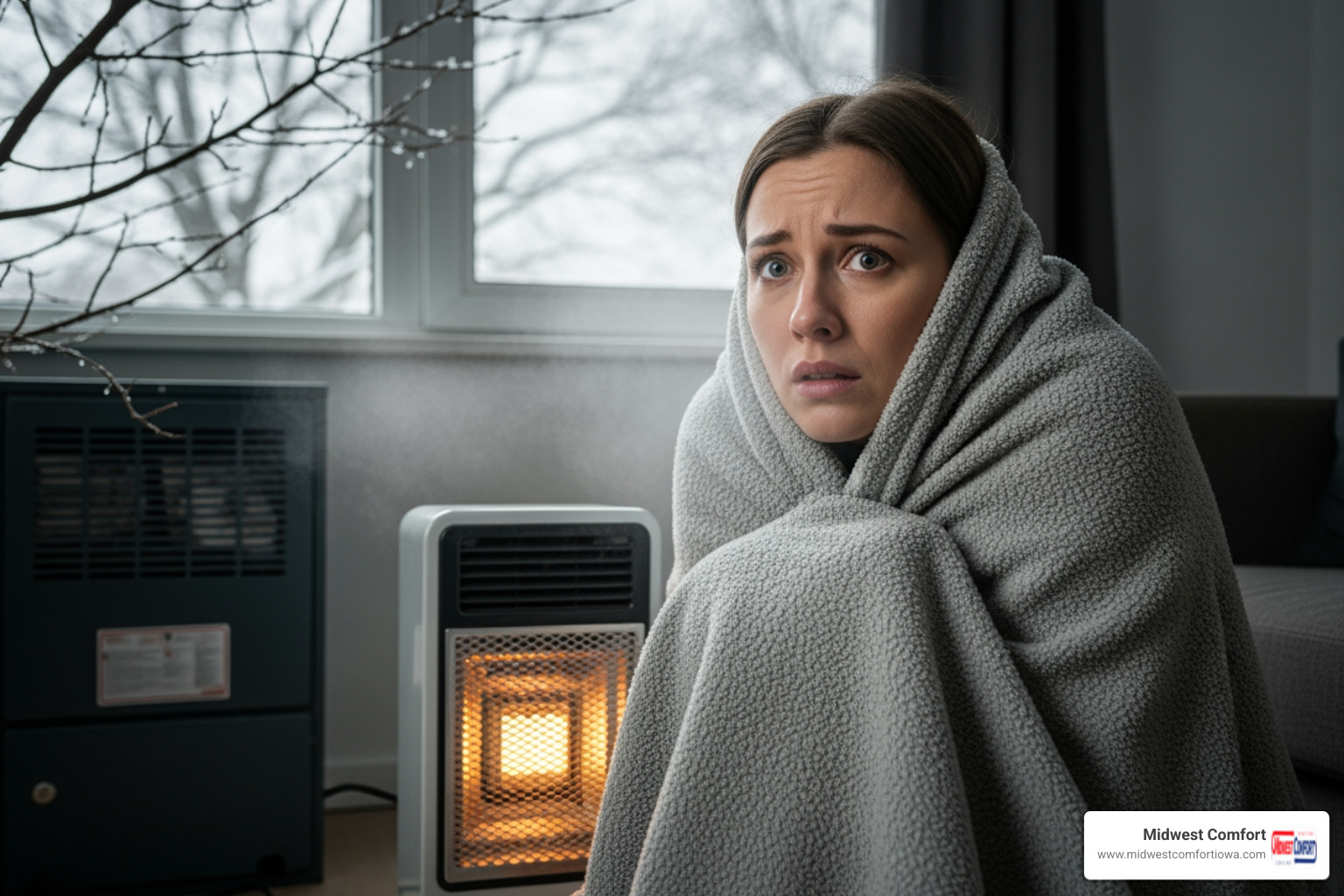
What are the signs that indicate a furnace needs emergency service?
Sometimes, a furnace simply needs a minor tweak or a filter change. But other times, it's screaming for immediate professional attention. Recognizing these critical signs can help you determine if you're facing a true emergency that requires urgent assistance.
One of the most obvious signs is a complete loss of heat. If your furnace isn't producing any warm air, especially when the temperatures outside are dropping, it's a clear indicator that something is seriously wrong and demands immediate intervention. We understand that in Johnston, IA, a sudden cold snap can make a lack of heat not just uncomfortable, but potentially dangerous.
Another red flag is loud banging or grinding noises coming from your furnace. While some minor noises are normal, persistent or unusually loud sounds like rattling, grinding, clicking, or rumbling can indicate a serious mechanical issue, such as a failing motor or a loose component. Noisy operation can signal a mechanical or combustion problem that, if ignored, could lead to further damage or even a complete breakdown.
Strange smells should never be ignored. If you detect an odor similar to gas or burning plastic/wiring, it’s a serious emergency. Natural gas furnaces, while common, can pose significant hazards if there's a leak or a combustion issue. If you smell gas, evacuate your home immediately and call emergency services from a safe location. A burning smell might indicate overheating electrical components or a clogged system, which could be a fire hazard.
Finally, if your carbon monoxide detector alarm goes off, it's an undeniable emergency. Carbon monoxide (CO) is an odorless, colorless gas that can be deadly. If the alarm sounds, get everyone out of your home into fresh air immediately and call 911. Even if you're just experiencing symptoms like dizziness, nausea, or headaches while inside, it's crucial to get outside and seek medical attention.
Other signs that might warrant an emergency call include your furnace cycling on and off rapidly (short-cycling), which indicates inefficiency or a control problem, or if your furnace simply won't turn on at all after you've checked the basic troubleshooting steps. For more guidance on urgent heating issues, you can refer to our guide on emergency HVAC repair in Des Moines.
What should homeowners do immediately when their furnace stops working?
When your furnace decides to take an unexpected vacation, especially during a chilly Johnston evening, panic can set in. But before you dial for help, there are a few immediate steps you can take to potentially resolve the issue or gather crucial information for the technician.
First, check the thermostat settings. It might sound simple, but sometimes the thermostat gets accidentally switched to "off" or "fan only," or the temperature setting is simply too low. Ensure it's set to "heat" and that the desired temperature is above the current room temperature.
Next, head to your electrical panel and check the circuit breaker dedicated to your furnace. Furnaces, like any major appliance, can trip a breaker if there's an electrical surge or malfunction. If it's tripped, reset it. If it trips again immediately, do not try to reset it repeatedly; this indicates a deeper electrical issue that needs professional attention.
Then, locate the furnace switch (often found on or near the furnace itself, resembling a light switch). Ensure it's in the "on" position. Sometimes, it can be accidentally turned off during cleaning or other household activities.
A frequently overlooked culprit is the air filter. A clogged or dirty air filter can severely restrict airflow, causing your furnace to overheat and shut down, or simply run inefficiently. Check your filter and replace it if it's dirty. This is a simple, yet highly effective, preventative measure.
As mentioned earlier, if you smell gas, evacuate immediately. This is non-negotiable. Get everyone out of the house, away from the immediate area, and call emergency services from a neighbor's house or your mobile phone. Do not re-enter for any reason.
Once you've gone through these initial checks and your furnace is still refusing to cooperate, it's time to call for professional service. For reliable heating repair in Johnston, IA, our team is ready to assist. We understand that safety is paramount, and sometimes, the best immediate action is to call an expert. If temperatures are freezing, you might also consider allowing faucets to drip slightly to prevent pipes from freezing while you wait for service.
Understanding Emergency Furnace Service
When your heat goes out, especially during an Iowa winter, you're not just looking for a repair; you're looking for a quick, reliable solution to restore your home's comfort and safety. Emergency furnace service is designed to address these urgent situations with speed and expertise.
How quickly can emergency furnace service technicians typically respond in Johnston?
When your furnace quits in the middle of a cold night, speed is of the essence. We pride ourselves on offering fast response times for our Johnston customers. Our goal is to get a technician to your home as quickly as possible to diagnose and resolve your heating emergency.
We offer 24/7 availability, meaning we're here to answer your call day or night, weekends and holidays included. This around-the-clock service is crucial when you're facing a no-heat situation in freezing temperatures. While actual arrival times can vary based on demand and the time of day, we prioritize emergency calls, especially during cold snaps, to ensure you're not left in the cold for long.
In many cases, same-day service is available for non-life-threatening issues, and we always strive to provide prompt assistance. Once our technician arrives, most visits for diagnosis and common repairs typically take 60-90 minutes, though this can vary depending on the complexity of the issue and the accessibility of your system. Our aim is always to restore your heat safely and efficiently, minimizing your discomfort.
What services are typically included in an emergency furnace repair call?
When you call us for an emergency furnace service, you can expect a comprehensive approach to getting your heat back on. Our technicians are trained to handle a wide range of urgent issues, ensuring your safety and comfort.
The first step is always a thorough system diagnosis. Our technician will carefully inspect your furnace, using their expertise and specialized tools to pinpoint the exact cause of the breakdown. This includes listening for unusual noises, checking electrical connections, and examining components for wear or damage.
A critical part of any emergency call, especially for natural gas furnaces, is a safety inspection. We conduct full safety checks for gas leaks, proper ventilation, and carbon monoxide risks to ensure your system isn't just working, but working safely. Your family's well-being is our top priority.
Following the diagnosis, our technician will perform component testing to confirm the faulty parts. Once the problem is identified, we'll provide a clear, transparent quote for the repair, explaining what needs to be done, why it's necessary, and any alternative solutions. We believe in empowering you with information so you can make an informed decision.
Our technicians arrive equipped with a wide array of common parts, allowing for immediate parts replacement in most cases. We use compatible, high-quality components to ensure lasting repairs. After the repair is complete, we perform rigorous system testing post-repair to verify that your furnace is functioning correctly, efficiently, and safely. We won't leave until your heat is restored and you're comfortable. For a full list of our offerings, check out our all services page.
What information should homeowners have ready when calling for emergency furnace service?
To help us provide the fastest and most efficient service possible, having a few key pieces of information ready when you call can make a significant difference. Think of it as giving us a head start on solving your heating puzzle!
First, please have the furnace make and model readily available. This information is usually found on a label or sticker inside the furnace compartment or on its exterior. Knowing this helps us anticipate potential issues and ensures our technicians arrive with the right tools and possibly even specific parts for your unit.
Knowing the age of the system is also helpful. Furnaces, like all appliances, have a lifespan, and older units often have different issues than newer ones. This can also play a role in determining if a repair or replacement is the more sensible option.
A clear and concise description of the problem is invaluable. Tell us what happened: Did it just stop working? Did it make a strange noise before failing? Is there a particular smell? The more details you can provide, the better our technicians can prepare.
If your furnace has a digital display, check for any error codes displayed. Modern furnaces often have diagnostic codes that can quickly point to a specific sensor or electrical fault, speeding up the troubleshooting process. Taking a photo of the furnace label or any error codes with your phone can also be very helpful.
Finally, ensure you have your accurate address and contact information ready. This allows us to dispatch a technician to the correct location and keep you updated on their estimated time of arrival. Having this information at your fingertips helps us streamline the process and get your heat back on as quickly as possible.
Deciding Between Furnace Repair and Replacement
When your furnace breaks down, especially in the heart of winter, you're faced with a big decision: repair it or replace it? This choice isn't always straightforward, but understanding the key factors can help you make the best decision for your Johnston home and your wallet.
What factors determine if a furnace needs repair or replacement?
Making the call between repairing your existing furnace or investing in a new one can feel daunting. We help our customers in Johnston steer this decision by considering several critical factors:
Age of Furnace: The average lifespan of a well-maintained furnace is typically between 15 and 20 years. If your furnace is under 15 years old, repair is often the most logical and cost-effective solution, especially for minor issues. However, if your furnace is 15-20+ years old, it's generally considered to be nearing the end of its life, and replacement might be the smarter long-term choice. An older unit is more likely to experience frequent breakdowns and may be operating inefficiently.
Cost of Repair (The "50% Rule"): A good rule of thumb is the "50% Rule." If a single repair is going to cost 50% or more of what a new system would, replacement is usually the better long-term choice. Sinking significant money into an aging furnace can quickly become a bad investment, leading to more repairs down the line.
Frequency of Past Repairs: Has your furnace become a frequent visitor on your repair budget? If you've had multiple repairs in a short period, say, two or more in the last two years, you might be entering an "endless repair cycle." This indicates that various components are likely failing due to age and wear, making replacement more economical in the long run.
Energy Efficiency (AFUE Rating): Older furnaces are notoriously inefficient. Furnaces from 20 years ago might have an Annual Fuel Utilization Efficiency (AFUE) rating of only 65%, meaning 35% of the fuel you pay for is wasted. New high-efficiency furnaces, however, can boast AFUE ratings of 95% or higher, translating to significant savings on your utility bills. Given that heating and cooling can account for 35-50% of your home's total energy bill, upgrading to a high-efficiency model can offer substantial long-term savings.
Critical Component Failure: Some problems are non-negotiable. If a critical component like the heat exchanger is cracked, replacement is almost always necessary due to serious safety concerns, particularly the risk of carbon monoxide leaks. This is one of those situations where safety outweighs all other factors.
We're always here to provide an honest evaluation and help you weigh the pros and cons for your specific situation. For more insights on replacing your heating system, visit our heating replacement Johnston, IA page.
What are the potential dangers of delaying furnace repair?
When your furnace acts up, it's easy to think, "I'll just wait it out," especially if the weather isn't too extreme. However, delaying furnace repair, particularly for certain issues, can lead to serious consequences that extend far beyond mere discomfort.
One of the most critical dangers is the risk of carbon monoxide leaks. As we touched upon, a cracked heat exchanger is a prime example of a fault that can allow this deadly, odorless gas to escape into your home. Delaying repair in such a scenario puts everyone in the household at severe risk of carbon monoxide poisoning, which can be fatal.
Another significant concern is fire hazards. Faulty wiring, overheating components, or debris buildup within a malfunctioning furnace can lead to electrical fires. Ignoring strange burning smells or tripped breakers linked to your furnace is incredibly dangerous and can put your home and family at risk.
Imagine your furnace giving up completely during a deep cold snap. This isn't just an inconvenience; it's a critical safety issue in Johnston, IA, where winter temperatures can plummet. A total system failure during extreme cold can lead to dangerously low indoor temperatures, posing health risks, especially for the elderly, young children, or those with compromised immune systems.
Furthermore, a complete loss of heat can result in frozen pipes. When temperatures inside your home drop below freezing, water in pipes can freeze and expand, causing them to burst. This can lead to extensive water damage and costly repairs that far outweigh the cost of a timely furnace fix.
Lastly, delaying repairs almost always leads to higher utility bills. A malfunctioning furnace typically works harder and less efficiently to produce heat, consuming more energy and driving up your heating costs. What might seem like a small issue can quickly become a drain on your finances.
We emphasize that proactive maintenance and prompt repairs are not just about comfort; they're about ensuring the safety and structural integrity of your home. For more detailed information on preventing HVAC emergencies, consult our emergency HVAC repair Des Moines guide.
My heat just went out. Who provides emergency furnace service in Johnston?
When the heat goes out, the immediate question is, "Who can I call?" Finding a reliable emergency furnace service provider in Johnston, IA, is crucial. We understand the urgency and the need for trustworthy assistance.
How can homeowners find a reliable emergency furnace service provider in Johnston?
Finding a dependable emergency furnace service provider in Johnston requires a bit of due diligence, but it's well worth the effort to ensure you get professional and timely help. Here's what we recommend looking for:
First and foremost, check for 24/7 availability. An emergency can strike at any time, day or night, weekend or holiday. A truly reliable provider will offer round-the-clock service to address your urgent heating needs promptly.
Always verify that the technicians are licensed and insured. This protects you as the homeowner and ensures that the work is performed by qualified professionals who adhere to industry standards and safety protocols. Our technicians, for example, are highly trained and certified to handle a wide range of furnace issues.
Read online reviews and testimonials. What do other Johnston residents say about their experience with a particular company? Look for patterns of positive feedback regarding responsiveness, professionalism, diagnostic accuracy, and efficiency. Customer experiences often paint a clear picture of what you can expect.
Don't hesitate to ask for recommendations from neighbors, friends, or local community groups. Word-of-mouth referrals from people you trust can be an excellent way to find reputable local services.
Finally, verify they service your specific furnace brand. While many companies service all major brands (such as Carrier, Trane, Lennox, Goodman, and others), it's always good to confirm that they are familiar with your specific make and model. This ensures they have the expertise and potentially the necessary parts to address your unit's needs.
By considering these factors, you can find a local HVAC company that you can trust to deliver excellent service when you need it most. For more information on finding local heating and cooling experts, check out our HVAC company Des Moines, IA page.
What should I know about emergency service calls?
Emergency service calls are distinct from routine maintenance or scheduled repairs. They are specifically designed to address urgent "no-heat" situations and other critical furnace malfunctions that pose an immediate threat to comfort, safety, or property.
The primary focus of an emergency service call is to address urgent no-heat situations. When temperatures plummet, having a functional furnace is vital, and these calls are prioritized to restore heating as quickly as possible. This means that while a technician will aim for a full repair, the immediate goal might be to get your system safely operational.
Emergency services typically involve after-hours availability, including evenings, weekends, and holidays. This convenience comes from having technicians on standby for urgent situations, ensuring help is available whenever a crisis strikes.
During an emergency call, the technician's priority is to focus on restoring heat safely and quickly. This involves a rapid diagnosis of the problem, ensuring there are no immediate safety hazards (like gas leaks or carbon monoxide), and then performing the necessary repairs to get your furnace running again. They will also provide transparent estimates and explain all options clearly.
Professional diagnosis is key for any HVAC repair in Des Moines, IA. While you might be tempted to try a DIY fix, especially in an emergency, the complexities of modern furnaces and the potential safety risks involved (especially with gas-powered systems) make professional intervention essential. Our skilled technicians are equipped to handle these situations with expertise and care, ensuring your system is repaired correctly and safely.
How to Prevent Future Furnace Emergencies
An ounce of prevention is worth a pound of cure, especially when it comes to your furnace. While emergencies can sometimes be unavoidable, many can be prevented with simple, proactive measures.
Are there any preventative measures homeowners can take to avoid furnace emergencies?
Absolutely! Taking a few proactive steps can significantly reduce the likelihood of experiencing a furnace emergency and help your system run more efficiently and reliably throughout Johnston's cold winters.
The most crucial preventative measure is to schedule annual professional maintenance. This isn't just a recommendation; it's a necessity. During a tune-up, our technicians perform a multi-point inspection, clean vital components, check for wear and tear, and conduct safety tests. This helps catch small issues before they escalate into major breakdowns. Industry statistics show that nearly 75% of emergency "no-heat" calls are related to a lack of regular maintenance. An annual tune-up helps your system run safely, efficiently, and reliably—especially during Iowa’s cold snaps.
Another simple yet highly effective measure is to regularly change air filters. A dirty filter restricts airflow, forcing your furnace to work harder, which reduces efficiency and can lead to overheating or premature component failure. We recommend checking your filter monthly and changing it every 1-3 months, or more frequently if you have pets or allergies.
Ensure you keep vents and registers clear of furniture, rugs, or drapes. Blocked vents can disrupt airflow, creating pressure imbalances that stress your furnace and reduce heating effectiveness. Proper airflow is essential for your furnace to operate efficiently and safely.
Finally, test your carbon monoxide detector regularly. CO detectors are a vital safety device, and ensuring they are functioning correctly can literally be a lifesaver. Replace batteries annually and replace the unit according to the manufacturer's recommendations (typically every 5-7 years).
By following these preventative measures, you can extend the lifespan of your furnace, improve its energy efficiency, and significantly reduce the chances of a sudden, inconvenient, and potentially dangerous heating emergency. For all your heating and cooling needs, you can always search for HVAC near me and find our reliable local services.
Your Trusted Partner for Johnston Furnace Service
Losing heat during an Iowa winter is more than an inconvenience—it's an emergency. Taking immediate, safe steps and calling a reliable professional is crucial. For honest, high-quality, and cost-effective furnace services Johnston, IA, trust the family-oriented team at Midwest Comfort to restore your home's warmth and safety. We are committed to offering custom solutions, loyalty programs, and flexible payment options for all your HVAC needs, ensuring your comfort and peace of mind through every season.


Get Your HVAC Serviced Today


