


How to Thaw Your AC and Fix the Underlying Cause


Discover the Essential Benefits of Regular Air Conditioning Maintenance
Regular maintenance of your air conditioning system ensures optimal performance and longevity. It helps prevent costly repairs while improving energy efficiency, keeping your home comfortable year-round.

Routine checks can significantly reduce energy bills and extend the life of your unit.


Ice Forming on Your AC Unit: Causes and What to Do Right Now
Ice forming on your AC unit causes and what to do is something every Des Moines homeowner should understand — especially heading into another hot Iowa summer. If you've walked up to your indoor unit and spotted frost, ice, or a puddle of water on the floor, here's a quick answer before we dive deeper:
The most common causes of a frozen AC unit are:
- Dirty or clogged air filter — blocks airflow over the evaporator coil
- Blocked or closed vents — restricts warm air from reaching the coil
- Low refrigerant levels — caused by a leak, drops system pressure and temperature
- Dirty evaporator coil — insulates the coil and prevents proper heat exchange
- Malfunctioning blower fan — reduces airflow across the coil
- Thermostat issues — causes the system to run continuously and overcool
- Operating the AC in cool weather — running AC below 60°F outdoor temps can cause freezing
What to do immediately:
- Turn your AC off right away
- Switch the thermostat fan setting to "On" (not "Auto") to circulate warm air and speed up thawing
- Check and replace your air filter if it looks dirty or clogged
- Make sure all vents are open and unblocked by furniture or curtains
- Let the ice melt fully — this takes 1 to 3 hours on average, sometimes longer
- Do not chip, scrape, or use sharp tools on the ice — the coils are fragile
- If the problem comes back or you suspect a refrigerant leak, call an HVAC professional
Here's the thing most people don't realize: a frozen AC isn't a sign your system is cooling extra hard. It's a warning sign that something is wrong inside your system. Ignoring it — or worse, running the unit while it's iced over — can cause serious damage to your compressor, which is one of the most expensive components in your entire cooling system.
In Des Moines, where summers bring both heat and humidity, a frozen AC unit can leave your family without relief fast. The good news is that most causes are fixable, and many can be prevented with simple routine maintenance.

Recognizing the Signs of a Frozen Air Conditioner
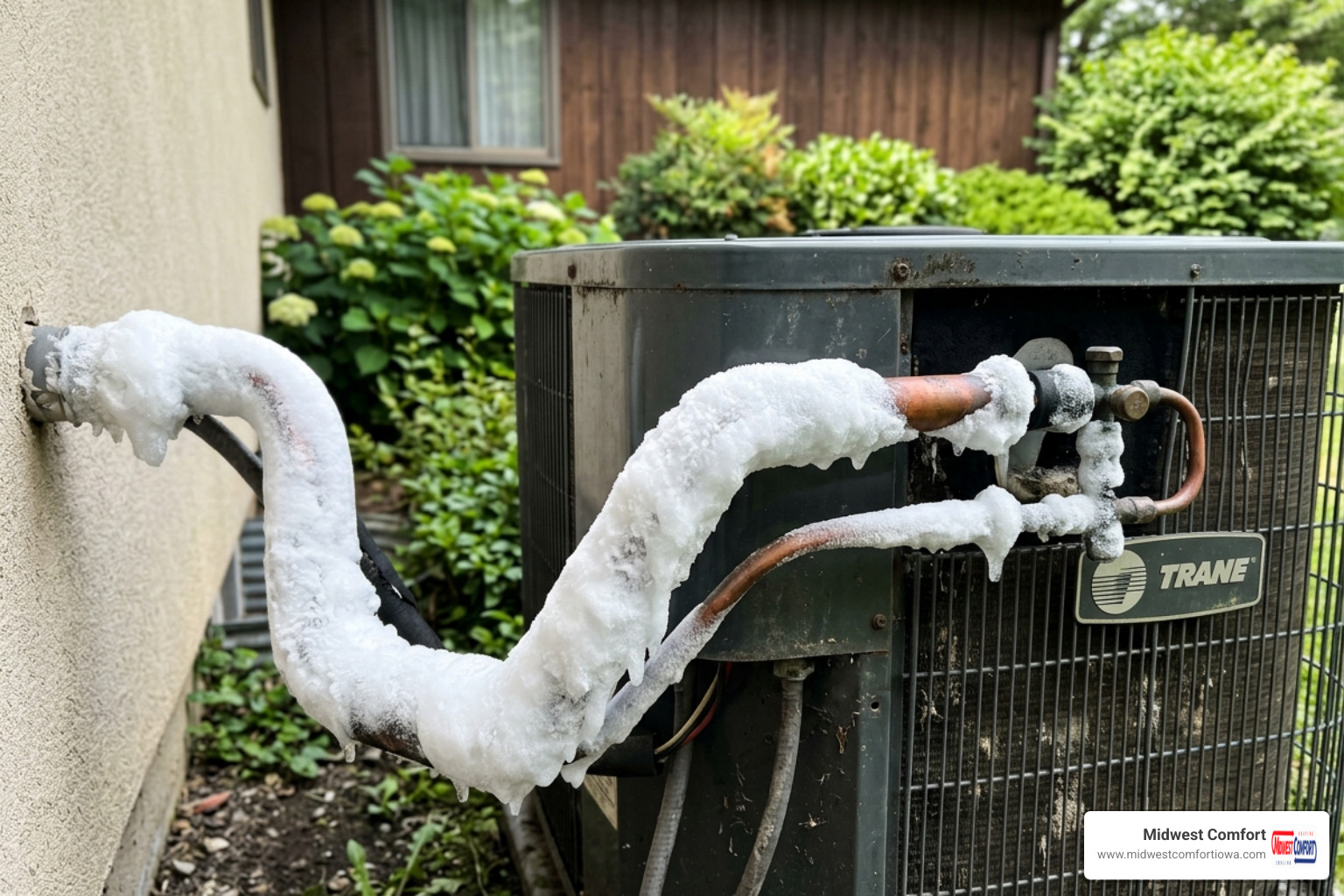
Before you even see a block of ice, your air conditioner will usually send out a few "S.O.S." signals. In our experience serving homeowners from Ankeny to Norwalk, the most common red flag is a sudden drop in cooling performance. You might notice the AC is running constantly, but the temperature inside your home is actually rising.
Other key indicators include:
- Warm Air: If you place your hand over a supply vent and feel lukewarm or warm air instead of a crisp breeze, your coils might be iced over.
- Weak Airflow: Ice acts as a physical barrier. As it builds up on the evaporator coil, it restricts the amount of air that can pass through your ductwork.
- Visible Frost: You might see white frost or solid ice on the copper refrigerant lines leading into the indoor unit or even on the exterior of the outdoor condenser.
- Hissing or Bubbling Noises: These sounds often indicate a refrigerant leak, which is a leading cause of freezing.
- Water Puddles: As the ice begins to melt (either naturally or when the system cycles off), the volume of water often exceeds what the condensate drain pan can handle, leading to puddles around your furnace or air handler.
If you notice these symptoms, it is vital to act quickly. Knowing what to do when your AC freezes up can save you from a much larger repair bill later in the season.
Ice Forming on Your AC Unit: Causes and What to Do
Understanding ice forming on your AC unit causes and what to do starts with a bit of basic science. Your AC doesn't actually "create" cold; it removes heat from your indoor air. This happens at the evaporator coil, where cold refrigerant absorbs heat. If there isn't enough warm air passing over that coil, or if the refrigerant itself is behaving incorrectly, the temperature of the coil drops below freezing. Moisture in our humid Iowa air then hits that sub-freezing metal and turns instantly to ice.
This creates a "cascading effect." A thin layer of frost makes it harder for air to pass through, which makes the coil even colder, which leads to even thicker ice. Before you know it, your unit is encased in a block of ice.
| Symptom | Likely Cause | Primary Fix |
|---|---|---|
| Weak airflow, visible ice | Airflow Restriction | Change filter, open vents |
| Hissing sound, ice on lines | Low Refrigerant | Professional leak repair |
| System won't shut off | Thermostat/Mechanical | Professional diagnostic |
| Ice only in the morning | Low Outdoor Temps | Adjust thermostat settings |
To get your system back on track, you can refer to this AC Repair Des Moines IA Guide for a broader look at common failures.
Airflow Restrictions: Ice Forming on Your AC Unit Causes and What to Do
Airflow is the lifeblood of your HVAC system. When it’s restricted, the evaporator coil doesn't have enough heat to "absorb," causing it to freeze.
- Dirty Air Filters: This is the number one cause of frozen ACs. We recommend changing your filters every 1 to 3 months, especially during the peak of a Des Moines summer.
- Blocked Vents: Many homeowners close vents in unused rooms to save energy. However, closing more than 20-25% of your vents increases static pressure and reduces airflow to the point of freezing the system. Ensure at least 80% of your vents are open and clear of furniture, rugs, or curtains.
- Dirty Coils: Dust and pet hair can act as an insulator on the evaporator coil, preventing it from absorbing heat efficiently.
For a deeper dive into these mechanical hurdles, check out our AC Repair Des Moines IA Complete Guide.
Low Refrigerant: Ice Forming on Your AC Unit Causes and What to Do
A common misconception is that refrigerant is like "gas in a car" that gets used up. In reality, your AC is a closed system. If your refrigerant is low, you have a leak.
When refrigerant levels drop, the pressure inside the evaporator coil also drops. According to the Joule-Thomson effect, this drop in pressure leads to a significant drop in temperature—often well below the freezing point. This is a serious issue that requires a professional to locate the leak, seal it, and recharge the system. If you notice your system is struggling to keep up, it might be why your AC is short cycling in Ankeny or other nearby areas like Johnston or Grimes.
How to Safely Defrost Your System
If you find a block of ice, your first instinct might be to grab a screwdriver and start chipping away. Stop! The coils and fins of your AC are incredibly delicate. Chipping at the ice can easily puncture a refrigerant line, turning a simple fix into a total system replacement.
Follow these steps to safely defrost your unit:
- Shut it Down: Turn the thermostat to the "Off" position immediately. This stops the cooling cycle and prevents further ice buildup.
- Activate the Fan: Switch your thermostat fan setting from "Auto" to "On." This keeps the indoor blower motor running, pulling warm indoor air over the frozen coils to help them melt naturally.
- Wait Patiently: Most units will defrost within 1 to 3 hours, though heavy ice blocks can take up to 24 hours.
- Monitor the Water: Keep an eye on the condensate pan. As the ice melts, make sure the water is draining properly to avoid water damage to your floors or furnace components.
- Check the Filter: While the system is thawing, check your air filter. If it's grey or clogged with dust, replace it with a fresh one.
Once the ice is completely gone and the unit is dry, you can try turning the AC back on. If it freezes up again shortly after, you likely have a refrigerant or mechanical issue that needs professional attention.
Preventative Maintenance to Avoid Future Freezing
The best way to deal with a frozen AC is to ensure it never happens in the first place. Living in the Midwest, our systems work hard to battle the humidity in places like Pleasant Hill and Altoona.
- Filter Schedules: Mark your calendar or set a phone reminder to check your filter every 30 days.
- Keep it Clear: Maintain at least a two-foot clearance around your outdoor condenser unit. Trim back weeds, grass, and bushes to ensure the unit can "breathe."
- Vent Management: Walk through your home and ensure no furniture or heavy drapes have moved to block your return or supply registers.
- Professional Tune-ups: We recommend a professional inspection at least once a year. A technician can check refrigerant pressures, clean the coils, and ensure the blower motor is moving the correct volume of air.
For more tips on keeping your system running smoothly, read our Guide to Air Conditioner Maintenance or learn why regular AC maintenance for optimal performance is the smartest investment you can make for your home.
Frequently Asked Questions about Frozen AC Units
How long does it take for an AC unit to defrost?
On average, a frozen AC will defrost in 1 to 3 hours if you turn the system off and run the fan. However, if the ice is thick enough to look like a solid block of crystal, it may take up to 24 hours. The ambient temperature in your home will also play a role; the warmer the house, the faster the melt.
Can I use a hairdryer to melt the ice on my AC?
You can use a hairdryer to speed up the process, but you must be extremely careful. Keep the dryer on a low or medium heat setting and hold it at least six inches away from the coils. Never use a high-heat heat gun, as the intense heat can damage the solder joints or the delicate aluminum fins on the coil.
Is it safe to run my AC if I see frost?
No. If you see frost, you should shut the system down immediately. Running a frozen AC forces the compressor to work under extreme stress. Since compressors are designed to pump vapor, not liquid, the "slugging" caused by unevaporated refrigerant returning to the compressor can cause permanent mechanical failure. Taking action early is how AC maintenance boosts performance and saves your equipment.
Conclusion
Dealing with ice forming on your AC unit causes and what to do doesn't have to be a nightmare. By understanding the balance of airflow and refrigerant, you can often solve simple icing issues yourself just by changing a filter or opening a vent.
However, if you've thawed your system and the ice keeps coming back, it’s time for a professional look. At Midwest Comfort, we bring honest, high-quality, and family-oriented HVAC expertise to our neighbors across Des Moines, Waukee, Ankeny, and the surrounding communities. We don't just "top off" your refrigerant; we find the root cause to ensure your home stays comfortable all summer long.
If your AC is giving you the cold shoulder (literally), don't wait for the compressor to fail. Contact us today for expert Air Conditioning Services and let our family take care of yours.


Get Your HVAC Serviced Today


