How to Choose the Right AC for Your Iowa Home
When it comes to staying comfortable in the Hawkeye State, we have to deal with more than just high temperatures. Iowa sits firmly in Climate Zone 5A, a region characterized by roughly 6,500 heating degree days per year and summers that can swing from pleasantly mild to oppressively hot and sticky in a matter of hours.
Choosing a cooling system here isn't just about picking a brand; it’s about system matching. Many homes in our service areas—from Des Moines and Ankeny to Waukee and Grimes—rely on existing ductwork that serves both a furnace and an air conditioner. Because our winters are so harsh, your AC choice must be compatible with your heating system to ensure the blower motor and airflow patterns work efficiently year-round.
Why Iowa’s climate changes what AC works best
In Iowa, we experience "shoulder seasons"—those weeks in spring and fall where you might need the heat at night and the AC by noon. A system that can’t handle these transitions efficiently will cost you more in the long run.
Humidity is perhaps the biggest factor. Iowa’s lush agricultural landscape contributes to significant moisture in the air. If your AC unit is just a "cold air machine" and doesn't prioritize dehumidification, you’ll find yourself lowering the thermostat just to feel comfortable, which wastes energy and puts unnecessary strain on the compressor. Proper insulation and air sealing in your attic and crawlspaces also play a massive role; without them, your brand-new AC will be fighting a losing battle against the Iowa sun.
How Iowa humidity affects comfort, efficiency, and AC performance
In the HVAC world, we talk about "latent load"—this is the energy required to remove moisture from the air. In a humid climate like ours, an AC has to work twice as hard. If your system isn't running long enough cycles, you end up with "clammy air"—it’s 72 degrees, but you feel sticky.
This often happens with oversized AC units. They cool the house so fast that they shut off before they have a chance to pull the moisture out. This leads to higher mold risks and a shorter equipment lifespan. For many of our neighbors in the Des Moines metro, we often recommend considering a whole-home dehumidifier paired with the AC to ensure that even on the muggiest July days, your indoor air remains crisp and dry.
Size the System Correctly Before You Compare Features
One of the most common mistakes we see is homeowners assuming "bigger is better." In reality, an oversized unit is just as problematic as an undersized one. To get it right, we use a Manual J load calculation. This isn't a guess; it’s a scientific look at your home’s square footage, the number of windows, the quality of your insulation, and even which way your house faces.
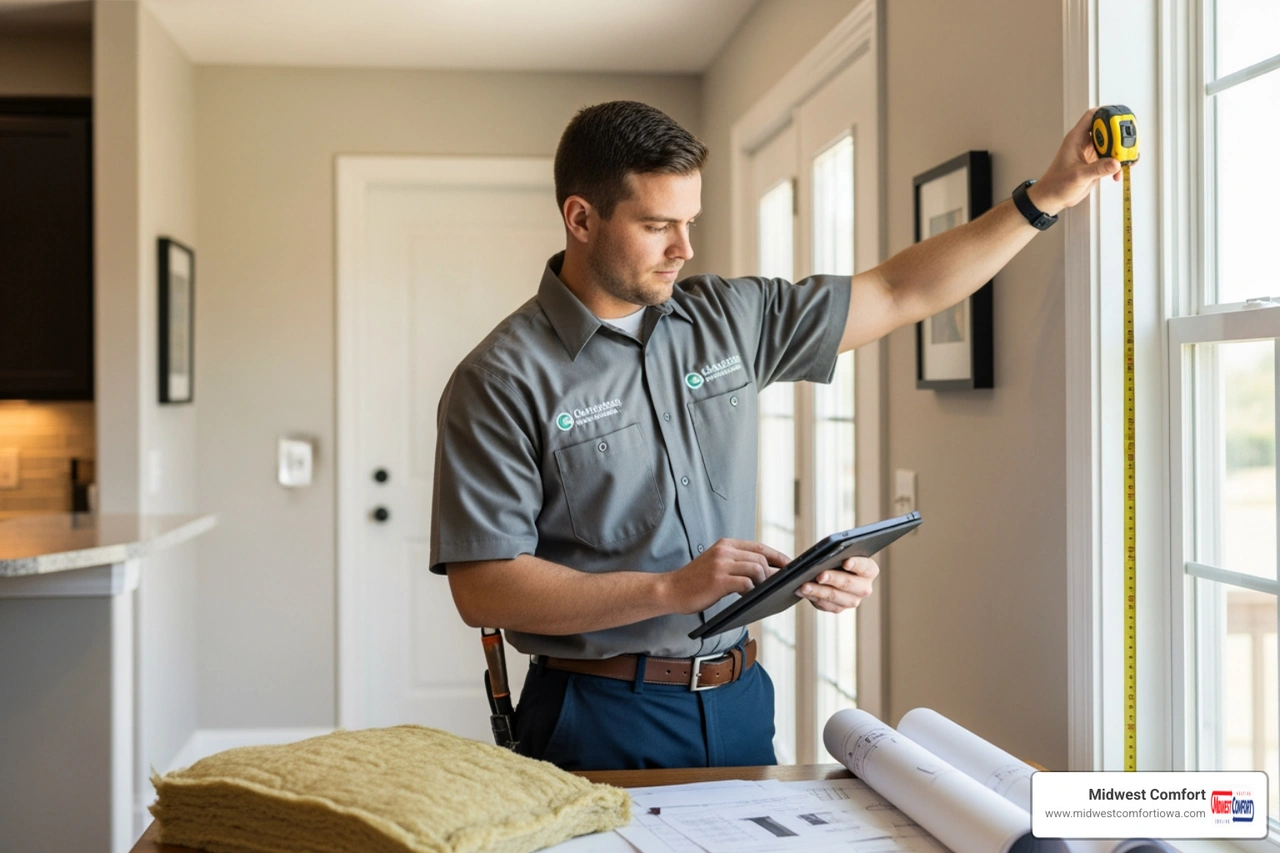
how to choose the right ac for your iowa home without oversizing or undersizing
While a general rule of thumb is that every 500 to 600 square feet requires one ton of cooling, this varies wildly based on your home's construction.
- 1.5 Tons: Usually sufficient for 600–1,100 sq. ft.
- 2 Tons: Often cools about 1,200 sq. ft.
- 5 Tons: Typically the maximum residential size, cooling up to 3,000 sq. ft.
Factors like ceiling height and sun exposure can shift these numbers. A home in Johnston with vaulted ceilings will have a much higher "volume" of air to cool than a standard ranch in Pleasant Hill with the same square footage.
What happens when an AC is too big or too small
If your unit is too small, it will run constantly, struggling to reach the set temperature. This leads to massive energy bills and a premature death for the system.
Conversely, if the unit is too big, it suffers from "short cycling." It turns on, blasts the house with cold air, and shuts off five minutes later. This constant starting and stopping is the hardest thing you can do to an electrical motor, and it leaves your home feeling humid because the air hasn't spent enough time crossing the cold evaporator coils to lose its moisture.
Why ductwork, layout, and insulation matter as much as unit size
You can buy the most expensive AC on the market, but if your ductwork is leaking or undersized, you won't feel the benefits. In many older Iowa homes, the ducts were designed for heating only, and pushing cold, heavy air through them requires a specific setup. We always recommend a Central AC Service check to ensure your returns are pulled from the right areas and your attic insulation isn't letting all that expensive "cool" escape through the roof.
Compare AC Types and Efficiency Ratings for Iowa Homes
As of May 2026, the technology available to Iowa homeowners is more efficient than ever. You have three main paths: Central AC, Ductless Mini-Splits, or Heat Pumps.
| Feature | Central AC | Ductless Mini-Split |
|---|---|---|
| Best For | Homes with existing ducts | Additions, garages, or older homes |
| Installation | Easier if ducts exist | Requires no ductwork |
| Zoning | Difficult/Requires dampers | Built-in room-by-room control |
| Efficiency | High (SEER2 15-20+) | Very High (SEER2 20-30+) |
Best AC system types for Iowa homes: central, ductless, or heat pump
For most homes in Altoona or Ankeny, a central AC system is the standard choice because the infrastructure is already there. However, ductless mini-splits are becoming incredibly popular for finished basements or home offices where the main system doesn't quite reach.
Heat pumps are the rising stars in Iowa. Modern cold-climate heat pumps can now handle our freezing winters, and when paired with a gas furnace in a "dual-fuel" setup, they offer the ultimate balance of electrification and reliable backup heat.
What SEER2 rating Iowa homeowners should target in 2026
SEER2 (Seasonal Energy Efficiency Ratio 2) is the updated standard for measuring efficiency. While the federal minimum is 15.2 SEER2, we generally suggest Iowa homeowners target 16 SEER2 or higher.
Upgrading from a 10-year-old unit to a high-efficiency model can cut your summer cooling costs by 20% to 40%. Given that Energy Efficient Air Conditioners pay for themselves over time through lower utility bills, the investment in a higher rating is usually the smartest financial move.
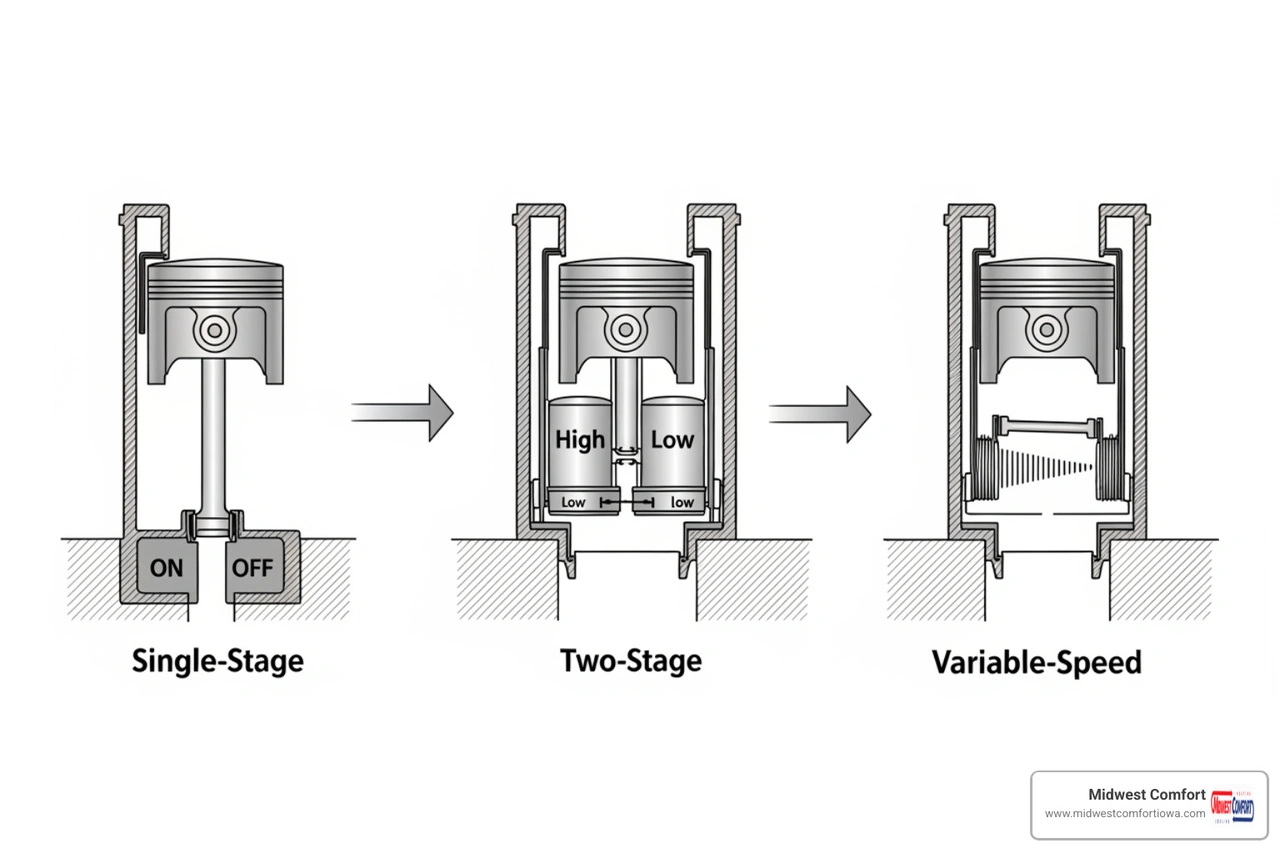
Single-stage vs two-stage vs variable-speed AC units
- Single-Stage: Like a light bulb—it's either 100% on or 100% off. It’s the most affordable upfront but the least efficient.
- Two-Stage: Has a "high" and "low" setting. It runs on the lower setting most of the time, which is quieter and better for dehumidification.
- Variable-Speed: The gold standard. It can adjust its speed in tiny increments (like a dimmer switch) to maintain the exact temperature within half a degree.
Pairing your AC with a furnace or dual-fuel system in Iowa
In our four-season climate, your AC doesn't live in a vacuum. It shares a blower motor and air handler with your furnace. If you have an old, inefficient furnace blower, a high-end variable-speed AC won't be able to do its job properly. This is why many homeowners choose a dual-fuel system, where an electric heat pump handles the cooling and moderate heating, and the gas furnace kicks in only when the Iowa temperatures drop below freezing.
Know When to Repair, Replace, or Upgrade
The average lifespan of a central air conditioner is about 10 to 15 years. If your unit was installed before 2015, you are likely using an older refrigerant (R-22) that is being phased out, making repairs increasingly expensive.
The right time to replace your AC unit in Iowa
If you’re noticing weak airflow, noisy operation, or if your energy bills have spiked despite normal usage, it’s time to look at our AC Replacement Guide. A good rule of thumb: if the cost of a repair multiplied by the age of the unit exceeds the cost of a new system, replacement is the logical choice.
how to choose the right ac for your iowa home when replacing an older system
When replacing an older system, don't just "swap like for like." Your home may have changed—maybe you added new windows or finished the basement. This is the perfect time to upgrade to smarter controls or a more efficient indoor coil. Sticking with the same system type (ducted vs. ductless) usually saves on infrastructure costs, but always have the ductwork inspected first to ensure it can handle the higher airflow requirements of modern high-efficiency units.
What to expect from AC installation planning
A professional installation isn't just a "drop and go." It involves a full home evaluation, load testing, and often a thermostat upgrade to handle new features like humidity control. For a deeper dive into the process, check out our AC Installation Des Moines IA Complete Guide. Most standard replacements in the Des Moines area take between 4 and 8 hours, meaning you can be back in comfort by dinner time.
Rebates, Tax Credits, Maintenance, and Contractor Selection
One of the best parts of choosing a new AC in 2026 is the financial help available. Between federal tax credits and local utility programs, the net cost of a high-efficiency system is often much lower than you’d expect.
Rebates, incentives, and tax credits available for Iowa homeowners
The federal 25C tax credit allows homeowners to claim a significant portion of the cost of high-efficiency cooling equipment. Additionally, many Iowa utility providers offer "Instant Discounts" or mail-in rebates for units that meet specific SEER2 and Energy Star requirements. We always help our customers gather the necessary AHRI certificates to ensure they don't leave money on the table.
How to choose a reliable HVAC contractor in Iowa
The quality of the installation is just as important as the brand of the equipment. When vetting a company in Polk City, Adel, or Norwalk, look for:
- Licensing and Insurance: Never hire an "unlicensed" tech; it voids your warranty.
- Written Scopes: Ensure the estimate includes everything from refrigerant lines to electrical permits.
- Load Calculations: If a contractor quotes you a size based only on square footage without looking at your windows or insulation, keep looking.
- Local Reputation: Check out our Best AC Company Des Moines Guide for tips on what to look for in a family-owned, local partner.
Maintenance tips that help your AC survive Iowa’s seasons
To make sure your new investment lasts 15 years instead of 10, follow these steps:
- Change filters monthly: Especially during Iowa's high-pollen spring days.
- Keep the outdoor unit clear: Cottonwood seeds and grass clippings can "choke" your AC coils.
- Schedule a Spring Tune-up: Professional AC Service Des Moines IA ensures your refrigerant levels are perfect and your condensate drain is clear before the first heat wave hits.
Quick signs you should schedule service instead of waiting
Don't ignore the warning signs. If you see ice buildup on the copper lines, hear strange grinding sounds, or feel warm air coming from the vents, it’s time for AC Repair Des Moines IA. Catching a small refrigerant leak early can save the entire compressor from failing.
Frequently Asked Questions About How to Choose the Right AC for Your Iowa Home
Is bigger always better when choosing an AC for an Iowa house?
Absolutely not. An oversized AC will "short cycle," meaning it turns on and off too frequently. This fails to remove humidity and leads to a "cold but clammy" environment. Proper sizing via a Manual J calculation is the only way to ensure comfort.
Can a heat pump really work in Iowa’s cold winters?
Yes! Modern cold-climate heat pumps are designed to work in temperatures well below zero. However, many Iowa homeowners prefer a dual-fuel system that uses the heat pump for cooling and moderate heating, with a gas furnace as a backup for those -20°F January nights.
Should you replace the furnace and AC at the same time?
While not strictly required, it is highly recommended. A new AC unit relies on the furnace's blower motor to move air. If you pair a brand-new, high-efficiency AC with a 20-year-old furnace, you won't get the SEER2 rating you paid for, and the mismatched components may lead to premature failure.
Conclusion
At Midwest Comfort, we know that your home is your sanctuary. As a family-owned business serving the Greater Des Moines area—from Polk City to Norwalk and everywhere in between—we take a family-oriented approach to your comfort. We don't believe in one-size-fits-all solutions; we believe in finding the right system that fits your home, your lifestyle, and your budget.
If you’re ready to stop sweating through the Iowa summers and start enjoying a more efficient, comfortable home, we’re here to help. Whether you need a quick repair or a full system consultation, our team is dedicated to providing honest, high-quality Air Conditioning services. Give us a call today, and let’s make sure your home stays cool, no matter how high the humidity climbs!
