
Why Heat Pump Advantages for Year-Round Comfort Matter for Des Moines Homeowners
The heat pump advantages for year-round comfort are hard to ignore — especially if you're a Des Moines homeowner tired of running a separate furnace in winter and a central AC in summer, only to watch energy bills climb higher every season.
Here's a quick look at what heat pumps bring to the table:
- One system, two jobs — heats in winter, cools in summer using the same equipment
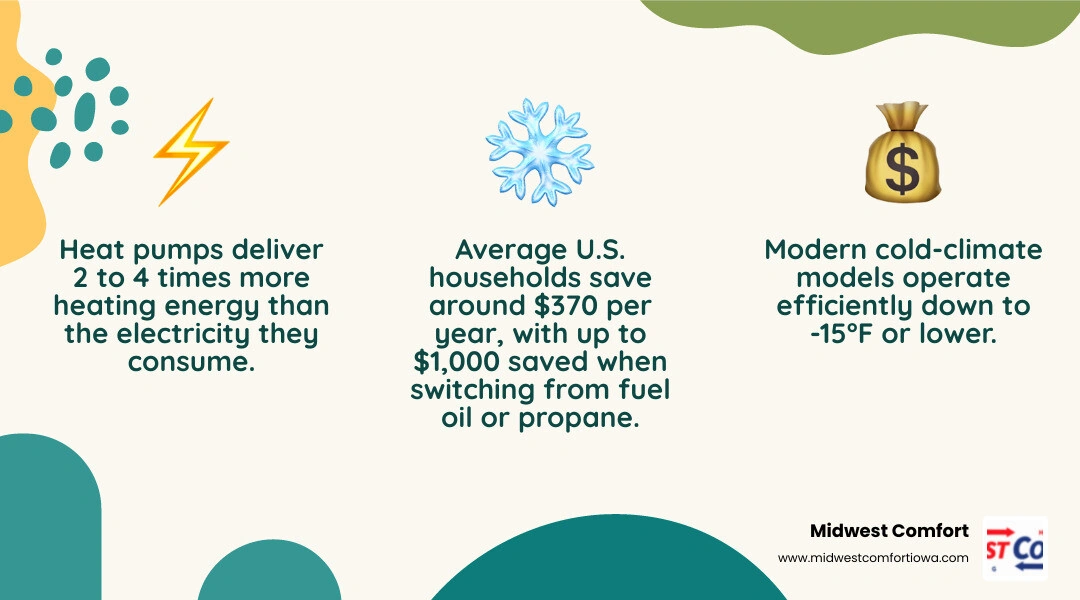
- Greater efficiency — delivers 2 to 4 times more heating energy than the electricity it uses
- Lower energy bills — average U.S. households save around $370 per year; those switching from fuel oil, propane, or electric resistance can save closer to $1,000
- Consistent comfort — runs continuously at low levels instead of blasting on and off, reducing hot and cold spots
- Better air quality — filters air more frequently due to continuous operation
- Quieter operation — indoor ductless units run as quietly as 20 to 40 decibels
- Reduced emissions — can cut household carbon dioxide output by roughly 40% compared to a gas furnace
- Proven in cold climates — modern cold-climate models operate effectively down to -15°F or lower, with backup heat available
Iowa winters are no joke. Many Des Moines homeowners assume heat pumps are better suited for the South — but that's an outdated idea. Technology has changed dramatically, and heat pumps now heat roughly half the homes in countries like Norway and Finland, where winters are far harsher than anything central Iowa typically sees. More than 115,000 have already been installed in Maine alone.
This guide walks through everything you need to know — from how heat pumps actually work, to cold-climate performance, system types, indoor air quality benefits, and what to ask before you install one.
Simple heat pump advantages for year round comfort glossary:
- cold climate heat pump performance in iowa winters
- heat pump benefits for iowa homeowners
- how does a heat pump work in extreme cold climates
Understanding the Heat Pump Advantages for Year-Round Comfort
To understand why a heat pump is such a game-changer for central Iowa homes, it helps to understand how it differs from a traditional HVAC system. Traditional systems generate heating or cooling. A furnace burns natural gas, propane, or oil to create heat, while an air conditioner uses electricity to strip heat from your indoor air and dump it outside.
A heat pump doesn't generate heat at all. Instead, it moves heat from one place to another. In the summer, it acts exactly like a high-efficiency air conditioner, extracting heat from inside your home and transferring it outdoors. In the winter, the process reverses. Using a specialized component called a reversing valve, the system changes the flow of refrigerant, pulls ambient heat from the outdoor air (yes, even cold winter air contains heat energy!), concentrates it, and pumps it inside.
Because moving heat requires significantly less energy than creating it, heat pumps are incredibly efficient. In fact, they can deliver up to 200% to 400% efficiency. That means for every single unit of electricity the system consumes, it delivers two to four units of heat. Compare that to a standard electric furnace, which is capped at 100% efficiency, or a high-efficiency gas furnace, which tops out around 98.5% AFUE.
Choosing this all-in-one setup provides a streamlined way to control your indoor climate without maintaining two separate, complex systems. To explore how these systems benefit families right here in our community, read our detailed breakdown on Heat Pump Benefits for Iowa Homeowners.
| Feature | Traditional HVAC (Furnace + AC) | Modern Heat Pump System |
|---|---|---|
| Primary Energy Source | Combustion of fossil fuels (gas/oil) + electricity | Electricity |
| Operation Method | Generates heat via combustion; removes heat for cooling | Transfers existing heat indoors or outdoors |
| Maximum Efficiency | ~98.5% AFUE (Gas Furnace) | 200% to 400%+ (COP of 2.0 to 4.0+) |
| Footprint | Two large units (indoor furnace + outdoor AC condenser) | One outdoor unit (plus indoor air handler or wall heads) |
| Airflow Style | Intermittent blasts of hot/cold air | Continuous, low-level steady airflow |
| Dehumidification | Standard cooling-cycle dehumidification | Superior, continuous variable-speed moisture removal |
Cold-Climate Performance and Dual-Fuel Heat Pump Systems
One of the most common myths we encounter in places like Johnston, Waukee, and Grimes is that heat pumps stop working when the temperature drops below freezing. While that might have been true for models built in the 1990s, modern technology has completely rewritten the rules.
Today's systems utilize variable-speed inverter-driven compressors. Traditional single-stage compressors are either 100% on or completely off, leading to frequent cycling, temperature swings, and high energy usage. In contrast, inverter technology allows the compressor to modulate its speed up or down in tiny increments, matching the precise heating or cooling load of your home. It runs continuously at a lower, ultra-efficient speed, maintaining a rock-steady indoor temperature.
When winter temperatures drop, these advanced compressors ramp up to extract every bit of available heat from the outdoor air. To learn more about how these systems hold up during our freezing local winters, check out our guide on Cold Climate Heat Pump Performance in Iowa Winters.
Cold-Climate Heat Pump Advantages for Year-Round Comfort in Winter
To tackle extreme Midwestern winters, manufacturers developed cold-climate heat pumps. These systems feature advanced technologies like vapor injection, which injects a cool mist of refrigerant into the compressor to boost heating capacity and efficiency at low temperatures.
An ENERGY STAR certified cold-climate heat pump can maintain full heating capacity down to 5°F without needing any auxiliary heating source. Even when outdoor temperatures plunge to -15°F or -20°F, these systems continue to operate, extracting heat from sub-zero air. This level of performance ensures that homes in areas like Windsor Heights stay cozy without relying solely on backup systems. You can read more about these localized efficiency solutions in our article on the Energy Efficient Heat Pump Windsor Heights page.
Dual-Fuel Systems for Extreme Cold Weather
While modern heat pumps can run in extreme cold, their heating capacity does naturally decrease as the outdoor air gets exceptionally frigid. In areas that experience prolonged sub-zero stretches, a dual-fuel (or hybrid) system is often the ultimate solution for year-round peace of mind.
A dual-fuel system pairs an electric heat pump with a high-efficiency gas furnace. The system is programmed with an automatic "switchover temperature" (usually between 15°F and 30°F). When outdoor temperatures are above this point, the heat pump handles all the heating, taking advantage of cheap, highly efficient electricity. If the temperature drops below the threshold, the system automatically switches to the gas furnace to provide rapid, intense heat during the coldest nights.
This hybrid approach optimizes energy consumption, keeps your utility bills as low as possible, and ensures your family is never left in the cold. If you are considering upgrading your system or need an emergency replacement in the northern metro, look over our Ankeny Emergency Heat Pump Install Guide for practical steps on choosing the right configuration.
Comparing Ducted, Ductless, Geothermal, and Absorption Systems
Not every home in central Iowa is built the same way. A historic home in Valley Junction might lack ductwork entirely, while a new construction home in Clive or Norwalk will have a fully designed central duct system. Fortunately, there is a heat pump configuration for every scenario.
Understanding the different options is key to choosing a system that fits your home's layout, your family's comfort goals, and your long-term energy plans. For a comprehensive look at all your choices, refer to our Heat Pump Services Complete Guide.
Ducted Heat Pump Advantages for Year-Round Comfort in Existing Homes
If your home already has a central duct system from an existing furnace and air conditioner, a ducted heat pump is a direct, seamless upgrade. The outdoor unit connects directly to your indoor air handler or gas furnace, sending conditioned air through your existing registers.
Because the system uses your home’s existing infrastructure, installation is straightforward. You get all the benefits of variable-speed comfort, balanced humidity, and lower energy bills throughout the entire house. This is a popular choice for families looking to simplify their HVAC setup. Learn more about how this upgrade can transform your day-to-day living environment by reading about how a Heat Pump Installation Enhance Comfort.
Ductless Mini-Split Systems for Zoned Comfort
For homes without ductwork—or for homeowners who want to heat and cool specific rooms independently—ductless mini-split heat pumps are the perfect solution. These systems consist of an outdoor condenser connected to one or more indoor wall-mounted, floor-mounted, or ceiling-recessed air handlers via small copper lines.
Ductless systems offer incredible flexibility and efficiency because they eliminate duct loss, which can account for more than 30% of a home's energy consumption. They also allow for true "zoned comfort." If you like your bedroom cool but want your living room warm, you can adjust each zone’s thermostat independently. This technology is incredibly popular for additions, finished basements, and older homes. If you live in the eastern suburbs, check out our resource on the Residential Heat Pump Altoona page to see how ductless systems fit local layouts.
Geothermal and Absorption Heat Pump Alternatives
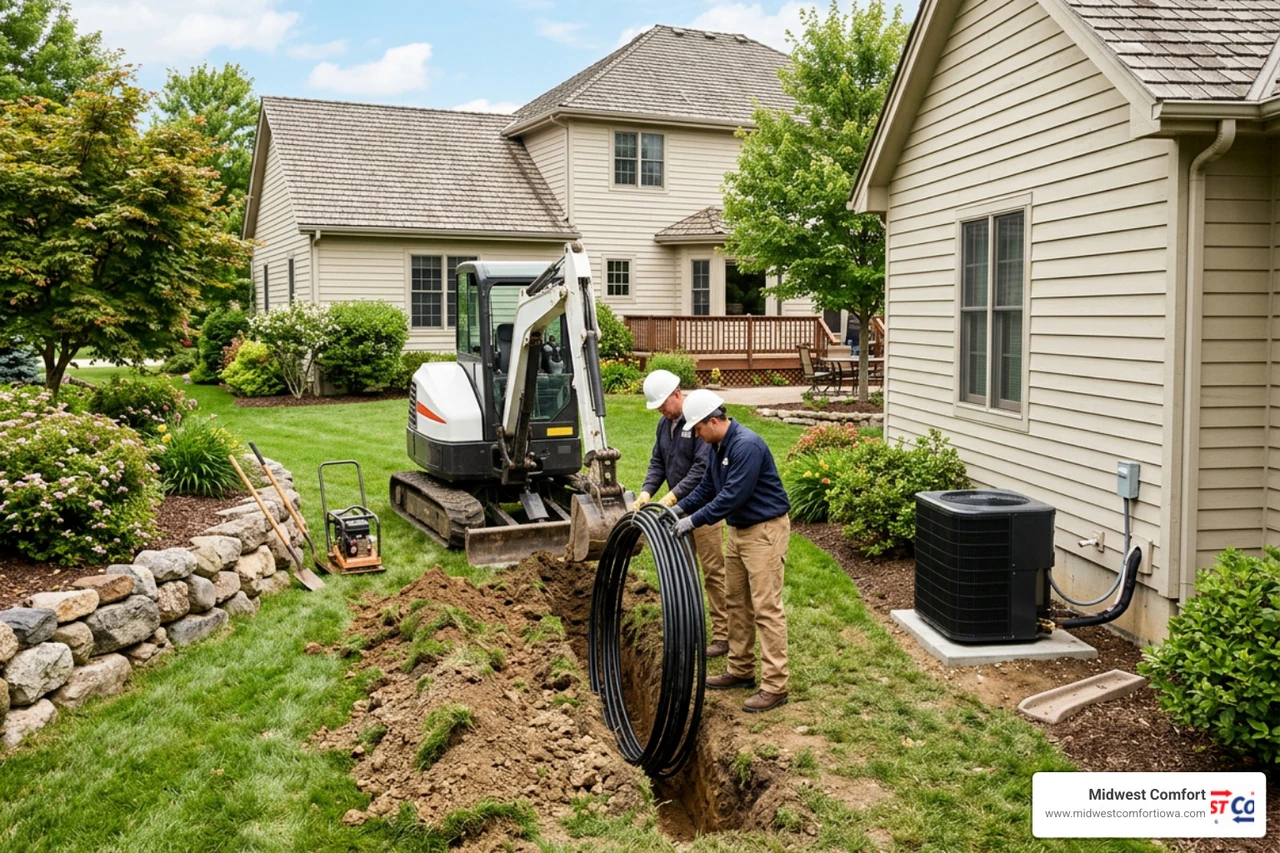
While air-source heat pumps pull heat from the outdoor air, geothermal (or ground-source) heat pumps pull heat from the earth. Just a few feet below the surface, the ground stays at a relatively constant temperature year-round (around 50°F to 55°F in Iowa). Geothermal systems use a series of underground pipes filled with water or refrigerant to transfer this stable thermal energy into your home.
Geothermal systems are the gold standard of efficiency, using up to 61% less energy than standard systems. While they require a more intensive installation process due to the underground loop system, their indoor components can last up to 24 years, and the ground loops themselves are rated to last over 50 years.
Absorption heat pumps, on the other hand, use heat sources like natural gas, solar-heated water, or geothermal water instead of electricity to drive the refrigeration cycle. While less common in standard residential settings, they represent another highly efficient alternative. To learn more about specialized installations in your area, read our guide on Who Specializes in Residential Heat Pump Services in Altoona IA.
Maximizing Indoor Air Quality, Humidity Control, and Lifespan
When homeowners talk about the heat pump advantages for year-round comfort, they often focus on utility bills and temperatures. But there is another major benefit that directly impacts how your home feels every single day: indoor air quality and humidity control.
Traditional HVAC systems blast hot or cold air into your home, quickly satisfy the thermostat, and then shut off. During those long "off" cycles, air sits stagnant, dust settles, and humidity levels creep up.
Because a variable-speed heat pump runs continuously at low, steady speeds, it keeps air constantly moving through your home's filtration system. This continuous circulation means your air filter catches more dust, pet dander, pollen, and airborne allergens before they can settle on your furniture or irritate your lungs.
Furthermore, during the muggy Iowa summers, a heat pump's continuous low-speed operation makes it an incredible dehumidifier. It extracts moisture from the air far more effectively than a standard air conditioner, which often cycles off before it can properly lower the indoor humidity. Lower humidity means you feel cooler at higher temperatures, allowing you to save even more energy. To learn more about how these factors combine to create a healthier home, read about Heat Pump Installation for Comfort.
Seasonal Maintenance and System Longevity
Like any hard-working machine, a heat pump needs regular care to perform at its best. Because a heat pump works hard during both the heating and cooling seasons, scheduling professional tune-ups twice a year is essential—once in the spring before the summer heat hits, and once in the fall before the winter freeze sets in.
During these seasonal checkups, an experienced technician will:
- Clean the indoor and outdoor coils
- Check refrigerant levels and inspect lines for leaks
- Test electrical connections and amp draws
- Verify that the reversing valve operates smoothly
- Clear the condensate drain line to prevent water damage
As a homeowner, the most important job you have is keeping your air filters clean. Because heat pumps run more continuously, they move a larger volume of air over time. We recommend checking your filter every 30 to 60 days, especially if you have pets or allergies. Additionally, make sure to keep the outdoor unit clear of leaves, grass clippings, snow, and ice. A minimum clearance of 24 inches around the outdoor unit ensures proper airflow and peak efficiency.
To keep your system running smoothly through every change in the weather, follow our handy Heat Pump Maintenance Checklist for Each Season. Regular care doesn't just prevent breakdowns; it directly impacts how many years of service you get out of your investment. To understand this connection better, see How Proper Maintenance Extends Heat Pump Lifespan.
Preventing Common Heat Pump Issues
Understanding the differences in how these systems operate can save you from unnecessary stress. For example, many homeowners panic when they see their heat pump steaming or dripping water in the winter. This is actually a normal part of the "defrost cycle," where the system temporarily reverses to melt frost buildup on the outdoor coils.
However, issues like refrigerant leaks, restricted airflow from dirty filters, or miscalibrated sensors can cause the system to work harder than it should, driving up your energy bills and causing premature wear. To learn more about the unique care these systems require compared to traditional air conditioners, read our guide on Heat Pump Maintenance vs AC Maintenance Differences.
By staying proactive, you can catch minor issues before they turn into major repairs. For a deep dive into troubleshooting and prevention, check out our article on Common Heat Pump Problems and How to Prevent Them.
Frequently Asked Questions About Heat Pumps
Do heat pumps work effectively in freezing winter temperatures?
Yes! Modern cold-climate heat pumps are specifically engineered to handle sub-zero temperatures. Thanks to variable-speed inverter compressors and advanced refrigerant management, they can extract heat from outdoor air even when temperatures plunge to -15°F or lower. For homes in areas with prolonged sub-zero stretches, pairing a heat pump with a gas furnace in a dual-fuel system provides the ultimate backup security.
Can a heat pump completely replace both my furnace and air conditioner?
In many homes, absolutely. Because a heat pump features a reversing valve, it can seamlessly switch between heating and cooling modes, serving as a true all-in-one year-round comfort system. However, in colder climates like central Iowa, many homeowners opt for a hybrid dual-fuel system to ensure they have a gas furnace backup for those rare, extreme sub-zero winter days.
What are the main differences between air-source and geothermal heat pumps?
The primary difference is where they extract heat. Air-source heat pumps pull heat from the outdoor air, making them simpler and quicker to install. Geothermal heat pumps pull heat from the constant temperatures underground using a series of buried pipes (ground loops). While geothermal systems are more highly efficient and have a longer lifespan, they require a more complex, invasive installation process compared to air-source units.
Conclusion
Upgrading to a heat pump is one of the smartest investments you can make for your home's comfort, your energy bills, and the environment. By moving heat rather than burning fuel, these systems deliver unmatched efficiency, whisper-quiet operation, and superior indoor air quality through every season of the year.
At Midwest Comfort, we are proud to be Des Moines' trusted, family-owned HVAC partner. We believe in providing honest, high-quality, and cost-effective comfort solutions tailored to your family's unique needs. Whether you live in Polk City, Granger, Waukee, Windsor Heights, or Altoona, we are here to help you navigate your home comfort journey with our customer-first approach, helpful loyalty programs, and flexible payment options.
If you are ready to experience the incredible heat pump advantages for year-round comfort, let's start the conversation. For expert guidance on finding the perfect system for your home, explore our Best Heat Pump Installation Des Moines guide, or visit our primary heat pump services page to schedule your professional home consultation today!
