Why Knowing How to Prepare for the Shift to Low GWP Refrigerants Matters for Des Moines Homeowners
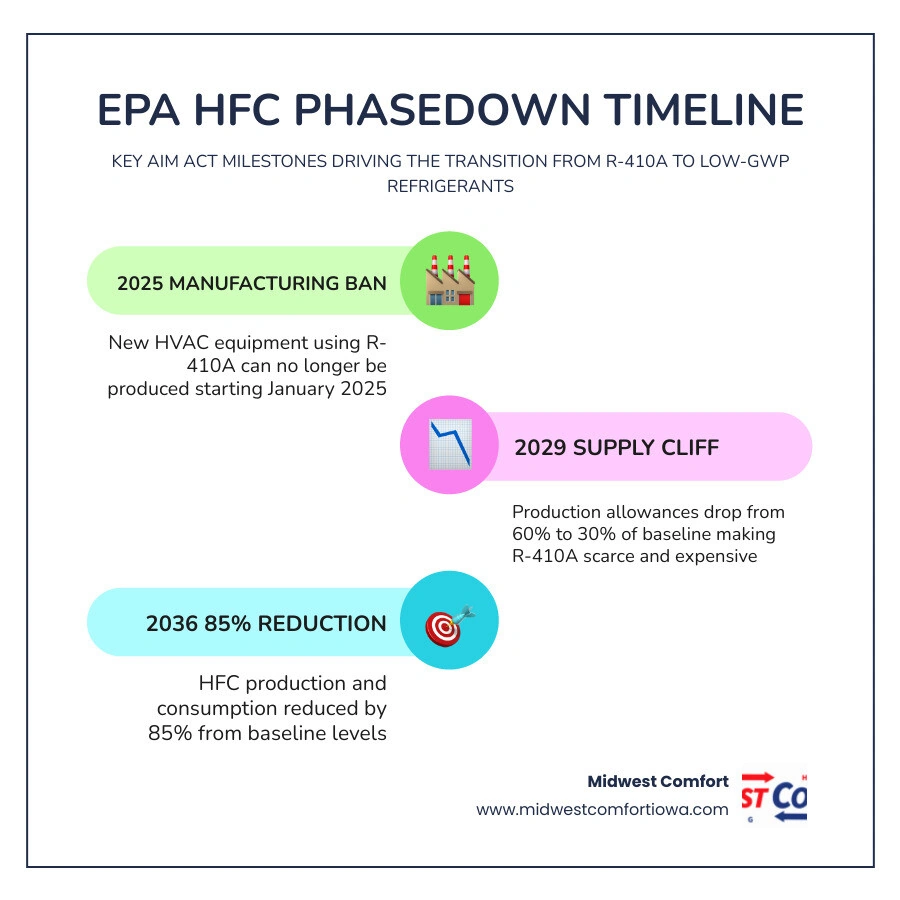
How to prepare for the shift to low GWP refrigerants is one of the most important questions Des Moines homeowners are asking right now — and for good reason. If your home runs on a standard air conditioner or heat pump, the refrigerant inside that system is almost certainly R-410A. As of January 1, 2025, manufacturers can no longer produce new HVAC equipment using R-410A. The EPA's AIM Act is driving an 85% phasedown of high-GWP refrigerants like R-410A by 2036, and the next major supply cut arrives in 2029 — when production allowances drop from 60% to just 30% of baseline. That means R-410A will get harder to find and more expensive to service with every passing year.
Here's a quick overview of the key steps to prepare:
- Audit your system - Check the outdoor condenser nameplate to identify your current refrigerant type and note the system's age and condition.
- Review your leak history - Repeated refrigerant leaks on an aging system are a strong signal that replacement makes more financial sense than continued repairs.
- Understand your options - New systems use low-GWP A2L refrigerants like R-454B or R-32, which are not drop-in replacements for R-410A and require new equipment.
- Plan your upgrade timeline - Systems older than 10-12 years should be prioritized for replacement before R-410A supply tightens further.
- Work with a qualified local HVAC professional - A licensed technician familiar with the new A2L safety requirements and local codes is essential for any upgrade.
This guide walks Des Moines homeowners through each of those steps in detail — covering the regulations behind the change, the new refrigerant options available, what to do with your existing system, and how to plan a smooth, cost-effective transition.
Regulatory Drivers Behind the Refrigerant Transition
The fundamental force driving the heating and cooling industry toward this massive shift is federal environmental policy. To understand why your home's air conditioner is affected, we have to look at the American Innovation and Manufacturing (AIM) Act. Enacted by Congress, the AIM Act grants the U.S. Environmental Protection Agency (EPA) the authority to phase down the production and consumption of hydrofluorocarbons (HFCs).
HFCs like R-410A have been the standard working fluids in residential air conditioners for the last two decades. While they do not deplete the ozone layer like the older chlorofluorocarbons (CFCs) and hydrochlorofluorocarbons (HCFCs) like R-22, they possess an incredibly high Global Warming Potential (GWP). GWP is a relative measure of how much heat a greenhouse gas traps in the atmosphere compared to carbon dioxide ($CO_2$), which has a baseline GWP of 1.
For perspective, R-410A has a GWP of 2,088. This means releasing one pound of R-410A into the atmosphere has the same warming impact as releasing 2,088 pounds of $CO_2$. Under the EPA Technology Transitions Rule, the agency has established a strict GWP ceiling of 700 for new residential and light commercial air conditioning and heat pump systems. Because R-410A sits far above this limit, its era in newly manufactured equipment has officially come to an end. For a deeper look into how these environmental policies affect your household cooling setup, you can read our comprehensive Refrigerant Guidelines for US Homes.
Key Compliance Deadlines for New HVAC Systems
The transition timeline is structured to prevent sudden market disruptions while ensuring rapid environmental progress. The primary milestones include:
- January 1, 2025 (Manufacturing Ban): After this date, manufacturers were prohibited from producing or importing new residential central air conditioners, heat pumps, and chillers that utilize refrigerants with a GWP of 700 or higher.
- January 1, 2026 (The Sell-Through Deadline): This marks the end of the transition period for installing newly manufactured R-410A split-system air conditioners. After this date, only systems compliant with the sub-700 GWP limit can be installed in residential applications.
- January 1, 2026 (VRF Systems): Variable Refrigerant Flow (VRF) systems, often used in larger homes or light commercial properties, must transition to low-GWP alternatives by this date.
This phased approach means that as we navigate 2026, the inventory of R-410A equipment is rapidly drying up. Homeowners looking to replace an aging system must now look to modern, compliant alternatives. To learn more about how the old industry standard stacks up against the leading next-generation replacement, check out our breakdown of R410A vs R454B Refrigerant: What You Need to Know.
Comparing Low-GWP Alternatives: R-32, R-454B, and CO₂
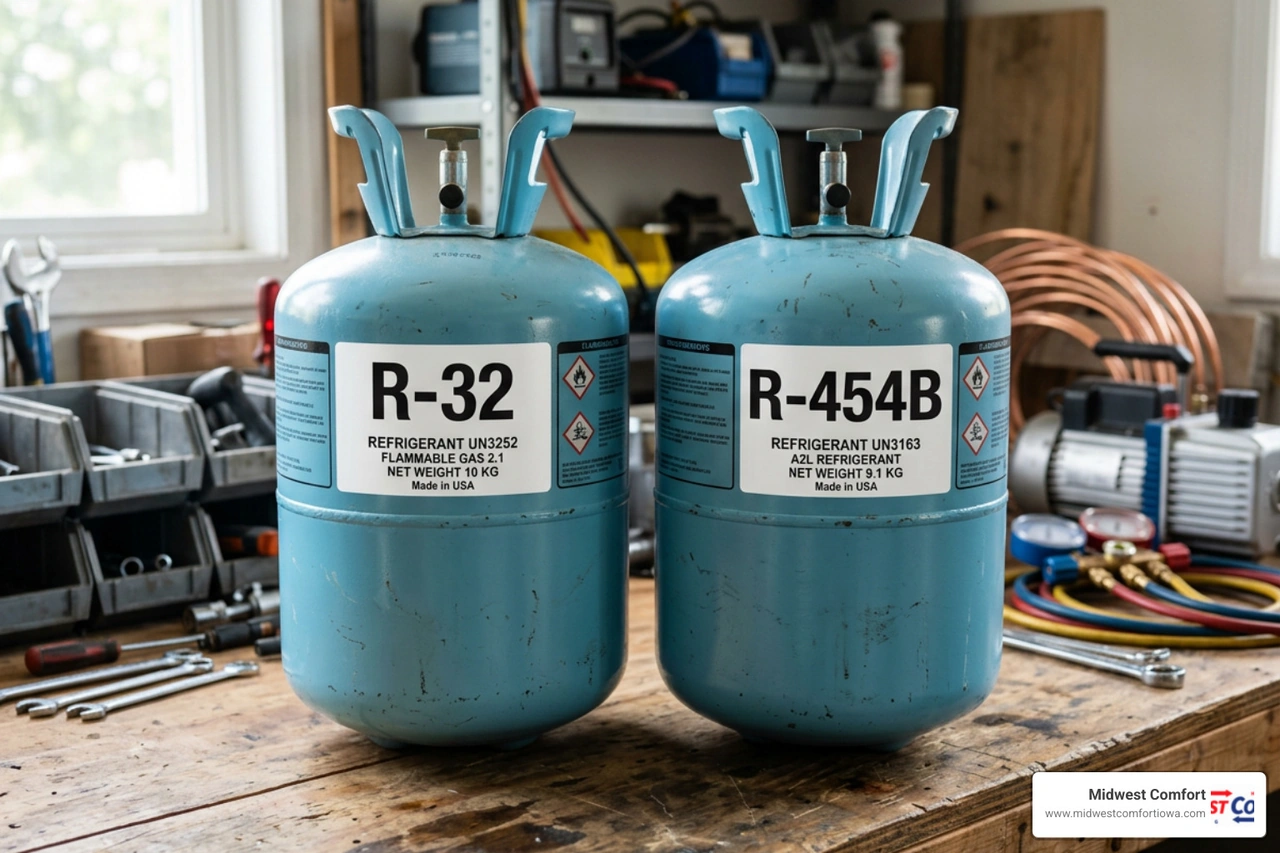
To meet the EPA's mandate, HVAC manufacturers have coalesced around two primary low-GWP refrigerant options for residential applications: R-32 and R-454B. While natural refrigerants like carbon dioxide ($CO_2$, also known as R-744) are highly effective in commercial refrigeration and industrial cold storage, they operate under incredibly high pressures that make them impractical for standard home central air conditioning systems.
The table below outlines how these different refrigerants compare across safety, environmental impact, and performance metrics:
| Refrigerant | Safety Classification | Global Warming Potential (GWP) | Relative Charge Size | Average System Efficiency |
|---|---|---|---|---|
| R-410A (Legacy) | A1 (Non-Flammable) | 2,088 | 100% | Baseline |
| R-32 (New standard) | A2L (Mildly Flammable) | 675 | ~60% to 70% | Up to 10% higher than R-410A |
| R-454B (New standard) | A2L (Mildly Flammable) | 466 | ~90% | Up to 5% higher than R-410A |
| CO₂ (R-744) (Natural) | A1 (Non-Flammable) | 1 | N/A (Commercial) | High in optimized systems |
Both R-32 and R-454B offer dramatic improvements in environmental safety. R-32 reduces GWP by roughly 68% compared to R-410A, while R-454B cuts the climate impact by an impressive 78%. Furthermore, R-32 is a single-component refrigerant, meaning it does not glide or separate (fractionate) if a leak occurs, making it exceptionally easy to reclaim and recycle. R-454B is a blend of R-32 and an HFO (hydrofluoroolefin) called R-1234yf, offering the lowest GWP of the primary residential choices.
Understanding A2L Mildly Flammable Refrigerants
You might have noticed that both R-32 and R-454B carry an A2L safety classification. To understand what this means, we look to the ASHRAE safety standard:
- "A" designates lower toxicity (perfectly safe for home occupancy).
- "2L" indicates mild flammability with a low burning velocity.
Unlike highly flammable "Class 3" hydrocarbons like propane (R-290), A2L refrigerants are incredibly difficult to ignite. In laboratory testing, these gases require a high-energy open flame or a continuous direct spark to ignite, and even then, they burn at a very slow velocity (less than 10 centimeters per second). They will not sustain a flame on their own if the ignition source is removed.
Despite this low risk, safety remains a top priority. Modern HVAC systems designed for A2L refrigerants incorporate advanced safety features:
- Refrigerant Detection Systems (RDS): Built-in sensors located near the indoor evaporator coil constantly monitor for leaks.
- Automatic Blower Activation: If a leak is detected, the system immediately shuts down the compressor and turns on the indoor blower fan to safely dilute the refrigerant concentration below its lower flammability limit.
- Spark-Proof Electrical Components: Contactors, relays, and fan motors in A2L systems are sealed or intrinsically spark-proof to eliminate potential ignition sources.
How to Prepare for the Shift to Low GWP Refrigerants in Your Home
Transitioning to new technology doesn't have to be overwhelming. By taking a proactive approach, you can avoid emergency situations on the hottest days of summer in Polk County. Preparing your home starts with understanding what equipment you currently have and mapping out its remaining life. For practical tips on keeping your existing setup running smoothly while you plan, refer to our guide on How to Extend the Life of Your AC in the Midwest or consult our comprehensive HVAC Maintenance Des Moines Guide.
Step 1: Audit Your Existing System to Prepare for the Shift to Low GWP Refrigerants
The very first step is to locate your outdoor condenser unit and read the manufacturer's nameplate. This metal label contains vital information:
- Refrigerant Type: Look for "R-410A," "R-22," or "R-407C."
- Manufacture Date: If your system was manufactured before 2015, it is entering its twilight years.
- Leak History: Have you had to call a technician to "top off" your refrigerant over the last few summers?
If your air conditioner runs on R-22, it is highly recommended to plan an immediate replacement. Virgin R-22 production was completely banned in 2020, and servicing these units has become incredibly expensive. If your system runs on R-410A and is over 10 to 12 years old, you are in the prime window for an upgrade. To help you evaluate whether it is time to make the switch, read our article When Should You Replace Your Air Conditioner.
Step 2: Plan Your Upgrade Path to Prepare for the Shift to Low GWP Refrigerants
If your audit reveals that your cooling system is approaching the end of its reliable lifespan, the next step is to align your replacement timeline with your household capital planning. Rather than waiting for a complete system breakdown during a humid July heatwave, proactive planning allows you to choose the ideal equipment, secure convenient financing or manufacturer loyalty programs, and schedule the installation at your convenience.
Upgrading to a modern, low-GWP system comes with a major silver lining: energy efficiency. Today's A2L systems are engineered to be up to 10% to 15% more efficient than older R-410A models. Over the lifespan of the equipment, these energy savings can offset a significant portion of the initial investment. To explore high-efficiency options that can lower your monthly utility bills in Des Moines, check out our resources on Energy Efficient Air Conditioners and our step-by-step AC Replacement Guide.
Equipment Compatibility: Retrofit vs. Replacement Decisions
A common question we hear from homeowners in Waukee, Johnston, and Ankeny is: "Can I just drain my existing R-410A system and refill it with R-454B or R-32?"
The short answer is absolutely not. The idea of a "drop-in" low-GWP refrigerant for existing residential systems is a dangerous myth. There are several critical engineering reasons why retrofitting is impossible:
- Operating Pressures: A2L refrigerants operate under different pressure curves than R-410A. Standard compressors and expansion valves are not calibrated to handle these variations safely or efficiently.
- Lubricant Compatibility: Compressors rely on specific synthetic oils to lubricate moving parts. The oils used in older systems are often incompatible with the chemical properties of new low-GWP blends, which can lead to rapid compressor failure.
- Missing Safety Infrastructure: Existing R-410A systems do not have the built-in safety sensors (RDS), control boards, or spark-proof electrical enclosures required by UL 60335-2-40 safety standards for A2L equipment.
Attempting to force an A2L refrigerant into a system designed for an A1 refrigerant is not only a violation of EPA regulations, but it also poses serious physical safety risks and completely voids all manufacturer warranties. A complete system replacement—including both the outdoor condenser and the indoor evaporator coil—is required to transition to low-GWP technology. To ensure your new system is sized and installed perfectly, learn about the Benefits of Expert HVAC Installation.
Managing Existing R-410A Systems and Leak Prevention
If your R-410A air conditioner is relatively new and running perfectly, there is no need to panic. The EPA does not require homeowners to prematurely retire operational R-410A systems. You can legally run your current unit for its entire natural lifespan.
However, because the AIM Act is rapidly squeezing the production of virgin R-410A, the supply of this gas will continuously shrink. To keep your system running without facing exorbitant repair costs down the road, you must prioritize leak prevention:
- Schedule Annual Maintenance: Professional cleanings and inspections allow technicians to spot tiny vibration wear points before they turn into major refrigerant leaks.
- Watch for Warning Signs: Hissing sounds, ice buildup on the indoor coil, or a sudden drop in cooling performance are classic signs of a leak.
- Insist on Reclaimed Gas: If your system does require a repair, ensure your service provider uses certified reclaimed R-410A, which helps support the circular economy and keeps supply available for older systems.
Frequently Asked Questions About the Refrigerant Transition
Can I retrofit my existing R-410A system with a low-GWP refrigerant?
No, you cannot. Converting a system designed for an A1 refrigerant (like R-410A) to run on an A2L refrigerant (like R-454B or R-32) is strictly prohibited by safety standards and federal regulations. The systems operate under different pressures, utilize different lubricants, and lack the essential refrigerant leak detection sensors and spark-proof electrical components required for safe A2L operation. To transition to a low-GWP refrigerant, you must replace the entire system.
Will R-410A still be available for AC repairs in 2026?
Yes, R-410A will still be available for servicing existing systems throughout 2026 and beyond, but the supply of newly manufactured (virgin) gas is shrinking rapidly under the AIM Act phasedown. As a result, the HVAC industry will rely heavily on reclaimed and recycled R-410A to service older units. While you will be able to get your system repaired, the cost of R-410A refrigerant is expected to rise significantly as the 2029 quota cliff approaches, making leak prevention and regular maintenance more critical than ever.
Are the new A2L refrigerants safe for residential use?
Yes, A2L refrigerants are incredibly safe and have been used successfully in millions of homes across Europe and Australia for over a decade. While classified as "mildly flammable," they are exceptionally difficult to ignite and require a consistent, high-energy ignition source to burn. Furthermore, residential systems designed for A2Ls include built-in safety mechanisms—such as leak detection sensors that automatically shut down the compressor and turn on the indoor blower fan to safely disperse any leaking gas.
Conclusion
The transition to low-GWP refrigerants is one of the most significant changes to hit the heating and cooling industry in decades. While the regulatory landscape can seem complex, preparation is simple: know what system you have, keep it well-maintained to prevent leaks, and plan your upgrade path proactively rather than waiting for an emergency breakdown.
At Midwest Comfort, we are dedicated to helping our neighbors navigate this transition with ease. As a family-owned business serving Des Moines and surrounding areas like Waukee, Altoona, Grimes, Clive, and Ankeny, we pride ourselves on providing honest, high-quality, and cost-effective HVAC solutions tailored to your family's unique needs. Whether you need to keep your current R-410A system running at peak efficiency or you are ready to explore a modern, energy-efficient low-GWP replacement, our experienced team is here to guide you every step of the way.
Contact Midwest Comfort for expert AC services in Des Moines today to schedule your comprehensive system audit and ensure your home stays cool, comfortable, and compliant for years to come.
