Is Your AC on Borrowed Time? How to Know When It's Time to Replace Your Air Conditioner
When should you replace your air conditioner is one of the most important questions a homeowner can face — especially heading into an Iowa summer. The short answer: if your unit is 10 to 15 years old, breaking down often, or driving up your energy bills, it's likely time to start thinking about a replacement.
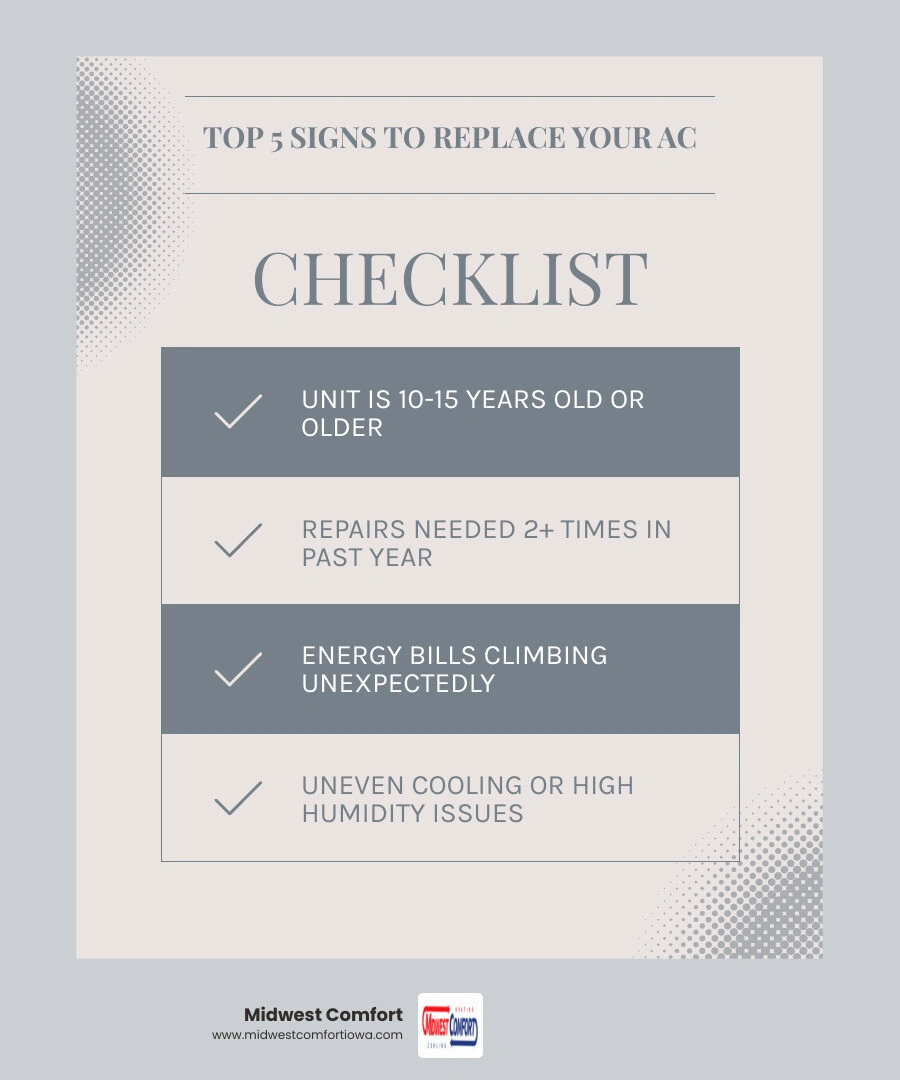
Quick answer — replace your AC if:
- Your unit is 10 to 15 years old (or older)
- You've needed repairs two or more times in the past year
- Your energy bills keep climbing with no clear explanation
- Your home has uneven cooling or humidity problems
- Your system uses R-22 refrigerant (phased out since 2020)
Most homeowners don't think about their air conditioner until it stops working — usually on the hottest day of the year. That leads to rushed decisions, added stress, and limited options. The good news? There are clear warning signs that show up well before a total breakdown. Knowing what to look for gives you time to plan, compare options, and make a smart choice for your home and budget.
In this guide, we'll walk you through everything you need to know — from lifespan and repair thresholds to efficiency upgrades and the best time to act.
For a deeper dive into the process, check out our AC Replacement Guide.
Understanding the Lifespan of an Iowa Air Conditioner
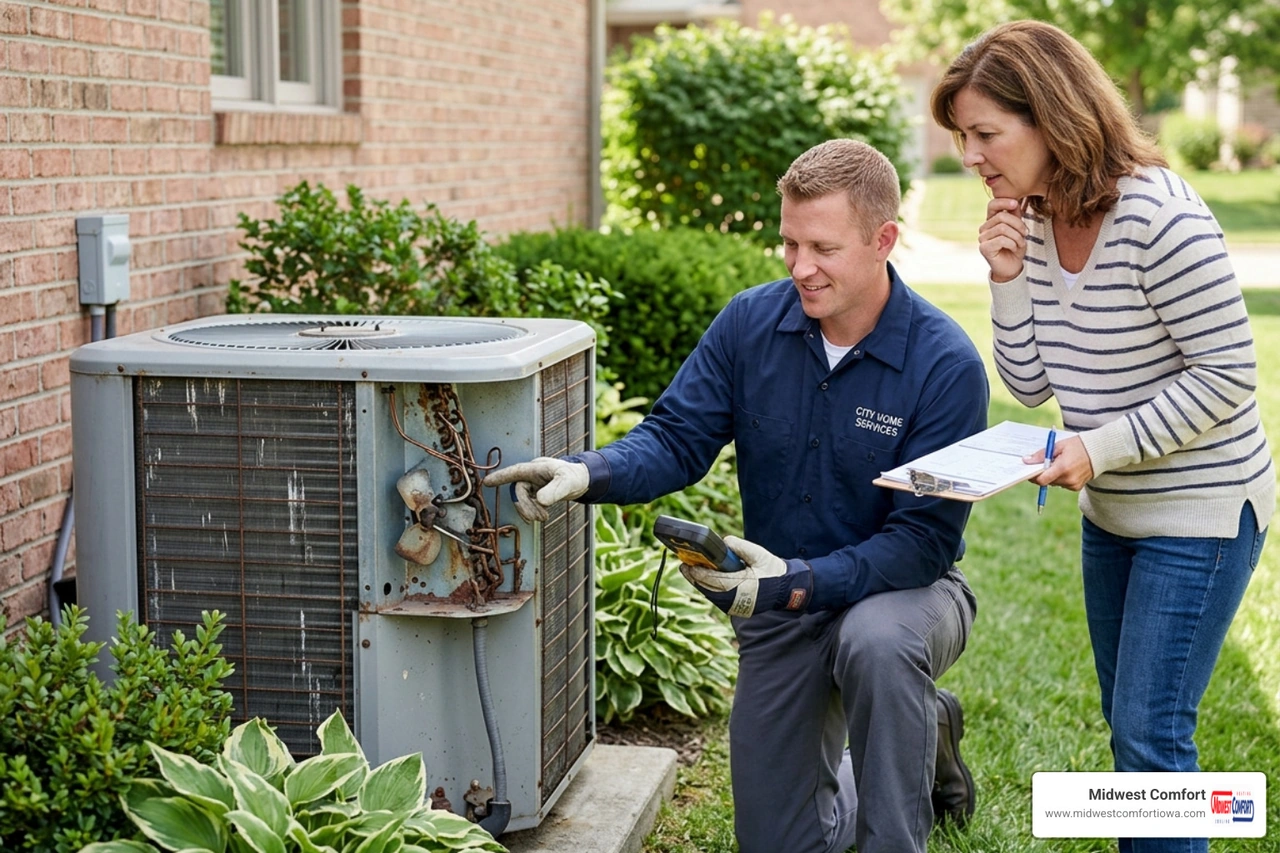
In the HVAC world, age isn't just a number; it’s a primary indicator of reliability. On average, central air conditioners last between 10 and 15 years. While some high-quality units can push toward the 20-year mark with impeccable care, they are often the exception rather than the rule.
In Iowa, our systems face a unique set of challenges. We experience high humidity during the peak of summer, which forces your AC to work double duty: cooling the air and removing moisture. This intense seasonal usage, followed by months of sitting idle in freezing temperatures, can take a toll on mechanical components.
We often find that systems hit a "critical threshold" around year 12. At this point, efficiency typically degrades by 25% to 35%, even if the unit has been maintained. The internal parts—like the compressor or the motor—simply begin to wear out from a decade of heavy lifting. If you aren't sure how old your system is, you can usually find the manufacture date on the nameplate of the outdoor condenser. Understanding this timeline is the first step in deciding Time to Replace Your Old HVAC System.
Key Indicators for when should you replace your air conditioner
If your system is entering its second decade, you shouldn't wait for a total catastrophic failure. There are several red flags that suggest your unit is on its last legs. One of the most obvious signs is the frequency of repairs. If you find yourself calling us every summer for a "quick fix," those costs are likely better spent on a down payment for a new, reliable system.
Listen to your unit as well. While no AC is silent, it should produce a steady, predictable hum. If you start hearing grinding, squealing, or loud banging, it often points to a failing compressor or a loose belt. Similarly, pay attention to odors. A burning smell could indicate an electrical issue or an overheating blower motor, while a persistent musty smell often suggests mold growth within the unit or the ductwork. For residents in the metro area, recognizing these signs early is vital for AC Replacement Des Moines IA.
Performance Issues and when should you replace your air conditioner
Performance issues often manifest as "hot spots" in your home. If your living room is a meat locker but your upstairs bedroom feels like a sauna, your AC may no longer have the capacity to move air effectively.
Poor airflow is another major sign. If you feel only a faint breeze coming from your vents, the blower motor might be failing, or the evaporator coils could be significantly clogged. Furthermore, your AC is responsible for humidity control. If the air inside your home feels "heavy" or sticky despite the unit running, it’s a sign the system can no longer manage the moisture load. Excessive dust can also be a byproduct of a failing system or leaky ducts pulling in attic air. This is a common reason homeowners look into Air Conditioner Replacement Ankeny IA.
Rising Energy Bills and when should you replace your air conditioner
Have you noticed your monthly power bills creeping up even though your cooling habits haven't changed? This is a classic symptom of efficiency degradation. As an AC unit ages, its mechanical parts have to work harder and run longer to achieve the same temperature settings.
Heating and cooling account for up to 50% of home energy usage. In many cases, air conditioning alone makes up 12% to 27% of your monthly bill. When a unit becomes inefficient, it stays on for longer cycles, consuming more electricity and accelerating the wear and tear on the system. If your bills are significantly higher than they were two or three years ago, it’s a strong indicator that you should consider when should you replace your air conditioner. This is a frequent conversation we have during AC Replacement West Des Moines IA consultations.
The $5,000 Rule and Repair vs. Replace Decisions
Deciding whether to sink money into an old unit or buy a new one can be stressful. To take the emotion out of the decision, many HVAC professionals use the "$5,000 Rule."
The formula is simple: Multiply the age of your unit by the cost of the repair estimate.
- If the total is less than $5,000, a repair might be worth it.
- If the total is more than $5,000, replacement is usually the smarter financial move.
| System Age | Repair Cost | Total (Age x Cost) | Recommendation |
|---|---|---|---|
| 8 Years | $400 | $3,200 | Repair |
| 12 Years | $600 | $7,200 | Replace |
| 15 Years | $350 | $5,250 | Replace |
Another common guideline is the 50% Rule: if a single repair costs 50% or more of the price of a new system, you should almost always replace it. Investing $2,000 into a 14-year-old system is often "throwing good money after bad," especially since other aging components are likely to fail soon after. We help families navigate these numbers every day when discussing AC Replacement Urbandale IA.
The Impact of Refrigerant Phase-Outs and SEER2 Standards
The type of refrigerant your system uses plays a massive role in the "repair vs. replace" debate.
- R-22 (Freon): If your unit was built before 2010, it likely uses R-22. The production and import of R-22 were banned in 2020. Today, only recycled supplies exist, making it incredibly expensive—sometimes hundreds of dollars per pound. If an R-22 system develops a leak, replacement is almost always the only logical choice.
- R-410A (Puron): While R-410A replaced Freon, it is also being phased down in favor of more environmentally friendly refrigerants like R-454B.
- SEER2 Standards: As of 2023, the Department of Energy (DOE) increased efficiency requirements. In northern states like Iowa, the minimum SEER2 rating is 14.
Modern units are designed to meet these higher standards, offering significantly better cooling for less money. If you are still running a system with a SEER rating of 10 (common in the early 2000s), upgrading to a modern SEER2 unit can drastically reduce your carbon footprint and your bills. This is a key factor for homeowners considering AC Replacement Johnston IA.
Benefits of Upgrading to High-Efficiency Cooling Systems
Upgrading your air conditioner isn't just about avoiding a breakdown; it’s about improving your quality of life. Modern, high-efficiency systems offer features that older units simply can't match:
- ENERGY STAR Savings: Units with the ENERGY STAR label are roughly 15% to 20% more efficient than standard models.
- Variable-Speed Technology: Unlike older "single-stage" units that are either 100% on or 100% off, variable-speed compressors can run at lower speeds to maintain a perfectly consistent temperature.
- Smart Thermostat Integration: Modern systems communicate seamlessly with smart home technology, allowing you to manage your comfort from your phone.
- Better Humidity Control: New systems are far more effective at pulling moisture out of the air, which is essential for those muggy Iowa July afternoons.
- Environmental Impact: Newer refrigerants have a much lower Global Warming Potential (GWP).
A new system is a "visionary investment" that pays dividends in comfort and lower operating costs. Learn more about the advantages of modern systems through HVAC Replacement West Des Moines IA.
Frequently Asked Questions about AC Replacement
What is the best time of year to replace an AC in Iowa?
The best time to replace your AC is during the "shoulder seasons"—specifically spring (March to May) or fall (September to November). During these months, demand is lower, meaning contractor schedules are more flexible. You can avoid the "emergency rush" of mid-July and often take advantage of off-season rebates or discounts. If you're in the Waukee area, planning ahead is the best way to ensure a smooth AC Replacement Waukee IA.
How do I know if my ductwork is the problem?
Sometimes, the AC unit itself is fine, but the "delivery system" is failing. Signs of ductwork issues include excessive dust, whistling noises from vents, or rooms that never seem to get cool. Leaky ducts can reduce your system's efficiency by up to 30%. A professional inspection can determine if you need a new AC or if a simple duct sealing and cleaning will solve the problem. This is a common service we provide during AC Replacement Clive IA evaluations.
Can regular maintenance extend my system's life?
Absolutely. Think of AC maintenance like an oil change for your car. Annual tune-ups involving coil cleaning, refrigerant checks, and electrical inspections can help a unit reach the 15-to-20-year mark. Changing your air filters every 1 to 3 months is the single best thing you can do as a homeowner to prevent the blower motor from burning out. For residents in Altoona, staying on top of maintenance can delay the need for AC Replacement Altoona IA.
Conclusion
Deciding when should you replace your air conditioner doesn't have to be a guessing game. By watching for signs like rising bills, frequent repairs, and strange noises, you can make a proactive choice that saves you money and stress in the long run.
At Midwest Comfort, we pride ourselves on being a family-owned business that treats your home like our own. We aren't here to sell you something you don't need; we’re here to provide honest, high-quality, and cost-effective solutions tailored to your family's needs. Whether you are in Polk City, Granger, Dallas Center, or right here in Des Moines, our team is ready to help you stay cool.
If you think your AC might be on its last legs, don't wait for the next heatwave. More info about air conditioning services is just a click away, or give us a call to schedule a professional evaluation today.
