
Why Choosing the Right AC Filter Matters for Iowa Homeowners
Finding the best ac filter options for Iowa homes comes down to a few key factors: your MERV rating, filter type, thickness, and how often Iowa's seasons push your HVAC system to its limits. Here's a quick look at what works best for most Central Iowa households:
Top AC Filter Options for Iowa Homes at a Glance:
| Filter Type | MERV Rating | Best For | Replace Every |
|---|---|---|---|
| Pleated (1-inch) | MERV 8–11 | Most homes, basic allergen control | 30–90 days |
| Pleated (4-inch media) | MERV 11–13 | Pets, allergies, heavy HVAC use | 3–6 months |
| Electrostatic | MERV 8–10 | Low-maintenance households | 90 days |
| Fiberglass (1-inch) | MERV 1–4 | Equipment-only protection | 30 days |
| Whole-house air cleaner | MERV 13+ | Allergies, asthma, smoke concerns | 6–12 months |
Iowa's climate is not average. Des Moines and surrounding communities sit in Climate Zone 5 — a heating-dominant zone with cold, long winters and hot, humid summers. That means your HVAC system often runs nearly non-stop for months at a time, and your air filter takes the full brunt of that workload.
Add in spring pollen, agricultural dust from rural areas, occasional wildfire smoke drifting in from the west, and pets or allergy sufferers in the home — and that "replace every 90 days" label on your filter starts to look optimistic at best. As one HVAC source put it, Iowa's filter "90-day ratings assume ideal conditions that rarely apply" in this climate.
The right filter protects your equipment, keeps your indoor air clean, and helps your system run efficiently all year. The wrong one either lets too much through or chokes your system's airflow — both of which cost you money.
This guide breaks down exactly what Iowa homeowners need to know before buying their next filter.
Understanding Filter Types and the Best AC Filter Options for Iowa Homes
When you walk down the home improvement aisle in Waukee or Grimes, the sheer variety of air filters can feel overwhelming. To find the best ac filter options for Iowa homes, you must first understand the fundamental differences in how these filters are constructed and how they interact with your HVAC system.
Choosing the correct filter type directly impacts your heating and cooling efficiency, your indoor air quality, and the overall lifespan of your blower motor. Let’s look at the most common residential options.
Fiberglass vs. Pleated Filters for Midwest Climates
The two most common styles of disposable filters are flat fiberglass and pleated paper or polyester.
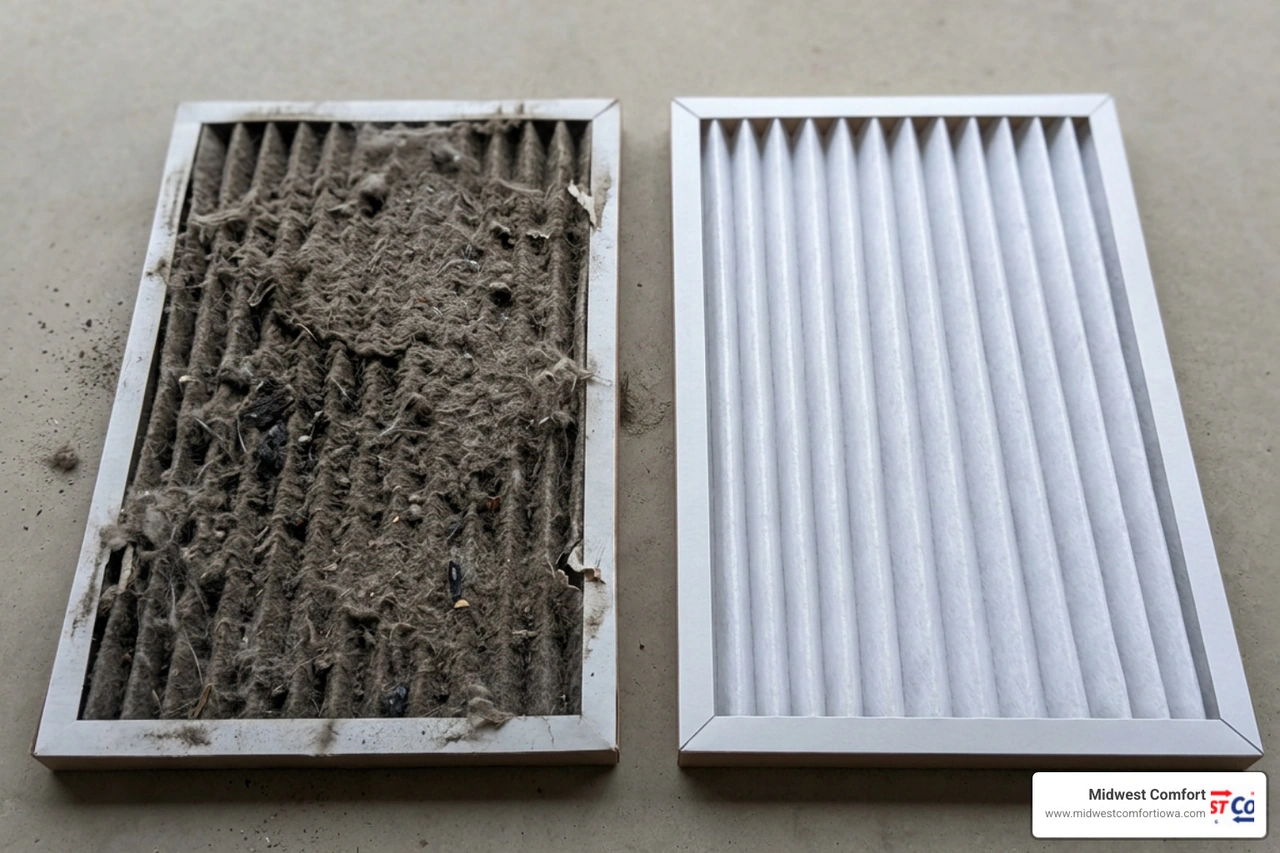
- Fiberglass Filters: These are the inexpensive, spun-glass filters you can practically see right through. They are designed with a single, loose layer of glass fibers held together by a cardboard frame. Their primary job is not to clean your breathing air, but to act as a shield for your furnace and AC coils, catching large debris like hair and giant dust bunnies. In a climate like Central Iowa’s—where systems run heavily in both winter and summer—fiberglass filters clog rapidly and offer almost zero protection against fine dust, pollen, or pet dander. They generally need to be replaced every 30 days without exception.
- Pleated Filters: Pleated filters are made from folded sheets of polyester or cotton-synthetic blends. The folds (or pleats) create a massive increase in surface area compared to a flat fiberglass filter. This design allows them to capture much smaller particles—such as mold spores, fine dust, and pet dander—without immediately choking off your system's airflow. Because they have more surface area to distribute the trapped debris, high-quality pleated filters can last up to 90 days under light to moderate use.
For more details on keeping your system running smoothly, check out our Air Filter Maintenance Guide 2026.
Electrostatic and Washable Options
If you are tired of throwing away cardboard filters every month, you might have looked into electrostatic or washable options.
- Electrostatic Filters: These filters use self-charging cotton or paper fibers that naturally develop a static charge as air flows through them. This static charge acts like a magnet, pulling tiny airborne particles out of the air stream and holding onto them. They are highly effective for capturing small dust particles and are available in both disposable and washable varieties.
- Washable (Permeable) Filters: Often constructed with a plastic or aluminum frame and woven synthetic fibers, washable filters are designed to be hosed down, dried, and reused for several years. While they seem eco-friendly and convenient, they come with a major warning for Iowa homeowners.
Iowa summers are notoriously humid. If you wash your filter and reinstall it before it is 100% dry, you run a massive risk of circulating mold spores and mildew throughout your ductwork. Furthermore, washable filters generally have lower filtration efficiency for microscopic particles compared to high-quality disposable pleated filters, and they require meticulous, frequent cleaning to prevent airflow blockages.
Deciphering MERV Ratings for Central Iowa HVAC Systems
To compare filters accurately, the HVAC industry relies on the MERV (Minimum Efficiency Reporting Value) scale. Developed by the American Society of Heating, Refrigerating and Air-Conditioning Engineers (ASHRAE), this rating system measures how effectively a filter traps particles of various sizes. The scale ranges from 1 to 20, with higher numbers indicating tighter filtration.
What MERV Rating is Best for Your Home?
For the vast majority of homes in Des Moines, Ankeny, and surrounding communities, the sweet spot for filtration lies between MERV 8 and MERV 13.
- MERV 1–4: Typically standard fiberglass filters. They only capture large particles (greater than 10 microns) and offer minimal air quality benefits.
- MERV 5–8: Good basic residential filters. A MERV 8 pleated filter will capture mold spores, pet dander, and household dust down to 3 microns. This is the baseline recommendation for a standard home without pets or severe allergies.
- MERV 9–12: Superior residential filtration. Filters in this range trap pollen, dust mite debris, and fine dust. A MERV 11 filter is highly recommended for families with mild allergies, asthma, or households with one or two pets.
- MERV 13–16: Hospital-level filtration. A MERV 13 filter is capable of capturing particles as small as 0.3 microns, including bacteria, smoke, and microscopic droplets from sneezes.
If you are interested in creating a healthier home environment, exploring options for Indoor Air Quality Des Moines can help you decide if a MERV 11 or MERV 13 filter is right for your family.
Balancing Air Filtration and System Airflow
It is tempting to think, "If MERV 13 or 16 is the cleanest, I should buy that!" However, higher filtration comes with a physical trade-off: airflow resistance.
Think of your air filter like a net. A net with larger holes (lower MERV) lets air pass through effortlessly but misses smaller fish (dust). A net with tiny, microscopic holes (higher MERV) catches everything, but it takes a lot more force to push air through it. This resistance is known as static pressure.
If you put a highly restrictive, high-MERV filter into an older or undersized HVAC system, your blower motor has to work twice as hard to pull air through the house. This can lead to:
- Increased monthly energy bills
- Uneven temperatures across different rooms
- Frozen AC evaporator coils during hot July afternoons
- Premature blower motor failure
To understand how restricted airflow can strain your equipment, read about how Dirty Air Filters Impact HVAC Performance.
Comparing the Best AC Filter Options for Iowa Homes by Efficiency
To help you visualize how these ratings stack up, here is a breakdown of what different MERV ratings actually capture and how often they need to be swapped out in typical Iowa conditions:
| MERV Rating | Key Particles Captured | Recommended Iowa Replacement Interval | Airflow Resistance Level |
|---|---|---|---|
| MERV 1–4 | Dust bunnies, lint, large carpet fibers | Every 30 days | Extremely Low |
| MERV 5–8 | Mold spores, pet dander, cement dust | Every 60 to 90 days | Low |
| MERV 9–12 | Pollen, lead dust, auto emissions, fine dust | Every 60 to 90 days | Moderate |
| MERV 13 | Bacteria, smoke, sneeze droplets, virus carriers | Every 30 to 60 days (or 3–6 months for thick media) | Moderate to High |
| HEPA (17–20) | Viruses, carbon dust, microscopic allergens | Not compatible with standard residential systems | Extremely High (Requires specialized system) |
Note: True HEPA filters capture 99.97% of particles down to 0.3 microns but are too restrictive for standard residential HVAC blowers without professional system modifications.
Sizing, Thickness, and Seasonal Replacement Schedules
Finding the best ac filter options for Iowa homes isn't just about the material; it's also about a physical fit. A filter that doesn't fit properly is essentially useless.
Choosing the Right Filter Size and Thickness
If you look at the side of your air filter, you will see numbers like "20x20x1." This is the nominal size, which is a rounded estimate used for retail labeling. However, if you take a tape measure to that same filter, you will find the actual dimensions are about 1/2 inch smaller (e.g., 19.5x19.5x0.75).
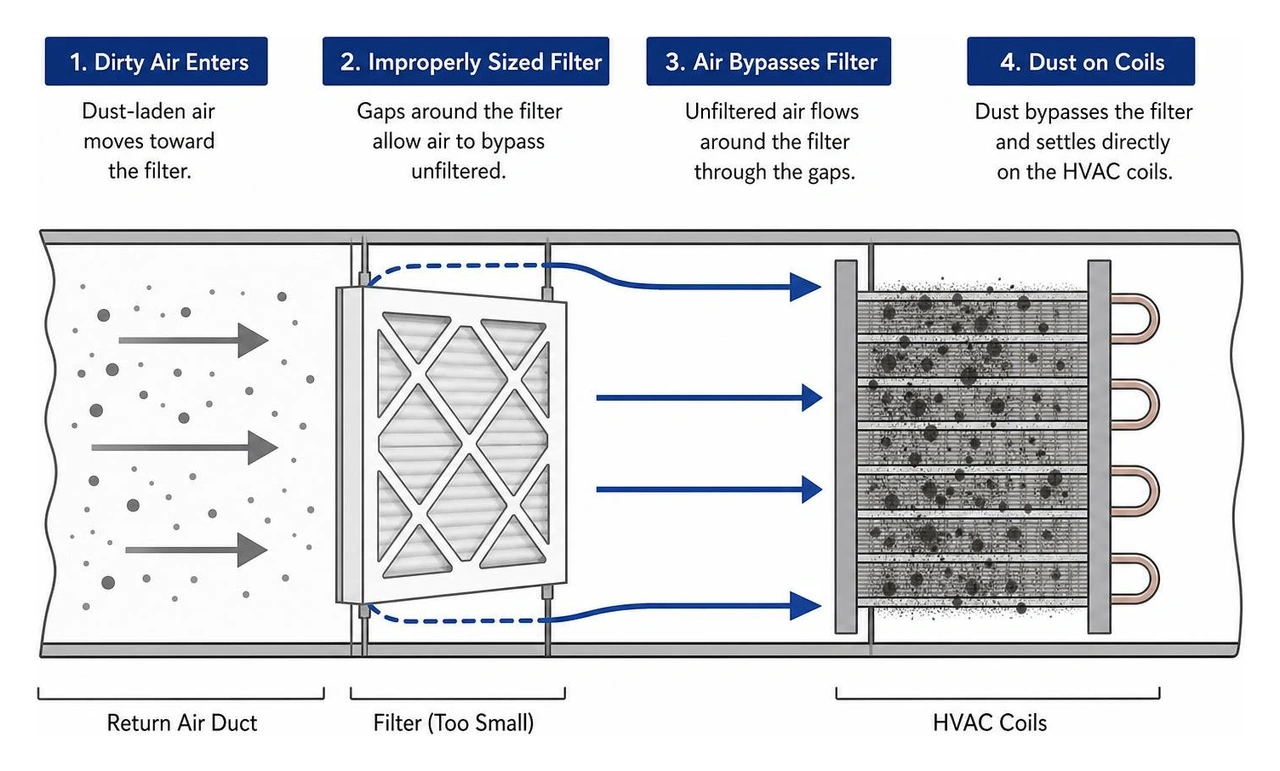
Always buy the filter size specified by your equipment manufacturer. If a filter is too small, air will bypass it entirely, letting dirty air cycle back into your furnace, AC coils, and living spaces. If it is too large, you will bend the frame trying to force it in, which creates gaps and lets unfiltered air slip past.
Additionally, pay attention to thickness:
- 1-inch Filters: The standard size for most basic filter slots. Because they have limited surface area, they clog faster and must be checked monthly.
- 4-inch to 5-inch Media Filters: These thick, boxy filters are installed in dedicated media cabinets. Because they have massive surface areas folded into deep pleats, they offer excellent filtration with very low airflow resistance. They can often last anywhere from 6 months to a full year before needing a replacement.
To find the perfect fit for your specific home setup, check out our guide on Air Filters Des Moines IA.
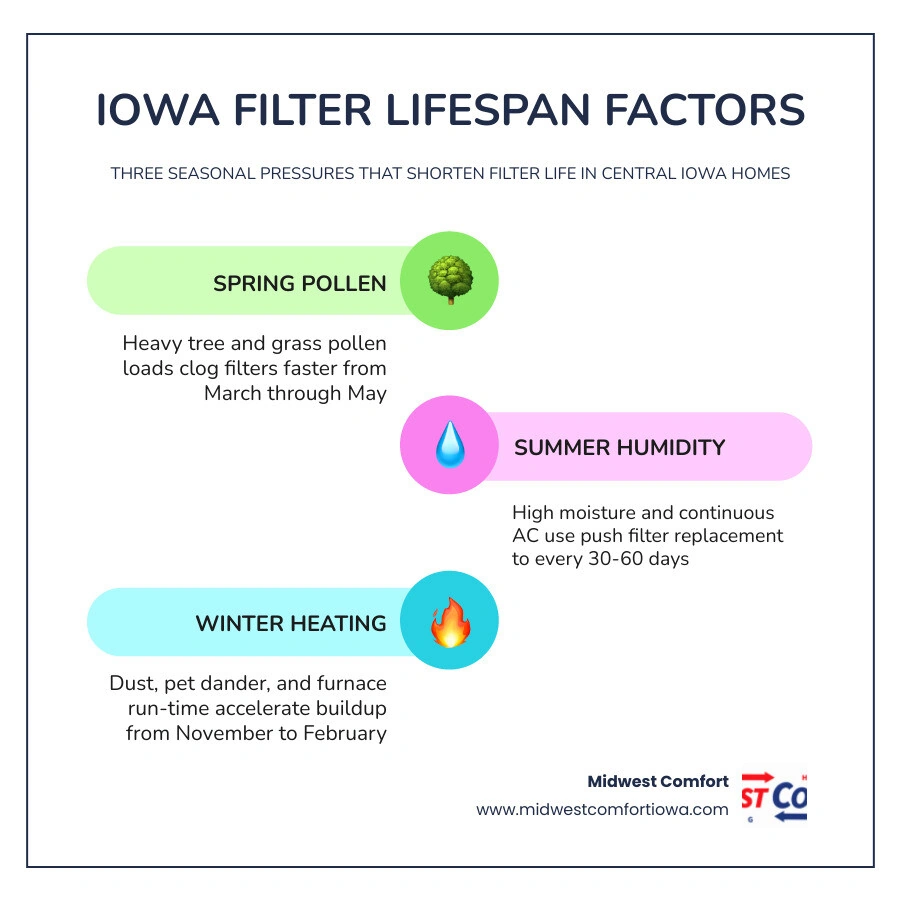
How Iowa’s Seasons Dictate Your Filter Replacement Schedule
In Iowa, we experience the full spectrum of weather extremes. Our summers are thick with humidity, and our winters are freezing and dry. These dramatic shifts mean your HVAC runtime fluctuates wildly, directly affecting how fast your filter fills up.
- Spring (Pollen & Agricultural Dust): As the fields are turned and the trees bloom in places like Johnston and Polk City, outdoor pollen and agricultural dust find their way indoors. If you suffer from seasonal allergies, you will want to inspect your filter monthly during this time.
- Summer (High Humidity & Constant Cooling): July and August require your AC to run almost continuously. High humidity makes airborne dust heavier, causing it to settle on your filter faster. This is also when we occasionally experience drifting wildfire smoke, which carries fine ash that can clog a MERV 11 or 13 filter in a matter of weeks.
- Fall (Harvest Dust & Leaves): Harvest season in rural Polk and Dallas counties kicks up massive amounts of fine crop dust, which can quickly travel into suburban neighborhoods like Waukee and Clive.
- Winter (Continuous Heating): Your furnace runs around the clock during Iowa's freezing winters. Because we spend most of our time indoors with the windows shut, pet dander, skin cells, and indoor dust accumulate rapidly.
If you live in Ankeny or the surrounding areas and want to keep your indoor air fresh through every season, learn more about local options for Air Filters Ankeny IA.
Whole-House Air Cleaners vs. Standard Filters
While standard 1-inch or 4-inch filters do a great job of protecting your HVAC equipment and catching standard household dust, they have their limitations. Homeowners seeking the absolute highest tier of indoor air quality often look beyond standard filters to professional whole-house air cleaning systems.
Upgrading to Professional Whole-House Filtration Systems
A whole-house air cleaner is professionally installed directly into your return ductwork. Instead of a simple slot, these systems utilize a sealed heavy-duty cabinet that houses advanced media filters or electronic clean air systems.
- Media Air Cleaners: These systems use deep-pleat media filters (usually 4 to 5 inches thick) that provide up to 100 times more filtering surface area than a standard 1-inch filter. They capture microscopic particles with incredibly low resistance to airflow. This means you get MERV 11 to 13 level filtration without putting any extra strain on your blower motor.
- Electronic Air Cleaners: These systems use an intense electrical field to charge incoming dirty particles, capturing them on grounded collection plates. They are incredibly effective at removing smoke, viruses, and ultra-fine dust, and many models feature filters that only need to be cleaned or replaced once or twice a year.
Finding the Best AC Filter Options for Iowa Homes with Advanced Purification
If you want to take your home's air quality to the next level, combining a high-quality media filter with an advanced purification system is the gold standard.
Advanced whole-house air purifiers work in tandem with your heating and cooling system to neutralize odors, kill airborne bacteria and viruses, and capture microscopic allergens that standard filters miss. This setup is highly recommended for families dealing with severe asthma, respiratory issues, or those living near dusty gravel roads in rural parts of our service area.
Frequently Asked Questions About Iowa AC Filters
We get a lot of questions from homeowners in Des Moines, Altoona, and Norwalk about how to manage their home air filters. Here are some of the most common questions we hear:
How often should I change my air filter in Central Iowa?
For standard 1-inch pleated filters, we recommend replacing them every 60 to 90 days. However, you should check them every 30 days if you have:
- One or more pets (fur and dander clog filters quickly)
- Family members with asthma or severe seasonal allergies
- A highly active household with children running in and out
- A home near active construction or gravel roads
If you use a thicker 4-inch or 5-inch media filter, you can typically go 6 to 12 months between replacements, though a quick visual check every few months is still a smart habit.
Can a high-MERV filter damage my furnace or air conditioner?
Yes, if your system is not designed for it. Standard residential HVAC systems are built to handle a specific amount of airflow resistance. If you install a restrictive MERV 13 or higher filter without ensuring your system can handle the static pressure, it can choke the airflow. This leads to frozen AC coils in the summer, an overheating furnace in the winter, higher energy bills, and eventual system failure.
Fortunately, high-quality filters like the 3M Filtrete 1900 series are engineered with specialized pleat designs that offer MERV 13 filtration with lower airflow resistance than many standard MERV 8 filters. Always consult an HVAC professional if you aren't sure what your system can handle.
Where can I source high-quality replacement filters in Des Moines?
You can find standard sizes at local hardware stores throughout the Des Moines metro area. However, for specialized sizes, custom dimensions, or high-performance media filters, purchasing through a local HVAC partner or setting up a recurring filter delivery subscription is the easiest way to ensure you always have the right size on hand when it's time to make a swap.
Conclusion
At the end of the day, finding the best ac filter options for Iowa homes is all about balance. You want a filter that captures the dust, pollen, and pet dander unique to our Midwest seasons, but you must balance that filtration with the airflow your heating and cooling system needs to run efficiently.
For most local homes, a high-quality MERV 8 to MERV 11 pleated filter changed every 2 to 3 months offers the perfect blend of performance, equipment protection, and energy efficiency. If you have pets, allergies, or want to explore whole-house filtration, upgrading to a professional media cabinet or air purifier can make a world of difference.
At Midwest Comfort, we are proud to be a family-owned business serving Des Moines, Ankeny, Waukee, Clive, Grimes, and surrounding communities. We bring a family-oriented approach to everything we do, offering honest, high-quality, and cost-effective HVAC solutions tailored to your home's unique needs.
If you are ready to upgrade your indoor air quality or need a seasonal tune-up to keep your system running at peak performance, we are here to help. Schedule professional indoor air quality services with Midwest Comfort today!
