
Why Comparing AC Quotes the Right Way Can Save You More Than Money
Knowing how to compare AC quotes from different companies is one of the most important steps a Des Moines homeowner can take before signing anything. Most people assume the quotes they receive are roughly the same — just different prices for the same job. In reality, two proposals sitting side by side can include completely different equipment, installation scope, warranty terms, and long-term protection. Without knowing what to look for, it is easy to choose the wrong one.
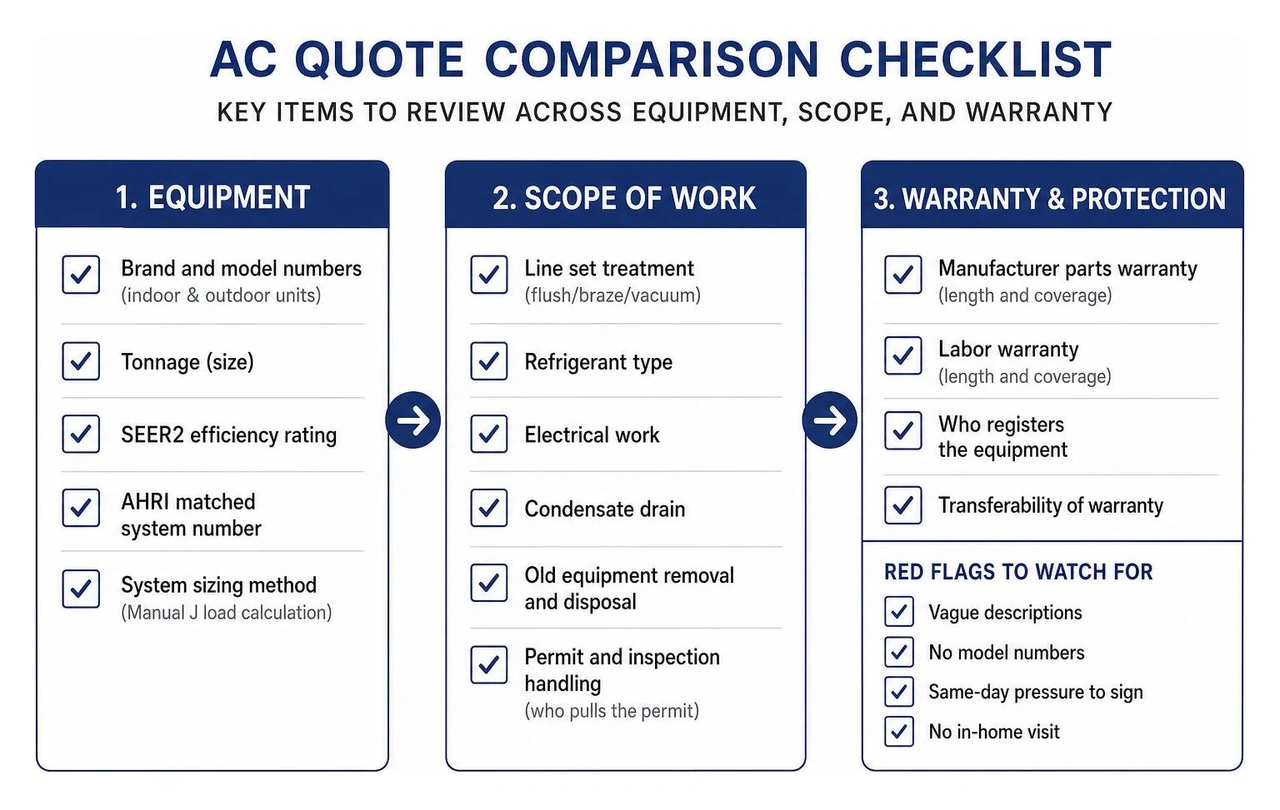
Here is a quick breakdown of what to check on every AC quote before comparing prices:
- Equipment details - Brand name, model numbers for both indoor and outdoor units, tonnage, and SEER2 efficiency rating
- AHRI matched system number - Confirms the indoor and outdoor components are certified to work together
- System sizing method - Was a Manual J load calculation performed, or did they just match the old unit?
- Installation scope - Line set treatment, refrigerant type, electrical work, condensate drain, old equipment removal
- Permit and inspection handling - Who pulls the permit and coordinates the inspection
- Warranty terms - Manufacturer parts warranty, labor warranty, and who registers the equipment
- Red flags - Vague descriptions, no model numbers, same-day pressure to sign, or no in-home visit
According to Consumer Reports, about 19 percent of central AC systems purchased between 2009 and 2024 encountered at least one problem — and nearly a quarter of those stopped working properly altogether. A lot of that comes down to installation quality, not just equipment. That means the details buried inside a proposal matter far more than the number at the bottom of the page.
Des Moines summers put real demand on cooling systems. Getting this decision right is about more than comfort — it protects your home investment for years to come.
Why Sizing and Load Calculations Matter for Your Des Moines Home
When you are looking over proposals, one of the first technical details you need to evaluate is system sizing. In the HVAC world, size is measured in "tons" or BTUs (British Thermal Units), which represent the cooling capacity of the system.
Some contractors might look at your old unit, see that it is a 3-ton system, and write up a quote for another 3-ton system without a second thought. This is a major mistake. Over the years, your home may have undergone changes—such as new energy-efficient windows, added attic insulation, or even a home addition. These updates alter your home's heat gain, meaning your old system's size might no longer be appropriate. To learn more about when it is time to make a change, take a look at our AC Replacement Guide.
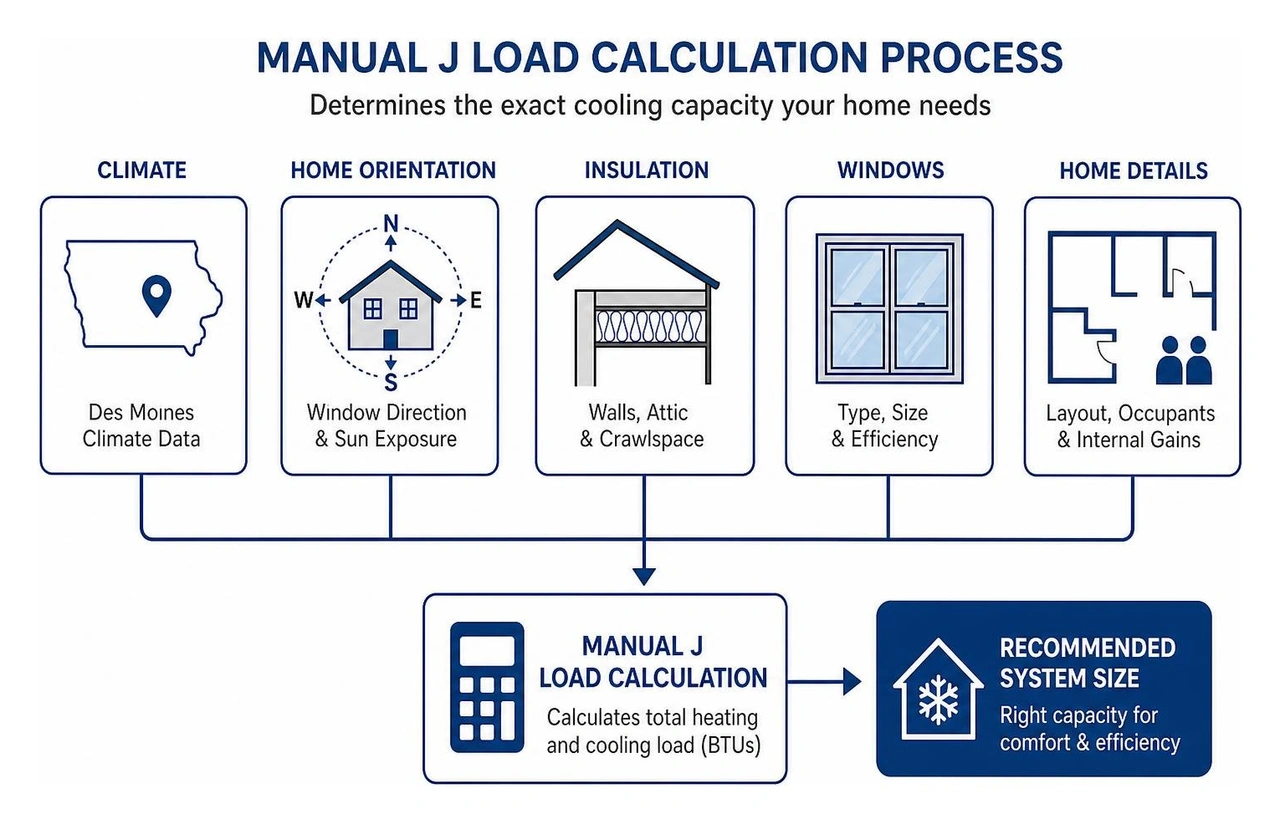
To determine the exact cooling capacity your home needs, a professional contractor must perform an ACCA Manual J load calculation. This scientific calculation takes into account several critical factors:
- The local climate in the Des Moines metro area
- The orientation of your home (which way your windows face)
- Insulation levels in your walls, ceilings, and crawlspaces
- The number of occupants and layout of the rooms
- The type and efficiency of your windows
Skipping this step and guessing the size leads to two major comfort problems:
- Oversizing: An oversized air conditioner will cool your home too quickly and shut off. This is called short-cycling. Because it does not run long enough, it never has the chance to pull moisture out of the air, leaving your home feeling cold but clammy. It also puts intense wear and tear on the compressor, leading to premature breakdowns.
- Undersizing: An undersized system will run constantly during hot July afternoons in Iowa, struggling to reach your thermostat setting. This drives up your energy bills and shortens the lifespan of the equipment.
How to compare ac quotes from different companies based on system sizing
When you have multiple quotes in front of you, look closely at the recommended system capacity. If one contractor recommends a 2.5-ton unit and another quotes a 3.5-ton unit for the exact same house, a red flag should go up.
To resolve this discrepancy, ask each contractor to show you their Manual J calculation. A reliable professional will gladly share this report with you. If a company sized your system based on a "rule of thumb" using only square footage, they are guessing with your comfort.
Proper airflow and ductwork capacity must also be factored into this calculation. An experienced technician will inspect your return and supply ducts to ensure they can handle the airflow of the new system. For a deeper look into proper installation practices, read our Expert AC Installation Guide.
Evaluating Equipment Specifications and Efficiency Ratings
The heart of your new cooling system is the equipment itself. When learning how to compare AC quotes from different companies, you must understand the difference in technology levels being proposed.

Every modern air conditioning system has an efficiency rating known as SEER2 (Seasonal Energy Efficiency Ratio 2). This standard, which is the updated version of the older SEER metric, represents how much cooling the system delivers per watt of electricity used under real-world operating conditions.
Upgrading from an older, inefficient system to a modern SEER2-compliant unit can reduce your cooling energy use by up to 20 percent. Over the life of the system, those monthly utility savings add up significantly. To understand the full installation process of these high-efficiency systems, check out our AC Installation Des Moines IA Complete Guide.
When comparing quotes, you will typically see three main types of compressor technology:
- Single-Stage Compressors: This is traditional technology. The system is either 100% on or completely off. It operates like a light bulb. While reliable, it can lead to slight temperature swings and higher energy usage because it runs at full blast every time it turns on.
- Two-Stage Compressors: These units have a high and a low setting. They typically run on the low setting (about 60% capacity) most of the time, which is highly efficient and provides excellent dehumidification. They only kick into high gear on the hottest days of the summer.
- Variable-Speed Compressors: This is the gold standard of home comfort. The compressor can adjust its speed in tiny increments (anywhere from 40% to 100%) to match the exact cooling needs of your home. It runs almost continuously at very low, whisper-quiet speeds, keeping your indoor temperature perfectly steady.
If one quote is for a basic single-stage system and another is for a variable-speed system, you are not comparing equivalent options. The variable-speed system will provide superior comfort and lower utility bills, but it requires a higher initial investment.
How to compare ac quotes from different companies using AHRI matched systems
One of the most overlooked details on an HVAC quote is the AHRI (Air-Conditioning, Heating, and Refrigeration Institute) matched system number.
An air conditioner is not just an outdoor unit. It is a split system consisting of an outdoor condenser and an indoor evaporator coil (which sits on top of your furnace or inside your air handler). For your system to achieve its rated SEER2 efficiency and perform reliably, these two components must be engineered to work together.
An AHRI certificate number proves that the specific combination of outdoor unit, indoor coil, and furnace blower has been laboratory-tested and certified to deliver the promised efficiency and capacity. If a contractor proposes keeping your old indoor coil and only replacing the outdoor unit, your system will not be an AHRI-matched system. This shortcut can drop your actual efficiency, cause premature system failure, and potentially void your manufacturer's warranty. For tips on choosing a contractor who respects these standards, read our guide on Choosing Reliable HVAC Companies.
The Ultimate Checklist for how to compare ac quotes from different companies
To make your comparison process as straightforward as possible, we have compiled the ultimate checklist of installation details. The scope of work is where quotes diverge the most. A cheaper quote often means the contractor is cutting corners on materials, permits, or testing.
Here is what should be clearly defined in a comprehensive installation proposal:
- Refrigerant Line Set: Will they install a brand-new copper line set, or flush and reuse the old one? In 2026, the industry is transitioning away from older R-410A refrigerants to next-generation options like R-454B or R-32. If they reuse an old line set, it must be thoroughly flushed of old oil and refrigerant to prevent system contamination.
- Electrical Upgrades: Does the quote include a new outdoor electrical disconnect box and a new flexible "whip"?
- Condensate Drain and Safety Switch: Will they install a new drain line and a safety float switch? A float switch automatically shuts down the system if the drain line clogs, protecting your home from water damage.
- Permits and Inspections: Will the contractor pull the required municipal permits and coordinate the final inspection with local authorities?
| Feature / Scope Item | Basic / Budget Quote | Complete / Professional Quote |
|---|---|---|
| Sizing Method | Rule-of-thumb / guess based on square footage | ACCA Manual J load calculation |
| Equipment Matching | Unmatched indoor/outdoor components | Certified AHRI matched system |
| Refrigerant Type | Older, phased-down inventory (R-410A) | Modern, compliant standards (R-454B or R-32) |
| Line Set Treatment | Reused without flushing or nitrogen purge | Brand-new line set or thoroughly flushed with nitrogen purge |
| Electrical Work | Reused old whip and disconnect box | New electrical whip, outdoor disconnect, and code compliance |
| Permits & Inspections | Often left to the homeowner or skipped entirely | Handled, pulled, and coordinated by the contractor |
| Commissioning | Quick turn-on test | Full startup report with airflow and refrigerant charge testing |
Understanding Warranties and Long-Term Protection
A new air conditioning system is a long-term investment in your home's comfort. To protect that investment, you must understand the different layers of warranty coverage specified in your quotes.
There are two primary types of warranties to evaluate:
- Manufacturer's Parts Warranty: This covers the physical components of the system (such as the compressor or coil) if they fail due to a manufacturing defect. The industry standard is a 10-year parts warranty. However, there is a catch: most manufacturers require you to register the equipment online within 60 to 90 days of installation. If you do not register it, the warranty often drops to 5 years. Ask your contractor if they handle this registration for you.
- Contractor's Labor Warranty: The manufacturer's warranty only covers the cost of the replacement part itself—it does not cover the labor cost for a technician to diagnose the issue and install the new part. A professional contractor should offer a written labor and workmanship warranty. This can range from 1 year to 10 years depending on the company and the system tier.
Additionally, pay attention to the ongoing maintenance requirements. Most manufacturers require annual professional maintenance to keep their warranties valid. When reviewing quotes, check if the contractor includes a maintenance plan or a loyalty program to help you stay on top of this requirement. If you are looking for flexible ways to manage your home comfort upgrades, read about Choosing a Trusted Local HVAC Provider with Financing Options.
Red Flags to Watch Out For When Reviewing Proposals
As you gather and compare quotes, you may run into proposals that seem incomplete or contractors who use aggressive tactics. Staying informed is your best defense against a poor installation experience.
Watch out for these common red flags:
- Vague Descriptions: If a quote simply says "Install new AC" with a single price and no brand name, model numbers, or efficiency ratings, do not sign it. This lack of detail makes it impossible to know what you are actually buying and allows the contractor to install the cheapest equipment they can find.
- No In-Home Visit: A contractor cannot accurately quote a new system over the phone or via satellite imagery. They must physically inspect your home, evaluate your ductwork, check your electrical panel, and perform a proper assessment.
- High-Pressure Sales Tactics: If a contractor tells you that a discount is "only valid if you sign today" or pressures you to make a decision before you can review other options, proceed with caution. A trustworthy company stands by their proposals and gives you the time to make an informed decision.
- Reluctance to Put Promises in Writing: Every detail discussed during the consultation—including permit handling, clean-up, and warranties—must be clearly written in the final contract. Verbal agreements are incredibly difficult to enforce.
If your current system is acting up but you are not sure if it needs a full replacement yet, you can try a few basic steps first. Check out our guide on AC Troubleshooting Tips Before Calling a Pro to see if it is a simple fix.
Frequently Asked Questions About Comparing AC Proposals
How many proposals should I collect for a new AC installation?
We generally recommend gathering three to four quotes from licensed, local HVAC contractors. This range gives you a clear sense of the local market and helps you identify patterns in recommendations. Collecting fewer than three quotes does not give you enough points of comparison, while gathering more than four can lead to information overload and make your decision-making process unnecessarily confusing.
What is an AHRI matched system and why is it important?
An AHRI matched system means that the outdoor condenser and the indoor evaporator coil have been tested together by the Air-Conditioning, Heating, and Refrigeration Institute and certified to perform at a specific efficiency level. If these components are mismatched, your system may run inefficiently, struggle to keep your home comfortable, experience frequent breakdowns, and have a significantly shorter lifespan.
Why do proposals for the same home vary so much in scope?
Proposals vary because different contractors have different standards of installation quality, use different materials, and propose different tiers of equipment. A lower-priced quote might reuse your old, dirty indoor coil, skip pulling the required municipal permits, or use cheaper electrical components. A complete, professional quote includes everything needed to ensure a safe, high-performing, and fully code-compliant installation that protects your home for the long haul.
Conclusion
Comparing air conditioning proposals does not have to be overwhelming. By looking beyond the bottom-line price and focusing on system sizing, equipment matching, installation scope, and warranty protection, you can confidently choose the best long-term option for your family.
At Midwest Comfort, we believe in keeping things simple, honest, and straightforward. As a family-owned business serving Des Moines and surrounding areas like Waukee, Ankeny, Johnston, and Clive, we take a family-oriented approach to home comfort. We don't believe in high-pressure sales pitches or vague, confusing quotes. Instead, we provide tailored solutions, robust loyalty programs, and flexible payment options designed to fit your unique needs.
Ready to experience a different kind of home comfort service? Schedule your Des Moines AC consultation today and let our family take care of yours.
