Why Ice Storms Are One of the Biggest Threats to Your Home's Heating System
Understanding how ice storms stress your furnace and boiler could be the difference between staying warm all winter and facing a heating emergency on the coldest night of the year. When freezing rain hits Des Moines, it does not just coat your driveway and tree branches — it goes to work on your heating system in ways most homeowners never see coming.
Here is a quick summary of the main ways ice storms put your heating system at risk:
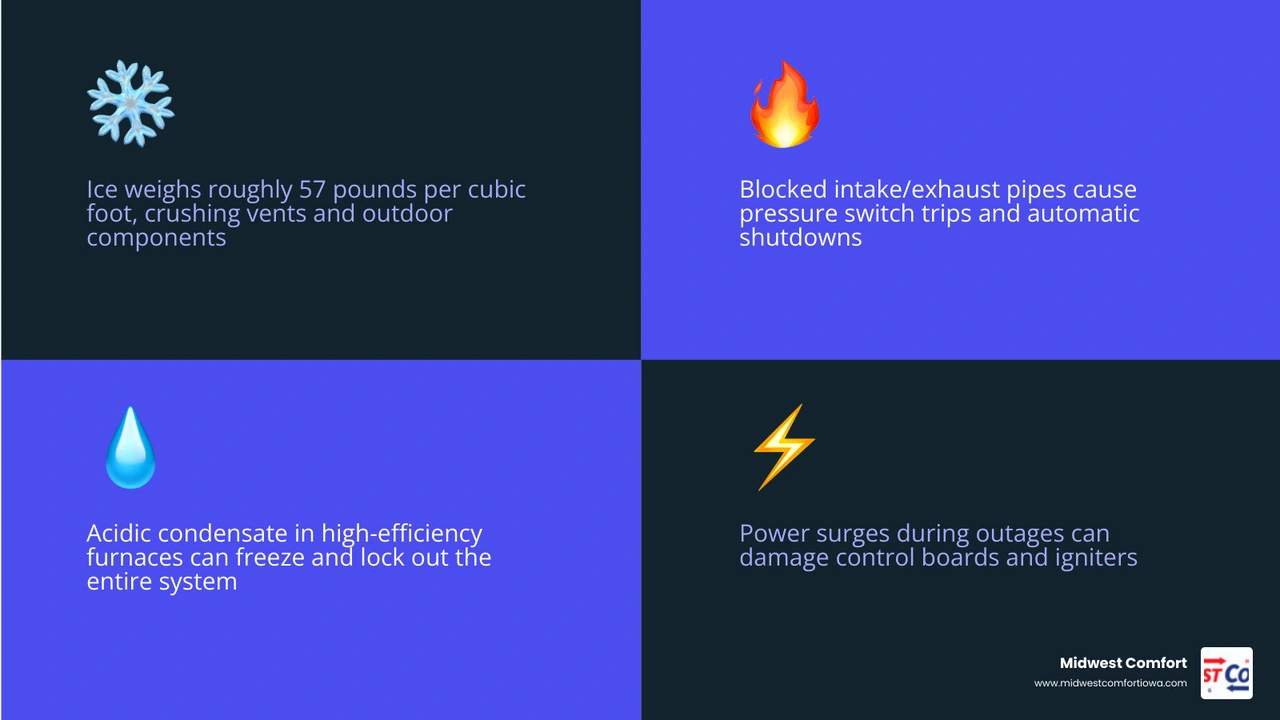
- Blocked vents: Ice and snow can seal off intake and exhaust pipes, triggering automatic shutdowns
- Frozen condensate lines: High-efficiency furnaces drain acidic water that freezes in extreme cold, causing lockouts
- Nonstop operation: Extended run times wear down blower motors, igniters, heat exchangers, and circulator pumps faster than normal
- Power surges: When the grid flickers or goes out, the surge on restoration can damage sensitive control boards
- Ice weight damage: Freezing rain deposits roughly 57 pounds of ice per cubic foot — far heavier than snow — which can crush outdoor equipment components
- Carbon monoxide risk: Blocked exhaust vents trap dangerous combustion gases inside the home
Ice is not like snow. Snow is relatively light and easy to brush away. Freezing rain, on the other hand, coats every surface in a solid, heavy shell. It can block a furnace vent in a matter of hours, and because the damage often happens out of sight — on a pipe tucked along an exterior wall or behind a shrub — many homeowners do not realize there is a problem until their system shuts down completely.
Iowa winters are no strangers to these conditions, and your heating system pays the price every time a significant ice event rolls through the region. The good news is that most of the damage is preventable with the right preparation and a quick post-storm inspection.
How Ice Storms Stress Your Furnace and Boiler: The Core Threats
When the temperature drops and freezing rain begins to fall, the physical demands on your heating system skyrocket. Unlike a standard cold snap, an ice storm introduces a dangerous combination of heavy, physical accumulation and rapid temperature drops.
To put it in perspective, typical snow weighs only 7 to 8 pounds per cubic foot. Ice, however, weighs roughly 57 pounds per cubic foot. This crushing weight can snap tree limbs onto gas lines, bend metal components, and sag rooflines directly over your heating vents.
Beyond the sheer weight, your system must cope with "thermal shock." This occurs when your furnace or boiler is forced to cycle rapidly from a cold baseline to extreme heat to combat rapid heat loss through your home's walls and windows. This extreme expansion and contraction places immense physical stress on metal components like heat exchangers and boiler sections.
When your heating system runs nonstop for 24, 48, or 72 hours during a major storm, any existing, minor vulnerability in your system is quickly exposed. This is why we see a dramatic spike in service calls immediately following the first major winter event. If your system is already harboring a worn-out capacitor or a slightly dirty burner, the continuous run times of a winter storm will push it over the edge. Knowing the signs you need heating repair before the storm hits can save you from a freezing household.
How Ice Storms Stress Your Furnace and Boiler via Blocked Vents
Modern, high-efficiency gas furnaces (rated at 90% AFUE or higher) do not vent through a traditional brick chimney. Instead, they utilize white plastic PVC pipes that exit through an exterior side wall of your home. One pipe pulls fresh air in for combustion, while the other expels dangerous exhaust gases.
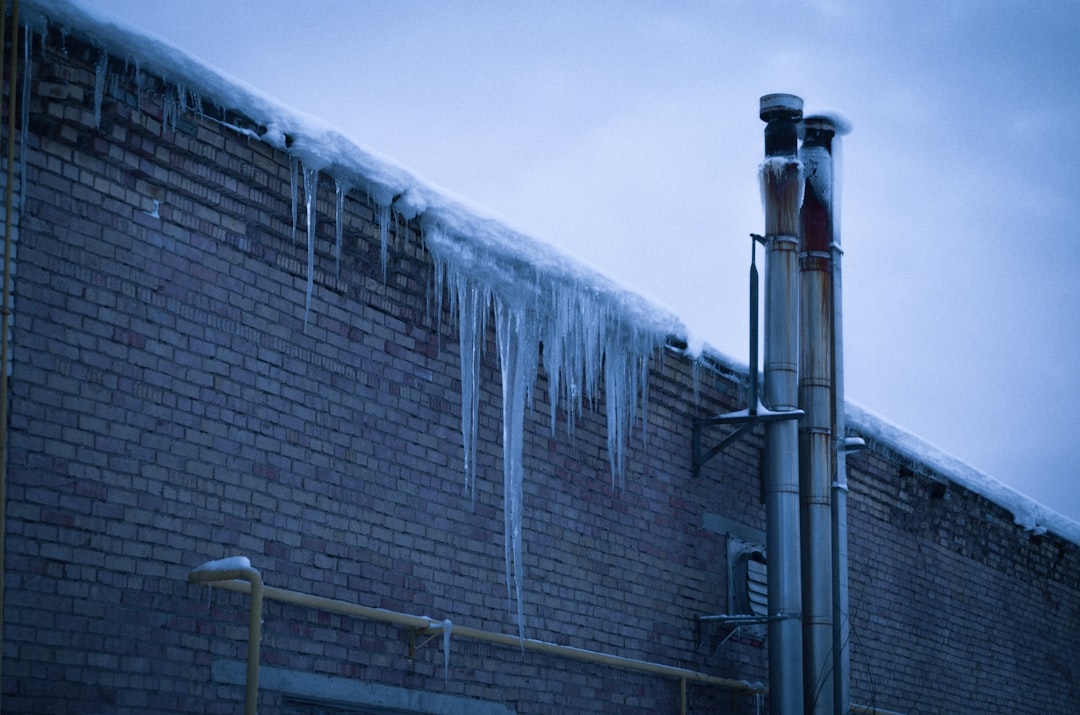
During an ice storm, freezing rain can quickly build up on the terminal ends of these pipes. As water drips down from your roofline or gutters, it freezes on contact with the cold PVC, gradually forming an icy shroud that completely seals off the opening.
When either the intake or exhaust vent is blocked:
- The furnace's internal pressure switch detects a restriction in airflow.
- For safety, the system prevents the burners from igniting to avoid backdrafting.
- The furnace enters a "lockout" state, leaving you without heat.
While a system lockout is frustrating, it is a crucial safety feature. If the pressure switch fails or if you have an older, atmospheric-venting boiler or furnace that lacks these modern safety controls, a blocked exhaust vent can lead to a deadly buildup of carbon monoxide (CO) inside your home.
How Ice Storms Stress Your Furnace and Boiler via Frozen Condensate Lines
High-efficiency furnaces and condensing boilers are incredibly effective at squeezing heat out of fuel, but this process produces a significant amount of acidic wastewater (condensate). Under normal conditions, this water flows through an internal drain line, into a condensate pump or gravity drain, and out of your home.
However, during an extended sub-freezing event, any portion of that condensate line running through an unheated space — like a crawlspace, attic, or along an exterior wall — is highly vulnerable to freezing. Once the water inside the thin plastic tube freezes solid, the condensate backs up into the furnace.
Modern systems feature condensate overflow switches designed to detect this backup. When water accumulates in the drain pan or the internal collector box, the safety switch trips, shutting down the entire heating system. If your heating system suddenly stops working and you notice water pooling around the base of your furnace, a frozen condensate line is often the culprit. Keeping an eye out for these water issues is one of the key 5 Signs Your Furnace Is Not Working Correctly during extreme weather.
Mechanical Failures Caused by Nonstop Winter Operation
When an ice storm hits, your home loses heat at an accelerated rate. To maintain a comfortable indoor temperature, your furnace or boiler must transition from its normal intermittent cycling to continuous, nonstop operation. This marathon run puts incredible strain on several key mechanical components.
- Blower Motors and Circulator Pumps: Blower motors (in furnaces) and circulator pumps (in boilers) are designed to run frequently, but continuous operation builds up intense heat within their electrical windings and bearings. If a motor is older or lacks proper lubrication, the sustained heat can melt insulation on the wiring or seize the bearings entirely.
- Heat Exchanger Stress: In a furnace, the heat exchanger is the metal chamber where fuel is burned. As the furnace runs continuously, this metal remains at an incredibly high temperature for hours on end. The prolonged thermal expansion, followed by brief cooling periods, can cause the metal to fatigue, crack, or split, creating a direct pathway for carbon monoxide to enter your indoor air.
- Igniter and Sensor Wear: Hot surface igniters and flame sensors are subjected to extreme conditions during heavy usage cycles. Flame sensors can rapidly collect carbon buildup when the system fires repeatedly, leading to ignition failures where the furnace turns on for a few seconds and then shuts down.
| Mechanical Component | Furnace Stress Point | Boiler Stress Point |
|---|---|---|
| Air / Water Movement | Blower motor overheating, bearing failure, capacitor burnout | Circulator pump failure, seized impellers, zone valve sticking |
| Primary Heat Source | Heat exchanger cracking due to continuous thermal expansion | Cast iron or copper heat exchanger scaling and thermal shock |
| Ignition & Safety | Flame sensor carbon buildup, hot surface igniter burnout | Thermocouple failure, low-water cutoff switch malfunction |
| Drainage / Piping | Frozen PVC condensate drain line causing pressure switch lockout | Frozen water pipes, expansion tank pressure spikes, relief valve leaks |
If your hydronic system is struggling to circulate hot water through your radiators or baseboards, you may need professional Boiler Repair Des Moines IA to replace failing pumps or clear airlocks before your pipes freeze.
Power Outages and Grid Instability: Furnaces vs. Boilers
One of the most common side effects of an ice storm is a widespread power outage. As ice accumulates on power lines and tree branches, the grid becomes highly unstable.
Many homeowners believe that because they have a gas furnace or gas boiler, they do not need electricity to heat their homes. Unfortunately, this is a misconception. Modern gas furnaces and boilers rely heavily on electricity to power their control boards, blower motors, circulator pumps, electronic igniters, and safety sensors.
A standard, modern gas furnace actually uses relatively little electricity — typically less than 600 watts — because it only needs to power the blower motor and small controls. Boilers can require slightly more or less depending on the number of circulator pumps running. This low wattage requirement means both systems can technically be run on small portable generators.
However, the real danger to your heating system is not the outage itself, but the power fluctuations and surges that occur as utility crews work to restore the grid. High-voltage surges can instantly fry the delicate microprocessors on your furnace or boiler's control board, leaving you with a dead system even after the power comes back on.
If your system fails to fire up once power is fully restored to your neighborhood, you may need to consult an Emergency Furnace Repair Ankeny IA Guide to safely troubleshoot your breakers and switches before calling in the professionals.
Proactive Steps to Protect Your Heating System Before the Storm
The best way to handle a winter emergency is to prevent it from happening in the first place. When an ice storm is in the forecast for the Des Moines metro area, taking a few proactive steps can save you days of discomfort.
- Replace Your Air Filter: A dirty air filter restricts airflow, forcing your blower motor to work twice as hard. During a storm when the furnace runs nonstop, a clogged filter is the fastest way to overheat the system and trip the high-limit safety switch.
- Mark and Clear Your Vents: Walk around the exterior of your home and locate your PVC furnace vents or boiler exhaust. Mark their locations with stakes or small flags. If a heavy snow drift or ice sheet builds up, you will know exactly where to shovel without damaging the pipes.
- Set Your Thermostat to "HOLD": If you use a programmable or smart thermostat, turn off the energy-saving "setback" schedule during extreme weather. Instead, set the thermostat to a comfortable temperature (such as 68°F or 70°F) and place it on a permanent "HOLD." Forcing your system to recover from a 5-degree temperature drop during sub-zero outdoor temperatures puts immense, unnecessary strain on the equipment.
- Test Your Carbon Monoxide Detectors: Ensure you have fresh batteries in all CO detectors on every level of your home. If a vent does become blocked by ice, these alarms are your primary line of defense.
To ensure your system is fully prepared for whatever Iowa winters throw our way, scheduling a seasonal checkup is highly recommended. You can read our Furnace Tune Up Des Moines Guide to understand what a professional inspection entails, or schedule your proactive Furnace Maintenance Urbandale IA to verify all safety switches and electrical components are in peak condition before the ice arrives.
Post-Storm Recovery and Safe System Restart
Once the freezing rain stops and the skies clear, it is time to assess your property and safely bring your heating system back to normal operation.
First, perform a careful visual inspection of your outdoor heating components. Walk to the side of your home where your vents exit. If you see ice draping over the PVC pipes, do not attempt to clear it using heavy tools, hammers, or ice picks. PVC becomes incredibly brittle in freezing temperatures, and a hard blow can easily crack the pipe, leading to expensive repairs or exhaust leaks inside your home. Instead, gently brush away loose snow with a broom or your hands, and use lukewarm water to melt away stubborn ice blockages.
If you experienced a power outage during the storm, follow this safe restart protocol to protect your system's control board:
If your boiler suffered from frozen water lines or went through a hard shutdown during a freeze, refer to our Emergency Boiler Repair Ankeny Guide for specific instructions on checking your system's pressure relief valves and water levels before firing it back up.
Frequently Asked Questions about Winter Storm Heating Stress
How do ice storms affect heat pumps differently than traditional furnaces and boilers?
While furnaces and boilers sit safely inside your home (aside from their vents), air-source heat pumps have an entire outdoor cabinet containing a compressor, fan, and condenser coils that are completely exposed to the elements.
During an ice storm, freezing rain coats the outdoor coils, insulating them and preventing them from absorbing heat from the outdoor air. To combat this, heat pumps must enter a "defrost cycle" where they temporarily reverse operation to send heat back to the outdoor coils to melt the ice.
However, freezing rain can quickly overwhelm this cycle. If meltwater cannot drain away from the base of the unit, it refreezes, creating an "ice pedestal" under the heat pump. This blocks airflow entirely and can eventually bend the fan blades or damage the compressor. When a heat pump is encased in ice, it is forced to rely entirely on auxiliary electric resistance heat strips, which can cause your utility bills to skyrocket.
What warning signs indicate my heating system is struggling before it fails completely?
Your heating system will often try to tell you it is under stress before it shuts down entirely. Watch out for these warning signs during a winter storm:
- Short Cycling: The system turns on and off every few minutes without ever reaching your thermostat's set temperature. This is often a sign of a clogged filter, a failing flame sensor, or an overheating limit switch.
- Unusual Noises: Listen for loud rattling, metal-on-metal scraping, or loud humming. A scraping sound in a furnace often indicates a failing blower motor bearing or a loose fan wheel, while a loud humming in a boiler can point to a seized circulator pump.
- Lukewarm Air: If the air coming from your vents feels cool or barely warm, your system may be struggling with restricted fuel flow, a failing gas valve, or a cracked heat exchanger.
If you notice these symptoms, it is crucial to evaluate your options. Understanding When to Consider Heating Replacement versus a simple repair can help you make an informed decision, and exploring Heating Replacement Des Moines IA can give you peace of mind before the next major storm hits.
When should I call a professional HVAC technician instead of attempting a DIY fix?
While clearing snow from your vents and changing your air filter are excellent DIY tasks, some situations require immediate, professional expertise to ensure your family's safety:
- The Smell of Gas: If you smell rotten eggs or natural gas near your furnace or boiler, evacuate your home immediately and call your utility company and an HVAC professional from a safe distance.
- Repeated Lockouts: If your system shuts down and will not restart after resetting the breaker once, do not keep resetting it. Bypassing safety controls can cause catastrophic damage to your system or lead to carbon monoxide poisoning.
- Electrical Issues: If your system is tripping your home's main circuit breaker, do not attempt to troubleshoot the internal wiring or control boards yourself.
For reliable, fast service, our team offers comprehensive Furnace Services Des Moines IA to safely diagnose and repair complex heating issues during and after extreme winter weather.
Conclusion
Ice storms are a formidable test for any home heating system, but they do not have to result in a household emergency. By understanding how ice storms stress your furnace and boiler, keeping your vents clear, and taking proactive maintenance steps, you can keep your home warm and cozy through the worst of Iowa's winter weather.
At Midwest Comfort, we are proud to serve our neighbors throughout Des Moines, Ankeny, Urbandale, Clive, Johnston, and the surrounding communities. As a family-owned business, we bring a warm, family-oriented approach to everything we do, offering tailored heating solutions, reliable maintenance, and honest service you can trust.
Whether you need a pre-storm tune-up, a post-storm safety inspection, or a complete system upgrade, we are here to help. Contact us today to explore our full range of Midwest Comfort HVAC services and ensure your home is ready for whatever Old Man Winter sends our way.
