


The Complete Guide to Adding Cooling Without Ductwork Options


Discover the Essential Benefits of Regular Air Conditioning Maintenance
Regular maintenance of your air conditioning system ensures optimal performance and longevity. It helps prevent costly repairs while improving energy efficiency, keeping your home comfortable year-round.

Routine checks can significantly reduce energy bills and extend the life of your unit.


Why So Many Des Moines Homeowners Are Comparing Cooling Options Without Ductwork
When it comes to adding cooling without ductwork options compared side by side, here's a quick look at how the most common solutions stack up:
| System | Efficiency | Noise Level | Lifespan | Installation Impact |
|---|---|---|---|---|
| Ductless Mini-Split | Up to 35 SEER2 | 19-32 dB (whisper quiet) | 15-20+ years | Minimal (3-inch wall hole) |
| High-Velocity Small-Duct | 14-18 SEER | 40-50 dB | 15-20 years | Moderate (flexible tubing) |
| Window AC Unit | 10-15 EER | 50-65 dB | 5-8 years | Low (window opening) |
| Portable AC Unit | 8-12 EER | 55-70 dB | 3-6 years | None (but least effective) |
Millions of homes across the country — especially those built before the 1970s — were never designed with central air in mind. In Des Moines and the surrounding metro area, that means a lot of older homes, finished basements, room additions, and converted spaces that face the same problem every summer: no ducts, no vents, and no real relief from the heat.
The good news? You have more options than ever before. And some of them are genuinely excellent — both for comfort and for your energy bill.
Traditional ducted systems can lose up to 30% of their cooling energy through leaks and poor insulation before the air ever reaches you. That's a significant waste, and it's one of the key reasons so many homeowners are rethinking how they cool their homes. Ductless systems eliminate that loss almost entirely, and modern units can be quieter than rustling leaves inside your home.
This guide walks through every major option — from ductless mini-splits to window units to high-velocity systems — so you can make a confident, informed decision about what works best for your home and your family.
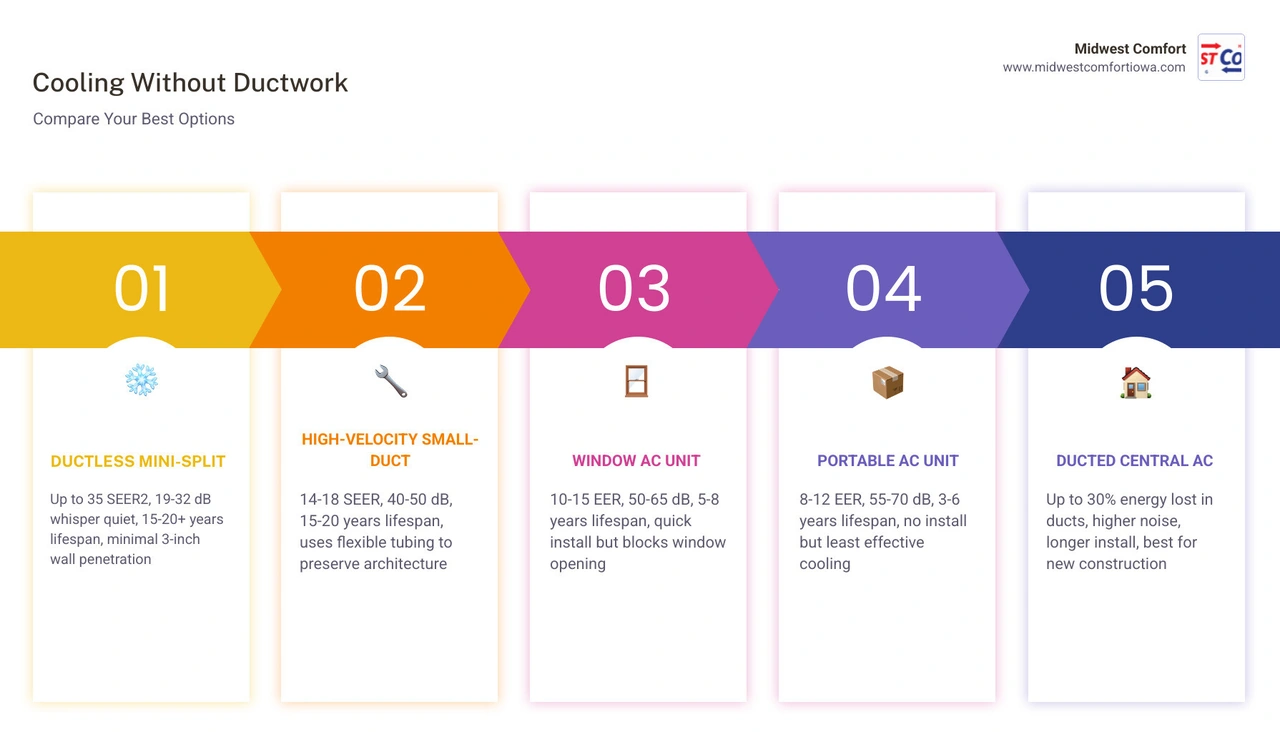
Adding Cooling Without Ductwork Options Compared
When we sit down with families in the Des Moines metro area to discuss retrofitting a home for summer comfort, the conversation always starts with a comparison. To find the perfect match, we have to look at the big picture. How does a permanent, high-efficiency system compare to a quick, temporary fix?
For a complete breakdown of how these systems stack up against traditional ducted systems, you can read our detailed Central AC vs Ductless Mini Split Comparison.
To make an informed decision, let's explore the primary contenders in detail.
Ductless Mini-Splits: The Gold Standard for Home Comfort
If you are looking for a permanent, highly efficient, and whisper-quiet solution, ductless mini-split systems are the undisputed champion. These systems consist of an outdoor compressor unit connected to one or more indoor air handlers via a small conduit containing refrigerant lines, suction lines, and power cables.
The magic of modern ductless systems lies in their inverter technology. Unlike traditional systems that operate like a standard light switch—either 100% on or completely off—inverter-driven compressors act like a dimmer switch. They constantly adjust their speed to meet the exact cooling demand of the room. This "cruise control" approach prevents the energy-guzzling start-stop cycles of older systems, saving up to 40% on utility consumption compared to conventional ducted systems.
Additionally, ductless systems provide built-in zoned cooling. Because each indoor air handler has its own thermostat, you can cool only the rooms you are actively using. If you want to learn more about how these systems function and why they are transforming home comfort, check out our guide on Mini Split Air Conditioners.
High-Velocity Small-Duct Systems for Historic Preservation
For homeowners who want central air but live in historic properties with plaster walls, beautiful woodwork, or limited space, high-velocity small-duct systems offer a compelling alternative.
Instead of bulky, metal ductwork that requires dropping ceilings or building soffits, high-velocity systems use flexible, insulated tubes that are only about two inches in diameter. These mini-ducts can easily be snaked through existing wall cavities, crawlspaces, and closets with minimal disruption to your home's historic structure.
High-velocity systems use a process called aspiration cooling. Instead of dumping cold air into a room, they draft air through small, circular wall or ceiling outlets at a high speed. This creates a gentle, continuous circulation pattern that mixes the air evenly, eliminating hot spots. A major benefit of this process is that it pulls up to 30% more moisture out of the air than standard air conditioners, making it highly effective during muggy Iowa summers.
Temporary Solutions: Window Units and Portable ACs
Window units and portable air conditioners are the most common "band-aid" fixes for hot rooms. While they provide quick, temporary relief, they come with substantial trade-offs in efficiency, security, and noise.
Portable units are particularly inefficient due to a phenomenon called negative pressure. Single-hose portable ACs pull conditioned air from inside the room, use it to cool the compressor, and vent it outside. This creates a vacuum inside your home, which actively sucks hot, humid outdoor air in through cracks around windows, doors, and floorboards. This means the unit has to work twice as hard to cool the same space.
Furthermore, temporary units are loud. Because the compressor and the fan are housed inside the same cabinet, these systems typically run at 50 to 70 decibels—comparable to a loud conversation or a vacuum cleaner. They also block window views, reduce natural light, and present security risks by leaving windows partially unlocked.
Why Ductless Mini-Splits Lead the Way in Efficiency and Air Quality
When we compare options for adding cooling without ductwork, energy efficiency is often the deciding factor. Modern ductless mini-split systems can achieve SEER2 (Seasonal Energy Efficiency Ratio 2) ratings as high as 35. To put that in perspective, typical central air systems generally range from 14 to 26 SEER2, and window units rarely break 15.
By bypassing ductwork entirely, you eliminate the thermal loss associated with leaky, uninsulated ducts running through hot attics or crawlspaces. This alone keeps your system running at peak performance. For a closer look at how these efficiency gains translate to local homes, read about the Ductless Mini Split Benefits for Iowa Homeowners.
Beyond saving energy, ductless systems offer superior indoor air quality and humidity control. Traditional ductwork can act as a collection site for dust, pet dander, pollen, and mold spores, which are then recirculated every time the system turns on. Ductless units utilize multi-stage filtration systems within each indoor air handler, trapping allergens and dust before they can circulate.
They also feature dedicated dehumidification modes that continuously pull excess moisture out of the air without over-cooling your living space, keeping your home feeling fresh and comfortable.
Sizing Your System When Adding Cooling Without Ductwork Options Compared
Getting the right size system is critical to your long-term comfort. A system that is too small will run constantly without ever cooling the room, while an oversized system will "short-cycle"—turning on and off rapidly. Short-cycling prevents the system from running long enough to remove humidity, leaving your home feeling damp and clammy.
To avoid this, we always perform a comprehensive Manual J load calculation. This scientific method determines the exact heating and cooling needs of your space by analyzing:
- Total square footage and ceiling height.
- The number, size, and orientation of windows (e.g., south-facing sunrooms have a much higher heat gain).
- Insulation levels in your walls, attic, and floors.
- Local climate patterns in the Des Moines metro area.
For a deeper dive into how proper sizing ensures peak performance, check out our resource on Mini Split AC Systems for Home Comfort.
Year-Round Performance and Cold Climate Heating
One of the greatest advantages of modern ductless mini-split systems is their dual functionality. Most of these systems are actually air-source heat pumps, meaning they can both heat and cool your home.
In the summer, they absorb heat from inside your home and release it outdoors. In the winter, the process reverses: they extract ambient heat from the outdoor air—even in freezing temperatures—and pump it inside.
Historically, homeowners worried that heat pumps couldn't handle freezing Midwestern winters. However, modern cold-climate heat pumps are engineered to maintain 100% of their heating capacity down to 5°F and continue providing reliable warmth at temperatures as low as -15°F. This makes them an exceptional year-round comfort solution and an excellent way to transition away from inefficient baseboard heaters or old radiators.
Installation and Maintenance for Long-Term Performance
One of the most appealing aspects of ductless mini-split systems is how non-invasive the installation process is. Unlike traditional central air retrofits, which can require tearing open walls and ceilings for weeks, a single-zone mini-split can typically be installed in just one day.
The installation requires only a small, three-inch hole drilled through the exterior wall. This hole is used to run the copper refrigerant lines, condensate drain tube, and electrical control wiring from the indoor air handler to the outdoor compressor.
While the process is straightforward, professional installation is essential. Technicians must properly flare the refrigerant lines, perform vacuum testing to ensure there are no leaks, and verify that the electrical panel has the capacity to handle the new load. If you are in the Urbandale area and want to see what a professional installation entails, read our guide on Mini Split Installation Urbandale IA.
To keep your system running efficiently for its 15-to-20-year lifespan, simple routine maintenance is required:
- Clean the filters: Wash the reusable mesh filters in your indoor units every 2 to 4 weeks during peak cooling season.
- Keep the outdoor unit clear: Ensure grass, leaves, and snow are cleared away from the outdoor condenser.
- Schedule annual tune-ups: Have a professional inspect refrigerant levels, clean the coils, and clear the condensate drain lines once a year.
Choosing the Right Setup When Adding Cooling Without Ductwork Options Compared
Ductless systems offer incredible design flexibility, allowing you to choose the indoor unit style that best fits your room's layout and aesthetic:
- Wall-Mounted Units: The most popular and cost-effective option, mounted high on a wall to maximize air distribution.
- Ceiling Cassettes: Recessed into the ceiling, leaving only a sleek grille visible. These are perfect for a clean, minimalist look.
- Floor-Mounted Handlers: Installed low on the wall, making them ideal for rooms with low ceilings, attic knee walls, or replacement of traditional radiators.
Whether you need a single-zone setup for a master suite or a multi-zone system to cool your entire home, there is a configuration tailored to your space. For residents in the northern metro area, you can learn more about local options by visiting our page on Ductless AC Ankeny IA.
Local Solutions and Regional Guides for Iowa Homeowners
Every neighborhood in the Des Moines area has its own unique home styles and cooling challenges. Whether you live in a historic home, a split-level, or a brand-new addition, we have put together local guides to help you navigate your options:
- Altoona: If you are upgrading an older system or finishing a basement, check out our Ductless AC Replacement Altoona guide.
- Waukee: Planning a home addition or looking to solve a "hot second floor" issue? Read our Ductless Replacement Waukee Guide.
- Johnston: Learn about custom zoning for multi-level homes in our Ductless System Johnston overview.
- Windsor Heights: For tips on maintaining system efficiency in mature neighborhoods, see our Mini Split Service Windsor Heights Guide.
Frequently Asked Questions about Ductless Cooling
Can a ductless mini-split cool an entire home?
Yes! While a single-zone system is designed for one room, multi-zone systems allow you to connect up to eight indoor air handlers to a single, powerful outdoor compressor. Each indoor unit operates independently with its own thermostat, providing complete, customized comfort throughout your entire home.
Are there federal tax credits or rebates available in 2026?
Yes, there are excellent financial incentives available in 2026 for high-efficiency upgrades. Under the Inflation Reduction Act, the Section 25C tax credit allows homeowners to claim up to 30% of the cost of qualifying ENERGY STAR-certified heat pumps, capped at $2,000 annually. Additionally, local utility companies across the Des Moines metro area often offer rebates for installing high-efficiency cooling systems.
How long do ductless mini-split systems typically last?
With proper care and annual professional maintenance, high-quality ductless mini-splits typically last 15 to 20 years. This is significantly longer than temporary window units (which last 5 to 8 years) or portable air conditioners (which often need replacement after 3 to 6 years).
Conclusion
Adding cooling to a home without existing ductwork doesn't mean you have to settle for noisy window units or undergo a massive, invasive remodeling project. By comparing your options, it is clear that ductless mini-splits provide the ultimate blend of whisper-quiet operation, unmatched energy efficiency, and long-term durability.
At Midwest Comfort, we are proud to be Des Moines' trusted, family-owned HVAC service provider. Our family-oriented approach means we don't believe in one-size-fits-all solutions. We take the time to evaluate your home's unique layout, listen to your comfort goals, and design a tailored system that fits your lifestyle. With our client loyalty programs and flexible payment options, we make it simple and stress-free to upgrade your home’s comfort.
Ready to reclaim your home from the summer heat? Schedule your professional cooling consultation today with Midwest Comfort and let us help you stay cool all year long!


Get Your HVAC Serviced Today


