The Calm Before the Cold: Facing the Annual Heating Bottleneck
As the mild September transition weather settles over the Des Moines metro area, it is the perfect time to understand exactly why you should never wait for the first freeze to test your furnace. The Midwest does not gradually ease into winter; we experience abrupt, severe temperature drops that can turn a comfortable autumn afternoon into a freezing night in a matter of hours. When that sudden chill hits, thousands of homeowners walk over to their thermostats, switch them to heat, and expect immediate warmth. But for many, that flip of the switch results in nothing but silence, cold air, or a flashing error light.
This creates a massive, concrete problem: discovering a failed ignition or a seized blower motor at the exact same moment that hundreds of your neighbors are discovering the exact same issue. When an entire region turns on its heating equipment simultaneously, the local service grid is instantly overwhelmed. What could have been a simple, scheduled tune-up in early fall suddenly becomes an emergency service call with a wait time that can stretch for days. The decision point you face right now is simple: you can run a safe, 10-minute test during the mild weather, or you can cross your fingers and hope your system survives the first sub-freezing night of the year.
Taking a few minutes to evaluate your system now gives you a massive advantage. If you find an issue, you have the luxury of time. You can schedule repairs at your convenience, without the stress of a freezing home or the disruption of an emergency after-hours visit. If you want to avoid the rush completely, reaching out to learn more about our heating systems is the smartest move you can make before the frost arrives.
Inside the Dispatch Center: The 'First Freeze' Phenomenon
To truly understand the value of testing your system early, you have to look at the first freeze from our dispatchers' perspective at Midwest Comfort Heating & Cooling. The morning after the first hard freeze in the Des Moines area is the most chaotic day of the year for our team. Before the sun even comes up, our phone lines begin to light up. By 8:00 a.m., our dispatch board is completely full. By noon, we are forced to tell panicked homeowners that the earliest available appointment is days away.
This localized panic is entirely predictable, yet it catches countless families off guard every single year. From our dispatchers' chairs, the sheer volume of simultaneous emergency calls is overwhelming. Our technicians are routed from one freezing house to the next, working long past sunset to restore heat. The stress of an unexpected breakdown takes a toll on homeowners, especially when they realize they are stuck at the back of a very long line. Testing your system early completely removes you from this chaotic bottleneck, trading anxiety for total peace of mind.
Why Simultaneous Failures Happen
It might seem like bad luck when your furnace refuses to start on the coldest night of the year, but it is actually a matter of basic mechanics. Based on our years of repairing Des Moines area furnaces, here is a pattern our team sees often during the off-season:
- Months of dormancy: Furnaces in the Midwest typically sit completely idle for five to six months. During this time, moving parts do not circulate lubrication, and electrical contacts remain inactive.
- Dust accumulation: Even in a clean home, dust settles heavily on heat exchangers, flame sensors, and burners over the summer. When the system finally fires up, this debris can interfere with sensitive safety sensors.
- Stiffened mechanical components: Belts can dry out, and blower motor bearings can stiffen after months of sitting still. The sudden demand of a long heating cycle can cause these weakened parts to snap or seize.
The simultaneous activation across the region exposes all of these dormant issues at the exact same time. It isn't a coincidence that furnaces break down on the first freeze; the first freeze is simply the event that forces all those hidden off-season problems into the light.
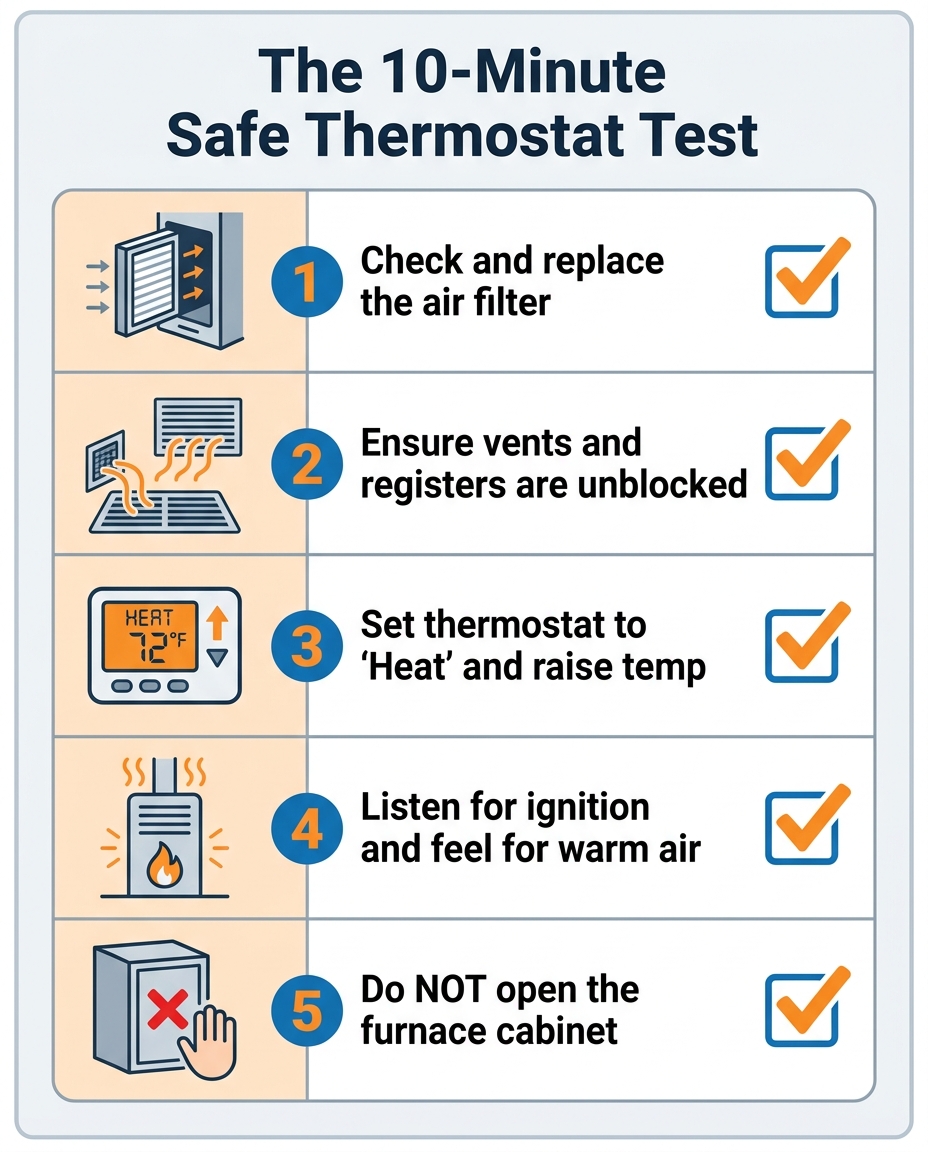
The 10-Minute September Thermostat Test (A Safe Homeowner Guide)
You do not need to be a mechanical expert to find out if your heating system is ready for winter. Mild September transition weather provides a safe, comfortable buffer to test your equipment without the immediate threat of freezing indoor temperatures if the system fails. Framing this quick check as a strategy to "skip the line" ensures you won't be caught in the emergency repair rush.
Here are the safe, actionable steps we recommend every homeowner take before the cold weather sets in:
- Check and replace the air filter: Before you even touch the thermostat, locate your furnace filter. A clogged filter restricts airflow, which can cause the system to overheat and shut down during your test. Slide in a fresh, clean filter to give your system the best chance of running smoothly.
- Ensure vents and registers are clear: Walk through your home and check the supply and return vents. Make sure rugs, furniture, or curtains have not been accidentally moved over the grilles during the summer. Blocked vents force the blower motor to work significantly harder than necessary.
- Switch the thermostat to "Heat": Go to your main control panel, switch the system mode from "Cool" or "Off" to "Heat," and raise the temperature setting three to five degrees above the current room temperature. This creates a definitive call for heat.
- Listen for the ignition sequence: Stand near the furnace (without opening any panels) and listen. You should hear a click from the thermostat, followed by the inducer motor spinning up, the click of the igniter, and finally the gentle roar of the gas burners igniting. Within a minute or two, the main blower fan should engage.
- Feel for warm air: Go to the nearest supply register and hold your hand over it. You should feel a steady stream of warm air. Let the system run for about ten minutes to ensure it doesn't short-cycle or shut down prematurely.
Strict Safety Warning: Your testing should be strictly limited to operating the thermostat and changing the air filter. You should never open the furnace cabinet, attempt to clean internal sensors, or try to bypass safety switches. DIY mechanical repairs on gas or electrical heating equipment are incredibly dangerous. If your system fails this basic test, the safest next step is scheduling a fall furnace tune-up with a licensed professional.

Normal vs. Abnormal: Decoding First-Cycle Smells and Sounds
When you fire up your heating system for the first time in months, it is going to make its presence known. Many homeowners panic at the first hint of an odor or a strange noise, assuming the system is failing. While you should always trust your instincts, it helps to know the difference between the harmless side effects of a long summer and the actual warning signs of a mechanical failure.
Here is a breakdown of what to expect during that crucial first cycle:
| Symptom | Normal (Safe) | Abnormal (Requires Professional Attention) |
|---|---|---|
| Odors and Smells | A distinct "burning dust" smell that occurs during the first 10 to 30 minutes of operation. This is simply the dust that settled on the heat exchanger over the summer burning off safely. | The smell of melting plastic, electrical ozone, or a persistent rotten egg odor (natural gas). If you smell gas or electrical burning, shut the system down immediately and call for help. |
| Startup Noises | A series of clicks from the thermostat, a low hum from the inducer motor, and a soft "whoosh" as the burners ignite. The ductwork may also "pop" slightly as it expands with the heat. | Loud banging, grinding, metal-on-metal screeching, or rapid rattling. These indicate failing motor bearings, a cracked heat exchanger, or loose internal components. |
| Airflow and Cycling | The blower fan turns on a minute or two after the burners ignite, delivering a steady, uninterrupted flow of warm air until the target temperature is reached. | The system turns on, blows cold air, and shuts off after just a few minutes (short-cycling), or the blower motor struggles to push air through the vents. |
The quick rule of thumb: If a burning dust smell dissipates after the first hour, we generally consider your system to be fine. If any abnormal signs occur, do not try to push the system through the cycle. Turn the thermostat off immediately to prevent further damage and contact a certified technician to investigate the root cause.
The Reality of Emergency Wait Times and After-Hours Calls
Waiting for a breakdown is a gamble that rarely pays off. When a furnace fails in the middle of a freezing night, the situation escalates from a minor inconvenience to a genuine home emergency. Without heat, indoor temperatures can plummet to dangerous levels within hours, putting your family's comfort at risk and increasing the danger of frozen, bursting pipes.
During the peak of the first freeze, local technicians are stretched to their absolute limits. After-hours emergency calls become a necessity when systems fail overnight, but the reality is that dispatchers can only send technicians to so many homes in a 24-hour period. When you wait for a failure, you are competing with every other unprepared homeowner in the region for a very limited number of available appointments.
Having an established relationship with a reliable team changes this dynamic entirely. One Des Moines homeowner who has maintained a long-term maintenance relationship with us at Midwest Comfort Heating & Cooling found that keeping their heating systems well-maintained meant they received quick, priority responses whenever emergencies did arise. A history of consistent care ensures that your equipment is known to our technicians, making diagnostics faster and repairs more efficient. However, the ultimate goal is to avoid these high-stress, after-hours situations entirely. Early testing and proactive care are the only guaranteed ways to protect your home from the chaos of the winter rush.
Skipping the Line with Proactive Fall Maintenance
While a 10-minute thermostat test is an excellent way to confirm basic operation, it does not guarantee winter-long reliability. Your thermostat can tell you if the furnace turns on today, but it cannot tell you if a capacitor is weak, if the flame sensor is coated in carbon, or if the blower motor is drawing too much amperage. To truly secure your home for the months ahead, you need to transition from basic testing to professional maintenance.
A professional tune-up involves a deep, comprehensive inspection of the internal components that you cannot safely access yourself. Our technicians use specialized tools to measure electrical currents, test safety limit switches, calibrate the gas valve, and inspect the heat exchanger for microscopic cracks. By diagnosing minor part wear before it causes a catastrophic breakdown, a tune-up saves you from the sudden shock of a mid-winter failure.
Proactive scheduling also allows you to choose an appointment time that actually fits your busy life, rather than being forced to take time off work to wait for an emergency repair window. For example, one local customer reached out on a Wednesday in early November when their furnace unexpectedly stopped running. Mick, one of our expert technicians, was able to quickly diagnose the issue, retrieve the necessary part, and get the furnace back up and running the very same day. While this fast, responsive turnaround was a huge relief for the homeowner, scheduling a thorough inspection earlier in the season often catches these worn parts before they ever have the chance to fail.
When you rely on local HVAC professionals to thoroughly inspect and clean your system before the cold weather hits, you gain unparalleled peace of mind. You sleep better knowing that your equipment has been verified by an expert, and you bypass the massive local bottleneck entirely.
Frequently Asked Questions About Fall Furnace Testing
When should I turn my furnace on for the first time?
Our team recommends testing your heating system in early fall during mild weather, well before the first freeze is forecasted. September or early October is the perfect window in the Midwest. Testing when the outside temperature is still comfortable ensures that if your system fails to start, your home won't immediately become dangerously cold while you wait for a repair technician.
Is it normal for a furnace to smell the first time you turn it on?
Yes, a brief burning dust smell is entirely normal during the first cycle of the season. Over the summer, dust and airborne particles settle on the heat exchanger inside the furnace cabinet. When the burners ignite for the first time, this dust burns off, creating a distinct odor that usually travels through the vents. It is harmless and should clear up shortly.
How do I test my furnace before winter?
Start by checking your air filter and replacing it if it is dirty. Next, ensure all your vents and registers are unblocked by furniture or rugs. Switch your thermostat to the "Heat" setting and raise the temperature a few degrees above the current room temperature. Finally, listen for the system to ignite and hold your hand over a vent to verify that warm air is blowing steadily.
What should I do if my furnace won't turn on after summer?
First, verify that your thermostat is set correctly to "Heat" and has fresh batteries if required. Next, check your electrical panel to ensure the furnace breaker hasn't tripped, and confirm that the furnace power switch (usually located on or near the unit) is flipped to the "On" position. If you have checked these basics and the system still fails to ignite, turn the thermostat off and call a professional technician.
Can I inspect the inside of my furnace cabinet myself?
No, opening the furnace cabinet and handling internal components requires specialized training and should only be done by a licensed professional. Furnaces combine high-voltage electricity with combustible natural gas, making DIY repairs extremely dangerous. Stick to changing the filter and operating the thermostat, and leave the internal diagnostics to the experts.
How long does a burning dust smell usually last?
The normal burning dust smell should dissipate within 15 to 30 minutes, though it can sometimes linger for up to an hour depending on how much dust has accumulated. Opening a few windows during this first cycle can help clear the air faster. If the smell persists for several hours, or if it smells like melting plastic or electrical burning, shut the system off immediately and call for service.
Beat the Rush: Secure Your Winter Comfort Today
The annual first freeze rush is entirely predictable, but participating in it is completely optional. By taking just ten minutes to run a safe thermostat test during the mild transition weather, you can identify hidden problems long before they turn into freezing, after-hours emergencies. Bypassing the massive local bottleneck means you stay in control of your schedule, your comfort, and your home's safety.
Do not wait for the temperature to drop off a cliff before finding out if your heating equipment is up to the task. Act now while the weather is still forgiving. Securing a proactive maintenance plan ensures that your system is thoroughly cleaned, inspected, and optimized by our professionals, keeping your family warm and worry-free all winter long.
