
Will Your Hot Water Supply Survive the Next Winter Power Outage?
Here at Midwest Comfort Heating & Cooling, our team frequently fields calls from homeowners wondering what happens to their daily routine when the grid drops during a freeze. Comparing Gas vs Electric Water Heaters for Winter Reliability is the critical first step to ensuring your home remains comfortable when severe weather strikes. In our years of preparing Des Moines homes for the cold, we've seen how severe winter storms and unexpected grid outages force homeowners to evaluate exactly how their essential appliances will perform when the power is suddenly cut. Replacing an aging water heater during your September pre-winter prep brings immense peace of mind, but it requires choosing the right fuel type for your home's specific infrastructure and your family's needs.
The primary decision comes down to weighing the faster recovery speed and potential off-grid capability of a gas unit against the installation simplicity and safety profile of an electric model. Understanding these differences ensures you aren't left taking freezing showers during a multi-day grid failure. If you are starting to evaluate your options for the upcoming season, exploring our professional HVAC Services and dedicated Water Heater Services will help you map out the best strategy for your household.
Understanding Winter Recovery Rates: The Impact of Dropping Groundwater Temperatures
As winter sets in across the Des Moines metro area, the temperature of the municipal or well water entering your home drops significantly. This physical reality changes how your water heater operates on a daily basis. During the summer, groundwater might enter your home at a relatively mild temperature. By January, that same water is hovering just above freezing as it travels through underground pipes into your basement or utility closet.
The Science of Delta T
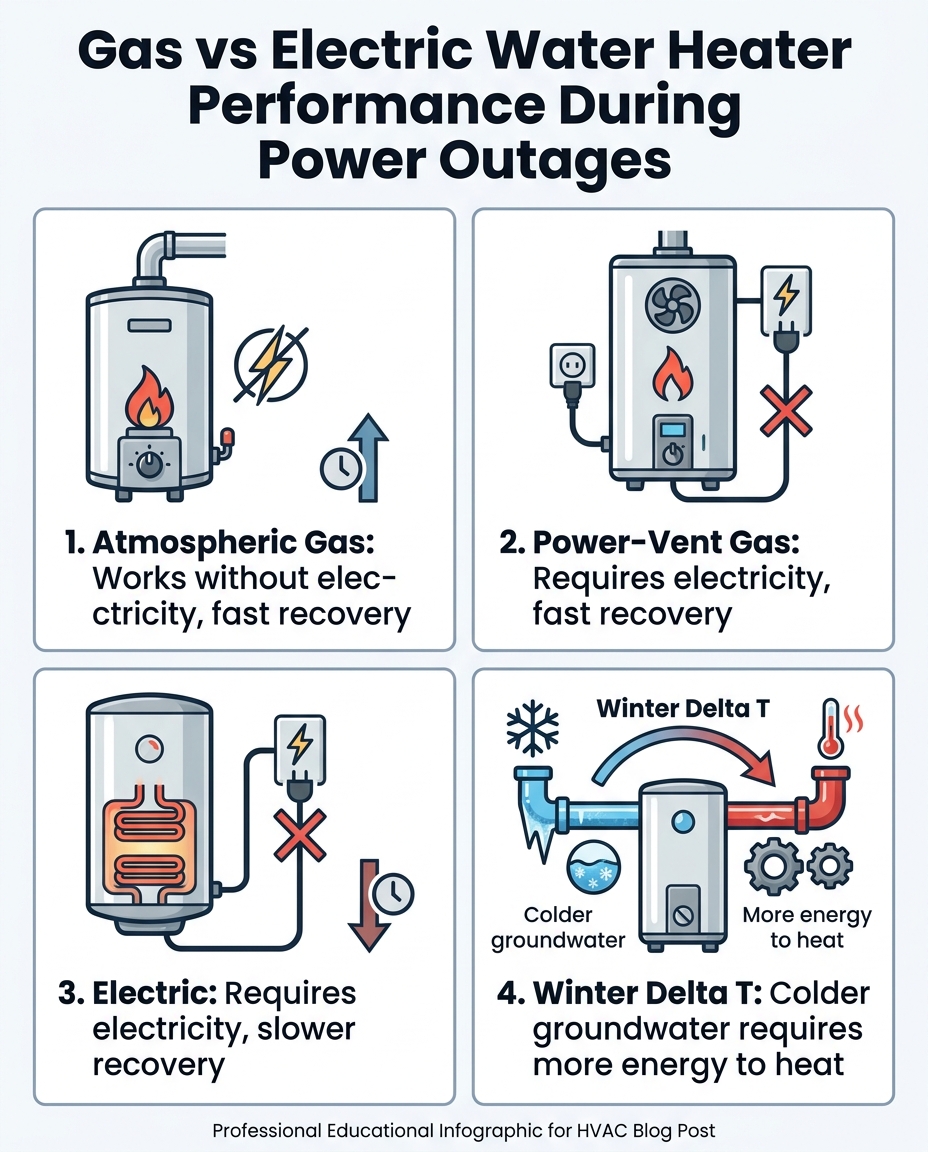
This colder inlet water requires a higher temperature rise—known in the industry as Delta T—to reach your desired shower temperature of around 120°F. If the incoming water is 40°F instead of 60°F, the system has to generate substantially more thermal energy to bridge that gap. A higher Delta T means the water heater must work harder and run longer, noticeably slowing down the overall recovery time between uses.
Why Inlet Temperatures Matter for Daily Comfort
With Des Moines average winter lows dropping well below freezing, inlet pipe temperatures are drastically affected, making recovery speed a daily comfort factor rather than just an abstract specification. Systems with higher BTU inputs or larger heating elements generally handle this increased workload more efficiently. In our experience servicing local neighborhoods, a pattern we see often is that when a system is undersized or struggling with the winter temperature drop, homeowners end up facing the dreaded mid-shower cold water shock as the tank is depleted faster than it can replenish.
Gas Water Heaters: Off-Grid Resilience and Faster Heating
Gas water heaters typically offer faster recovery speeds due to the intense, immediate heat of combustion. This makes them highly effective against the cold winter groundwater common in the Des Moines metro area. When our technicians help families evaluate gas models for winter reliability, we always emphasize the critical difference between the two primary venting types, as they behave entirely differently during a grid failure.
Atmospheric Venting: The Off-Grid Champion
Standard atmospheric vent gas heaters utilize a traditional standing pilot light and a mechanical gas valve. Because they rely on natural thermal buoyancy to exhaust combustion gases up the chimney or flue, they do not require a blower motor. This means they can operate completely without electricity. If an ice storm knocks out power to your neighborhood for three days, an atmospheric gas water heater will continue to produce hot water just as it does on a normal day, providing a massive advantage in off-grid resilience.
Power-Vent Models: Efficiency Tied to the Grid
Power-vent gas models, on the other hand, use an electric blower motor to force exhaust gases out of the home, often through a PVC pipe routed out the side wall. While these units are highly efficient and offer flexible installation options, they require electricity to run the exhaust fan. If the power goes out, the safety mechanisms will immediately shut down the gas burner. A power-vent gas model will NOT function during a power outage, meaning its off-grid resilience is identical to an electric unit.
A quick note on upgrades: We always remind homeowners upgrading to high-efficiency gas models that federal tax credits or local utility rebates may apply to certain qualifying installations. Always verify current program details with a tax professional or your utility provider before making a final purchase.
Electric Water Heaters: Simplicity, Safety, and Grid Dependence
Electric water heaters are incredibly popular due to their straightforward operation and excellent safety profile. Because they do not burn fuel, they carry zero risk of gas leaks, carbon monoxide issues, or combustion hazards. For many homeowners we work with who are tackling their September pre-winter prep, eliminating these risks is a top priority.
The Safety and Installation Advantage
Electric units feature a simpler installation process, as they do not require complex venting systems, roof penetrations, or gas line routing. This flexibility allows them to be placed in closets, under stairwells, or in finished basements where running a new gas line would be impractical. If you are looking for an affordable water heater installation, our team often recommends electric models as they present the path of least resistance regarding upfront labor and infrastructure modifications.
Managing Grid Dependence During Extreme Cold
The critical drawback for winter reliability is their total dependence on the electrical grid. When the power goes out, the heating elements stop immediately. While the insulated tank will keep stored water warm for a short period—usually enough for hand washing or one quick shower if you catch it early—the unit cannot generate new hot water until power is restored.
Furthermore, once the grid comes back online, electric models generally have a slower recovery speed than gas units. The upper and lower heating elements must work to overcome the severe winter Delta T, which can take an hour or more to fully replenish a depleted tank. If your neighborhood is prone to frequent, prolonged winter outages, this grid dependence is a major factor to consider.
Side-by-Side Comparison: Gas vs. Electric in Extreme Cold
To help you weigh your options objectively, we have broken down the core performance metrics of both systems. Our team's extensive local experience at Midwest Comfort Heating & Cooling in navigating Iowa's severe winters shows that prioritizing the right features for your specific home infrastructure prevents major headaches down the road. Here is how they stack up when the temperatures plummet:
| Performance Metric | Gas Water Heaters (Atmospheric) | Electric Water Heaters |
|---|---|---|
| Recovery Speed | Fast. High BTU output easily overcomes cold winter groundwater. | Slower. Heating elements take longer to bridge the winter Delta T. |
| Power Outage Resilience | Excellent. Operates completely off-grid without electricity. | None. Heating stops immediately when the grid drops. |
| Safety Profile | Good. Requires proper venting to prevent carbon monoxide buildup. | Excellent. Zero risk of combustion hazards or gas leaks. |
| Installation Requirements | Complex. Requires dedicated gas lines and specific vertical venting. | Flexible. Only requires a dedicated 240V electrical circuit. |

Beyond the Tank: Upkeep and Alternative Winter Heating Solutions
Regardless of the fuel type you choose during your September pre-winter prep, annual maintenance is critical to keeping the system reliable. A common issue we see during our fall tune-ups is that over time, minerals from your water supply settle at the bottom of the tank. This sediment buildup creates an insulating barrier between the heat source and the water, forcing the unit to run longer and lose recovery speed. Flushing the tank annually ensures the heater transfers energy efficiently.
Proactive Maintenance Prevents Cold-Weather Failures
Routine inspections of pilot lights, venting pathways, and electrical heating elements prevent unexpected failures on the coldest days of the year. Equipment malfunctions rarely happen at convenient times. Just last season, one of our Des Moines customers experienced a sudden system issue late in the evening and reached out at 10 PM. One of our technicians arrived the next morning at 9 AM and had everything fixed within 30 minutes. Staying proactive with a Routine Maintenance Plan helps catch these minor issues before they turn into late-night emergencies, ensuring your systems remain dependable for over a decade.
Exploring Boiler Systems for Severe Winters
For homes requiring robust, whole-house winter resilience, exploring hydronic heating alternatives can provide both radiant warmth and efficient hot water. Boiler Systems offer a different approach to home heating by circulating heated water or steam through radiators or radiant floor tubing. They provide consistent, quiet heat that is highly effective against extreme cold. In many setups we install, an indirect water heater can be tied directly to the central boiler, centralizing your maintenance needs and improving overall energy efficiency across the entire home.
Frequently Asked Questions About Winter Water Heating
Will my gas water heater work in a power outage?
It depends entirely on the venting type. Standard atmospheric vent gas water heaters with a standing pilot light will continue to work perfectly without electricity. However, power-vent gas models require an electric blower motor to exhaust gases, meaning they will shut down immediately during a grid outage.
Why does my water heater run out of hot water faster in the winter?
During winter, the groundwater entering your home is significantly colder than in the summer. Your water heater has to work much harder to raise this near-freezing water to your desired shower temperature (a higher Delta T), which slows down the recovery rate and depletes the tank faster.
Which water heater recovers faster in cold climates?
Gas water heaters generally recover faster in cold climates. The intense heat of a gas burner transfers energy to the water more rapidly than electric heating elements, allowing the tank to replenish hot water quicker even when the incoming groundwater is extremely cold.
Are electric water heaters reliable in extreme cold?
Yes, electric water heaters are highly reliable and safe for everyday use in cold climates. However, their reliability is strictly tied to the electrical grid. If a severe winter storm causes a power outage, your electric water heater will stop producing hot water until power is restored.
What is the difference between an atmospheric vent and a power vent water heater?
An atmospheric vent uses natural thermal buoyancy to draft exhaust gases up a chimney or vertical flue, requiring no electricity. A power vent uses a motorized fan to push exhaust gases horizontally out a side wall, which requires a standard electrical outlet to operate.
How does groundwater temperature affect my hot water supply?
Colder groundwater means the water entering your tank drops the overall internal temperature faster during use. The system must heat the water from a lower starting point, extending the time it takes to heat a full tank and reducing the volume of continuous hot water available for back-to-back showers.
Make a Confident Decision Before the Freezing Temperatures Arrive
Choosing between gas and electric depends entirely on your home's existing infrastructure and your priority for off-grid resilience versus installation simplicity. A clear, objective evaluation of how these models perform under heavy cold-weather use allows for a confident pre-winter purchase. By completing your September pre-winter prep early, you avoid the rush of emergency replacements when the first major freeze hits. Consult with our team at Midwest Comfort Heating & Cooling to ensure your new system is sized correctly, installed safely, and ready to deliver reliable performance all season long. Evaluating your options and Comparing Gas vs Electric Water Heaters for Winter Reliability today guarantees your household remains comfortable, safe, and fully prepared for whatever winter brings.
