
Why Understanding How Water Heater Overflow and Leaks Cause Damage Could Save Your Home
How water heater overflow and leaks cause damage is something every Des Moines homeowner should understand before a small puddle becomes a serious problem. Water heaters work quietly in the background every day — until they don't. When a leak or overflow goes unnoticed, the consequences can range from warped flooring and soaked drywall to dangerous mold growth and electrical hazards.
Here's a quick look at the main ways water heater leaks cause damage:
- Structural damage - Water soaks into subfloors, wood framing, and drywall, causing rot, warping, and long-term weakening of your home's structure
- Mold and air quality issues - Standing moisture creates the perfect environment for mold spores, which can trigger respiratory problems and worsen allergies
- Electrical hazards - Water near outlets, wiring, or the heater's own electrical components creates a serious shock and fire risk
- Damage to belongings - Flooring, furniture, and stored items in your utility room or basement can be permanently ruined
- Higher utility bills - A leaking heater works harder to maintain temperature, wasting energy and driving up your monthly costs
Even a slow drip from a water heater pipe can quietly destroy particleboard flooring, seep behind walls, and breed mold — all before you notice anything is wrong. According to home repair cost data, water damage covering just 120 square feet can run well over a thousand dollars to restore. That's before accounting for any structural repairs or mold remediation.
The truth is, water heater leaks rarely announce themselves loudly. They tend to creep up gradually — a bit of rust here, a small puddle there — until the damage is already done. Knowing what to look for, why it happens, and what to do about it can protect your Des Moines home from a very expensive and stressful situation.
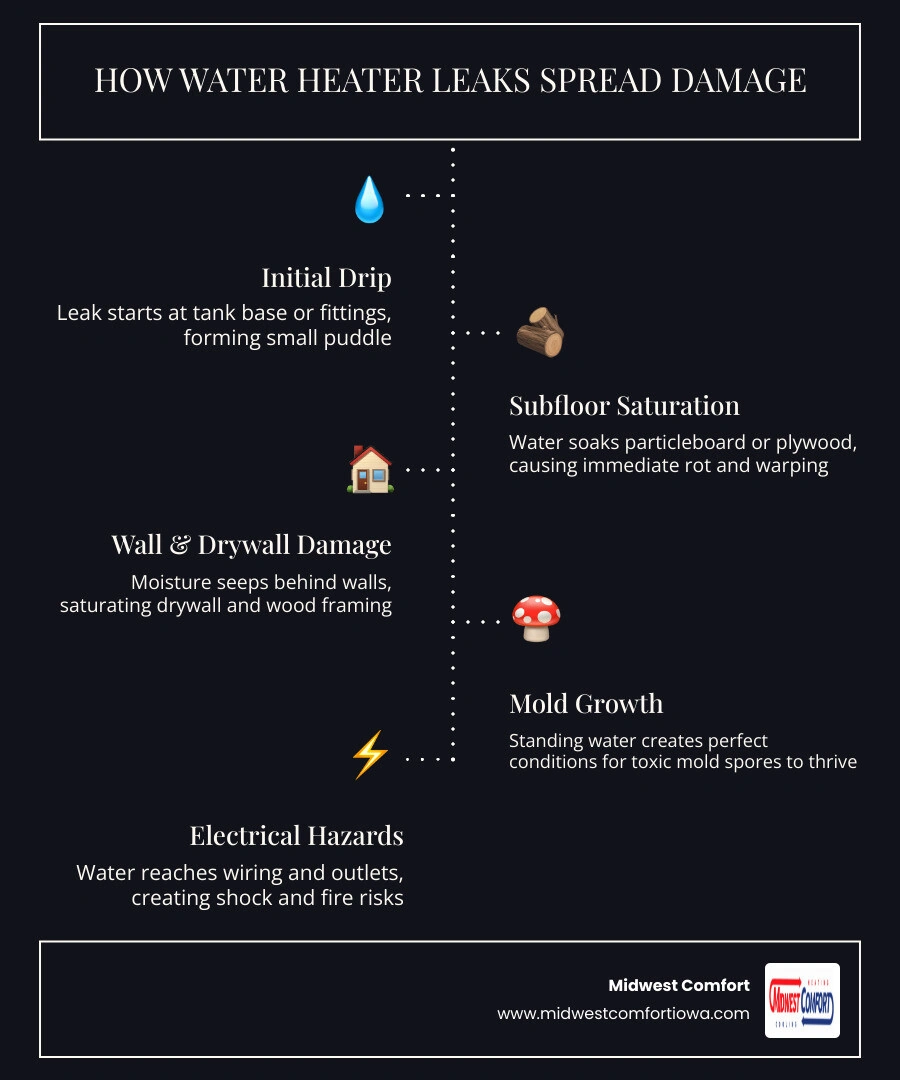
The Hidden Dangers: How Water Heater Overflow and Leaks Cause Damage
When we think of home disasters, we often imagine a burst pipe during a freezing Polk City winter. However, a slow-moving water heater leak can be just as devastating because it is often hidden. How water heater overflow and leaks cause damage usually begins with the materials surrounding the unit. Most utility rooms use porous materials like drywall and wood framing. When these are exposed to a constant drip, they act like a sponge, pulling moisture deep into the "bones" of your home.
Structural rot is a primary concern. If your water heater is located on a main floor or in a finished basement, the subfloor is at high risk. Many homes use particleboard, which loses its structural integrity almost immediately when wet. Even if you have plywood, prolonged exposure leads to delamination and rot. This doesn't just look bad; it can lead to sagging floors that eventually cave in under the weight of the heavy, water-filled tank.
Beyond the wood, we have to consider the risk of mold. It only takes 24 to 48 hours for mold spores to begin colonizing a wet surface. Because water heaters are often tucked away in dark, poorly ventilated closets or corners of the basement, mold can thrive for weeks before you smell that tell-tale "musty laundry" odor. This is why recognizing the Signs You Need Water Heater Repair is vital for the safety of your family.
How water heater overflow and leaks cause damage to your home's foundation
It might seem strange to think a water tank could hurt your foundation, but the volume of water involved is significant. A standard tank holds 40 to 80 gallons of water. If the tank ruptures or the overflow pipe discharges continuously, that water has to go somewhere. In many Des Moines basements, it seeps into the cracks of the concrete floor or pools against the base of the walls.
Drywall saturation is a major headache. Drywall can wick water upward, meaning a leak on the floor can ruin the bottom two feet of your walls in a matter of hours. This leads to crumbling plaster and the need for extensive "flood cuts" and patching. Understanding the Importance of Water Heater Repair means realizing that a small repair today prevents a total basement renovation tomorrow.
How water heater overflow and leaks cause damage to your health and air quality
Your home's air quality is directly tied to its humidity levels. A leaking water heater acts as a constant humidifier, but not the good kind. As water evaporates from the puddle on your floor, it raises the humidity in the surrounding area, making your AC work harder and creating a breeding ground for dust mites and fungi.
Mold spores are the biggest health threat. For residents in Waukee or Ankeny with asthma or allergies, mold can trigger severe respiratory distress, eye irritation, and skin rashes. In some cases, high-temperature leaks can also lead to Water Heater Temperature Fluctuations Causes that signal a failing thermostat, which could potentially lead to scalding or further tank stress.
Identifying the Culprits: Common Causes of Water Heater Failure
To prevent a swamp in your basement, we need to look at why these units fail in the first place. In the Des Moines area, we often deal with hard water. This means minerals like calcium and magnesium settle at the bottom of the tank. Over time, this sediment creates an insulating layer between the burner and the water, causing the bottom of the tank to overheat and eventually crack.
You can often hear this happening. When Water Heater Makes Popping Noises, it’s usually steam bubbles escaping from under that layer of "gunk." If you ignore these sounds, you are likely ignoring the Signs of Sediment Buildup in Water Heater that lead to a shortened lifespan.
Another major culprit is the Temperature and Pressure (T&P) relief valve. This is a safety device designed to open if the tank gets too hot (above 210°F) or the pressure gets too high (above 150 psi). If this valve fails or if your home’s water pressure is consistently above 80 psi, the valve might start to drip or, worse, stay closed when it should open, leading to a dangerous pressure buildup.
The role of the anode rod in preventing tank leaks
The anode rod is the "unsung hero" of your water heater. It is a long metal rod, usually made of magnesium or aluminum, that hangs inside the tank. Its sole purpose is to corrode so your tank doesn't have to. Because it is a more "active" metal, the rust-causing elements in the water attack the rod instead of the steel walls of the tank.
However, these rods don't last forever. In most homes, they need to be replaced every 3 to 5 years. Once the anode rod is completely eaten away, the water starts attacking the tank itself. This leads to internal corrosion that eventually eats a hole through the metal. At that point, Water Heater Repair Issues Solved usually involves a full replacement because you can't easily "patch" a corroded tank liner.
Red Flags: Warning Signs of an Impending Leak or Overflow
You don't have to wait for a flood to know your water heater is in trouble. We always tell our neighbors in Grimes and Johnston to keep an eye out for these red flags:
- Discolored Water: If your hot water looks rusty or brown, but the cold water is clear, the inside of your tank is likely rusting away.
- Moisture at the Base: Even if it’s just a damp spot on the concrete, it’s a sign that a connection is loose or the tank has a pinhole leak.
- Unusual Sounds: Banging, popping, or hissing sounds are all indicators of sediment or overheating.
- Age: If your unit is over 10 years old, it is officially in the "danger zone."
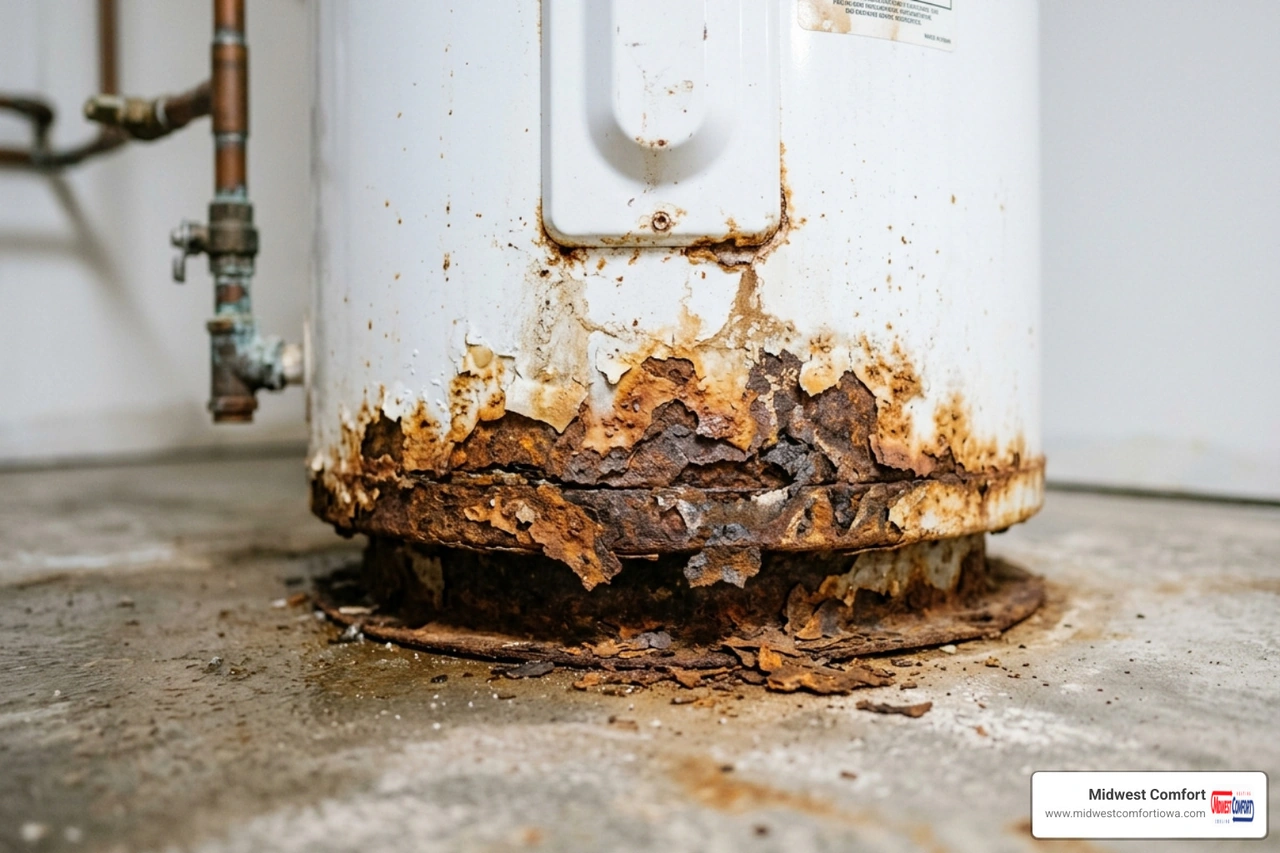
When you see these signs, it's a clear Warning Signs of a Failing Water Heater. Catching it now means you can schedule a controlled replacement rather than dealing with an emergency at 2 AM on a Sunday.
Why you shouldn't ignore a small puddle in your Des Moines utility room
It is tempting to see a small puddle and think, "I'll just wipe that up and keep an eye on it." But in plumbing and HVAC, puddles don't just go away. A small drip is often the precursor to a total tank failure. As the metal continues to corrode or the crack expands under the constant pressure of your home's water system, that drip will eventually become a gusher.
In our experience serving the Des Moines area, a "small puddle" is often just the tip of the iceberg. Water could be leaking from the top and running down behind the insulation, where you can't see it, rotting the tank from the outside in. If you see water where it shouldn't be, it is definitely Time for Water Heater Repair.
Emergency Response: Immediate Steps to Take When You Find a Leak
If you walk into your basement in Pleasant Hill or Clive and find standing water, don't panic. Follow these steps to minimize the damage:
- Safety First (Power Off): For an electric heater, flip the breaker in your electrical panel. For a gas heater, turn the dial on the thermostat to the "Off" or "Pilot" position. Never stand in water while touching electrical components.
- Shut Off the Water: Find the cold water pipe leading into the top of the heater. There should be a valve (either a handle or a lever). Turn it clockwise to stop the flow of water into the tank.
- Drain the Tank: If you have a garden hose, attach it to the drain valve at the bottom of the tank and run the other end to a floor drain or outside. Open the valve to empty the tank so it stops leaking onto your floor.
- Contain the Mess: Use towels, a wet/dry vac, or a mop to get the standing water up as quickly as possible to prevent mold and subfloor rot.
Taking these steps ensures Efficient Water Heater Repairs can happen faster once a technician arrives.
When to call a professional for a water heater leak in Des Moines
While some homeowners feel comfortable tightening a loose fitting, most water heater issues require a professional touch. This is especially true for gas units, where a mistake could lead to a gas leak or carbon monoxide issues. If the leak is coming from the bottom of the tank, it almost always signifies a structural failure of the unit.
In cases of massive flooding or if the water is near electrical panels, you need expert help immediately. A pro can help you decide if you need a Professional Water Heater Replacement or if a simple valve swap will do the trick.
Repair vs. Replacement: Making the Right Choice for Your System
Deciding whether to fix or toss your water heater usually comes down to the "50% Rule." If the repair costs more than half the price of a new unit — or if the unit is older than 8–12 years — replacement is usually the smarter financial move.
Here is a quick comparison of failure points to keep in mind:
| Feature | Traditional Tank Heater | Tankless Water Heater |
|---|---|---|
| Common Leak Point | Tank bottom (corrosion) | Heat exchanger (scale buildup) |
| Warning Sign | Popping sounds / Rust | Error codes / Low flow |
| Failure Risk | Tank rupture (flooding) | Internal component failure |
| Lifespan | 8–12 years | 15–20 years |
Knowing When to Replace Your Water Heater depends heavily on the condition of the tank itself. If the tank is leaking, it cannot be repaired. If a valve is leaking, you might have a few more years left in the unit.
Benefits of upgrading to a modern water heater
If you do need a replacement, the good news is that modern units are significantly more efficient than those made just a decade ago. New models have better insulation, reducing "standby heat loss" and lowering your energy bills. You might even consider a hybrid heat pump water heater or a tankless system to further reduce your footprint and eliminate the risk of a 50-gallon flood entirely.
Exploring the Benefits of Water Heater Replacement can make the sting of an unexpected expense much easier to handle. Plus, a new Water Heater Replacement gives you peace of mind during those long Iowa winters.
Steps for a seamless water heater transition
When it's time for a change, the process should be smooth. A professional installation ensures that the unit is properly vented, the gas lines are secure, and the T&P valve is piped correctly to a drain or the floor.
- Sizing: We help you calculate your "peak hour demand" so you never run out of hot water during the morning rush.
- Removal: The old, heavy, sediment-filled tank is safely hauled away.
- Installation: The new unit is leveled and connected to your home's specific plumbing and venting system.
Following the proper Steps for Water Heater Replacement is the best way to ensure your Old Water Heater Ready for Replacement doesn't cause any more headaches.
Frequently Asked Questions about Water Heater Leaks
Are tankless water heaters less likely to leak than traditional tanks?
Yes and no. Tankless heaters don't have a large storage tank that can rust through and flood a basement with 50 gallons of water. However, they are not immune to leaks. They can develop leaks in the heat exchanger or at the pipe connections, especially if hard water scale isn't flushed out annually.
Can I still use my water heater if it has a minor leak?
We don't recommend it. Even a small leak indicates that a component has failed or the tank integrity is compromised. Continuing to use it can lead to a sudden, catastrophic burst, and it will definitely increase your utility bills as the heater struggles to stay hot.
Is a leaking water heater considered a home emergency?
It certainly can be. If the leak is significant, near electrical outlets, or if you smell gas, it is an emergency. Even a slow leak should be treated with urgency to prevent mold growth and structural rot, which are much more expensive to fix than the heater itself.
Conclusion
At Midwest Comfort, we understand that your home is your sanctuary. Dealing with how water heater overflow and leaks cause damage is one of the most stressful experiences a homeowner can face, but you don't have to do it alone. As a family-owned business, we treat your home like our own, providing honest, high-quality, and cost-effective solutions tailored to the specific needs of Des Moines families.
From Polk City to Carlisle and Ankeny to Norwalk, we are here to ensure your home stays dry and comfortable. Whether you need a quick repair, a routine flush to remove sediment, or a brand-new energy-efficient system, our team is ready to help with flexible payment options and a commitment to excellence.
Don't let a small drip turn your basement into a swamp. For expert help with Water Heaters Des Moines IA, give us a call today and experience the Midwest Comfort difference.
