
The Unexpected Connection Between Late Summer Weather and Water Heater Leaks
Before the first autumn breeze arrives, many homeowners are already wondering why water heaters often fail during the shift from summer to fall weather. As the sticky heat of August begins to break, giving way to crisp mornings, most families are focused on the late summer / back-to-school transition. What we consistently see at Midwest Comfort Heating & Cooling is that this rapid drop in outdoor temperatures begins to affect your indoor plumbing in unseen, highly stressful ways.
Aging water heater tanks frequently develop sudden, unexplained leaks during this specific time of year. In our years serving the Des Moines area, we've learned this is not a random mechanical failure or a stroke of bad luck. Instead, it is a predictable reaction to shifting environmental conditions that put immense physical strain on older metal appliances. When the weather changes rapidly, the groundwater feeding your home cools down, creating a harsh environment inside your utility room.
Recognizing the early warning signs of thermal stress is critical to preventing catastrophic basement floods. By understanding how the changing seasons impact your plumbing, you can take proactive steps to protect your home. Investing in professional water heater services and maintaining an active preventative maintenance plan ensures that your equipment is evaluated by our experts before the weather forces a failure.
The Mechanics of Thermal Shock in Residential Water Heaters
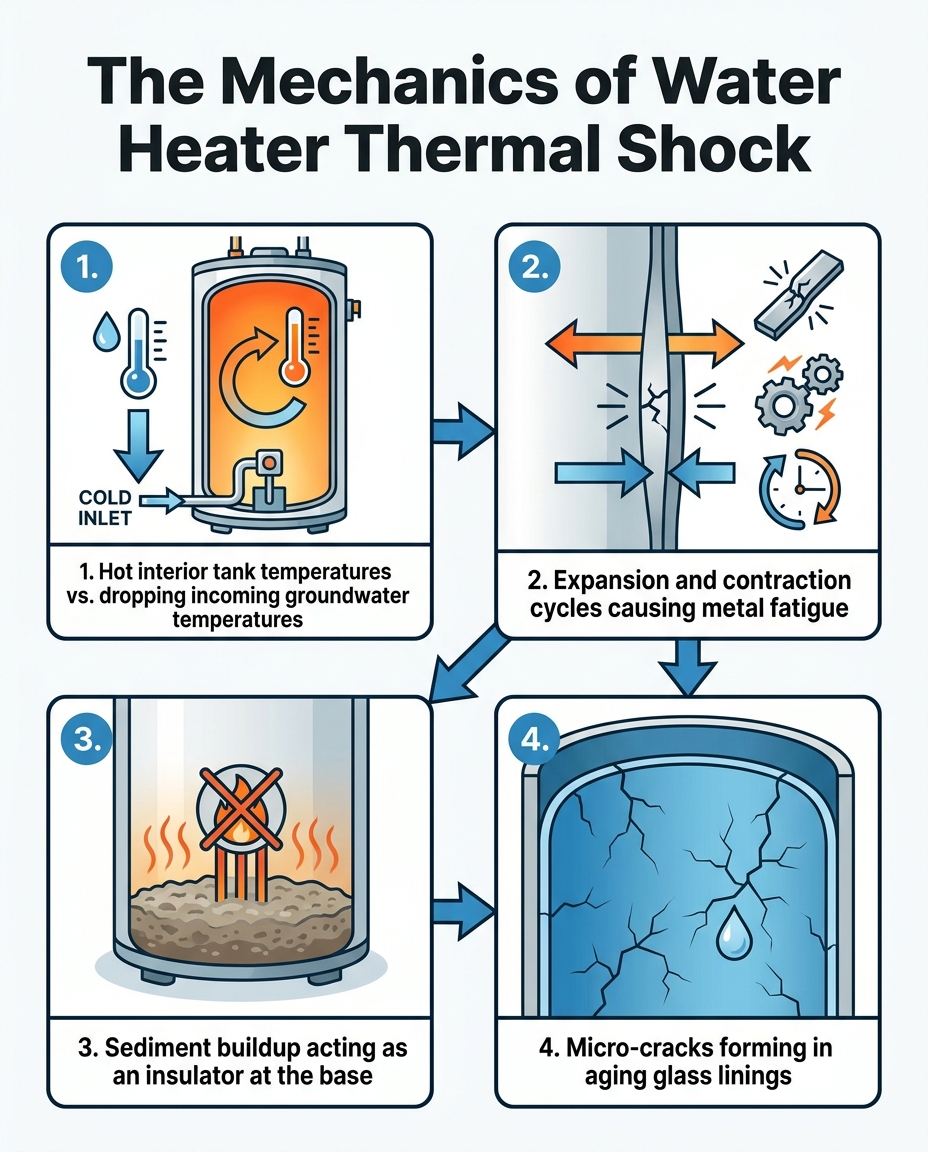
To understand why tanks fail when the seasons change, you have to look at the physics taking place inside the unit. Thermal shock occurs when a material experiences a rapid, extreme change in temperature, causing different parts of the material to expand and contract at different rates. In the context of residential plumbing systems, our technicians regularly see how this phenomenon puts a tremendous burden on the structural integrity of your tank.
- Cold Water Introduction: Your water heater maintains a steady interior temperature of around 120 to 140 degrees Fahrenheit. When you turn on a hot faucet, cold municipal water rushes into the bottom of the tank to replace the hot water you are using.
- Rapid Contraction: If that incoming water is significantly colder than usual, the sudden influx of chilled water forces the hot metal at the base of the tank to contract rapidly.
- Burner Activation: Simultaneously, the thermostat detects the temperature drop and triggers the burner to fire up. The intense heat from the burner now forces that same metal to expand rapidly.
- Material Fatigue: This intense push-and-pull cycle causes the metal to flex. Over thousands of cycles, the materials begin to weaken.
The inside of a standard tank is coated with a vitreous enamel glass lining to prevent the steel from rusting. As the tank ages, this glass lining becomes brittle. When subjected to sudden thermal stress, the brittle glass develops micro-cracks. Water seeps through these microscopic fissures, reaches the raw steel, and begins the rusting process that ultimately leads to a leak. Our team has found that this metal fatigue is a cumulative process that reaches a breaking point when temperature differentials peak in the Des Moines municipal water supply area.
How Temperature Differentials Stress Aging Metal
The standard operating temperature of a residential water heater is designed to be consistent. However, the sudden influx of cooler water forces the tank's materials into a state of shock. The metal base contracts rapidly from the cold water, while the heavy-duty burner works overtime to heat everything back up. This constant flexing is exactly how temperature differentials stress aging metal to the point of failure.

Why the Back-to-School Weather Shift is the Peak Danger Zone
Customers often ask our team why these failures happen so predictably in the early fall rather than the dead of winter. The answer lies in the speed of the temperature change. The late summer / back-to-school transition marks the first significant period where overnight lows drop sharply, signaling a rapid shift in the environment.
Step 1: The Outdoor Temperature Plunge
During the late summer, the sharp transition from hot, humid days to crisp, cool fall weather happens quickly. This rapid outdoor cooling directly lowers the temperature of shallow municipal water lines buried underground.
Step 2: Groundwater Chilling
Because the soil temperature drops alongside the air temperature, the water traveling through the municipal supply lines loses its summer warmth. By the time this newly chilled groundwater reaches your home, it is significantly colder than it was just a few weeks prior.
Step 3: The Shock Effect
When this freshly chilled water enters a hot, aging tank, the temperature differential is at its most extreme. The tank has been accustomed to warmer incoming water all summer. The sudden introduction of cold water creates a massive thermal shock effect on the fatigued metal.
By understanding this process, we help homeowners shift the narrative from "unlucky timing" to a predictable seasonal stressor. Homeowners who anticipate this transition can take action before the metal gives way.
The Impact of Cooling Groundwater on Indoor Appliances
The journey of municipal water starts at the treatment facility and travels miles underground before reaching your home. When the temperature drops in the supply line, it increases the workload and physical strain on your water heater. The burner must run longer to heat the cold water, and the metal tank must endure sharper temperature swings. This combination of increased workload and thermal stress is a primary driver of the seasonal plumbing failures our crews respond to every August.
Recognizing the Early Warning Signs of Metal Fatigue
Fortunately, a water heater rarely bursts without giving you a few subtle hints first. By educating yourself on how to identify a tank that is suffering from thermal shock, you can catch the problem before it fails completely during the late summer / back-to-school transition.
- Listen for unusual noises: A healthy water heater should operate relatively quietly. If you begin to hear loud popping, rumbling, or crackling noises, this indicates expanding sediment and severe thermal stress.
- Check for minor moisture: Visually inspect the base of the unit for minor moisture or small, unexplained puddles. Even a damp spot the size of a coin is a major red flag we tell our clients to watch for.
- Look for rust streaks: Inspect the outer jacket of the tank. If you see streaks of rust running down the side or pooling near the bottom, the internal glass lining has likely failed.
- Monitor water quality: If your hot water suddenly looks cloudy, rusty, or has a metallic smell, the inside of the tank is deteriorating rapidly.
A minor base leak is often the first physical symptom of micro-cracks in the glass lining. These signs require professional evaluation immediately. Temporary DIY fixes, like applying sealants to a leaking tank, are incredibly dangerous and will not resolve the underlying metal fatigue.
Decoding Popping and Rumbling Noises
It is important to know the difference between normal operational sounds and the distinct popping caused by thermal expansion. A soft hum from the burner is normal. However, a loud popping or banging sound means that water is trapped beneath a layer of hardened sediment at the bottom of the tank. As the burner heats the tank, this trapped water boils, turns to steam, and violently bursts through the sediment layer. This violent action, combined with the seasonal temperature shift, accelerates tank failure.
The Hidden Role of Sediment Buildup in Seasonal Failures
While thermal shock is the trigger, there is an aggravating factor our plumbers frequently encounter that makes the situation much worse: sediment buildup. Over the years, mineral deposits naturally accumulate at the bottom of the tank. In the Des Moines municipal water supply area, hard water minerals like calcium and magnesium slowly settle out of the water as it is heated, creating a thick, rocky layer on the floor of the water heater.
This sediment acts as an artificial insulator. Because the burner is located at the very bottom of a gas water heater, the heat must pass through the metal base and then through this thick layer of sediment before it can actually heat the water. This traps intense, localized heat against the metal base of the tank.
When you combine this trapped, extreme heat with the sudden rush of cold incoming municipal water, you create localized extreme temperature differentials. The metal is being superheated on the bottom and flash-cooled on the top. This opposing force literally tears the microscopic structure of the metal apart. We highly recommend professional flushing to remove this sediment and mitigate this compounding risk.
| Condition | Burner Heat Transfer | Thermal Stress Level | Risk of Failure |
|---|---|---|---|
| Clean Tank (No Sediment) | Even and efficient | Low to Moderate | Minimal |
| Moderate Sediment | Partially blocked | High (localized hot spots) | Elevated during seasonal shifts |
| Heavy Sediment Buildup | Severely blocked (trapped heat) | Extreme (constant expansion/contraction) | High risk of sudden base leaks |
Assessing Your Tank's Vulnerability Before Fall Arrives
Evaluating your risk level and taking proactive steps to protect your property is the best defense against seasonal plumbing disasters. You do not have to wait for a leak to occur to know if your system is at risk.
Step 1: Check the Age of the Unit
Most standard residential water heaters have a lifespan of 8 to 12 years. If your unit is approaching or has passed its tenth birthday, the glass lining is likely brittle and highly vulnerable to thermal shock.
Step 2: Review Maintenance History
Has the tank been flushed annually? Has the anode rod been checked? The anode rod is a sacrificial metal wand inside the tank that attracts corrosive elements, protecting the steel walls. Having one of our licensed technicians inspect the anode rod and structural integrity before the coldest weather hits is crucial.
Step 3: Bundle Your Seasonal Inspections
Our team suggests bundling this plumbing inspection with general heating system preparation to ensure the whole home is ready for the seasonal shift. Consistent, professional oversight catches vulnerabilities early. Just last August, our team helped a local Des Moines family who scheduled regular maintenance of their heating and cooling systems. Because our technicians provided thorough, professional service that went above and beyond a basic checklist, we caught a deteriorating tank early, saving them from an emergency flood.
Locally tailored maintenance is designed specifically to catch these seasonal vulnerabilities before they turn into major basement floods. By acting during the late summer / back-to-school transition, you stay one step ahead of the weather.
Immediate Steps to Take When You Discover a Seasonal Leak
If you walk into your utility room and find a puddle forming under your aging tank, knowing exactly what to do can save your home from extensive water damage. Here is what we advise homeowners to do if they find evidence of thermal shock.
- Turn Off the Water Supply: Safely turn off the cold water supply valve located on the pipe leading into the top of the water heater. This will stop new water from entering the tank and actively spreading the leak. Do not attempt any DIY repairs on the tank itself.
- Shut Off the Power or Gas: For an electric unit, flip the breaker in your electrical panel. For a gas unit, turn the gas control valve to the "off" position. Never work around standing water if you are unsure how to safely disconnect the power.
- Clear the Surrounding Area: Move boxes, furniture, and personal belongings away from the tank to prevent permanent water damage.
- Call for Professional Diagnostics: Prompt professional diagnostics are necessary to determine if the unit can be repaired or if replacement is the only safe option.
When unexpected issues occur, prompt action makes all the difference. Our emergency dispatch team frequently guides Des Moines homeowners through these exact shutoff steps while a technician is en route. The technician will promptly identify the problem, explaining the mechanics clearly so you understand the resolution. If you find yourself in this situation, you will need to start deciding whether to repair a leaking water heater before the fall temperature drop gets worse. A licensed expert from Midwest Comfort Heating & Cooling can guide you through that decision safely, and we can even help you explore whether generally applicable energy rebates or tax credits might apply to a qualifying high-efficiency replacement (always verify current programs with your utility provider).
Protect Your Home from Unexpected Seasonal Plumbing Failures
Thermal shock is a predictable seasonal event, not a random stroke of bad luck. As the late summer / back-to-school transition brings cooler groundwater into your home, your aging plumbing appliances are put under immense physical stress. The combination of cold water, trapped heat from sediment, and brittle glass linings creates the perfect storm for a sudden basement flood.
Recognizing the early warning signs—like popping noises and minor base leaks—empowers homeowners to act before a catastrophic failure occurs. Do not wait for a small puddle to turn into a major disaster. Schedule a professional inspection with our local experts today to ensure your system is fully prepared for the coming temperature drop.
Frequently Asked Questions
Why does my water heater make a popping sound?
A popping sound usually indicates that sediment has built up at the bottom of the tank. As the burner heats the unit, water trapped beneath this hard layer of sediment begins to boil and turn to steam. The steam bubbles violently burst through the mineral crust, creating a distinct popping or rumbling noise that signals your tank is under severe thermal stress.
Can cold weather cause a water heater to leak?
Yes, sudden shifts to colder weather can indirectly cause a leak. As outdoor temperatures fall, the municipal groundwater traveling through underground pipes cools rapidly. When this chilled water rushes into a hot, aging tank, it causes the metal to contract quickly, leading to thermal shock and micro-cracks in the glass lining.
What are the signs a water heater is failing?
The most common signs of failure include loud popping or banging noises, rusty or discolored hot water, and a noticeable drop in heating efficiency. The most urgent warning sign is finding small puddles or unexplainable moisture around the base of the tank, which indicates the structural integrity has already been compromised.
How long do residential water heaters typically last?
A standard residential tank-style water heater generally lasts between 8 and 12 years. The exact lifespan depends heavily on the hardness of your local water supply, the frequency of professional maintenance, and whether the internal anode rod has been regularly inspected and replaced.
Why is my water heater leaking from the bottom?
A leak from the bottom of the tank is typically caused by internal corrosion and metal fatigue. Over time, the protective glass lining degrades, allowing water to rust the steel tank from the inside out. Once a base leak occurs, the tank cannot be safely patched and must be replaced by a professional.
Can thermal shock in a water heater be prevented?
While you cannot control the temperature of incoming municipal water, you can mitigate the risk of thermal shock through routine maintenance. Having a professional flush the sediment from your tank annually removes the insulating barrier that traps heat, allowing the tank to expand and contract more evenly during seasonal weather shifts.
