
When the First Fall Chill Exposes a Furnace Problem
When those unpredictable weather shifts finally arrive, wondering why your pilot light keeps going out on chilly September nights is a frustrating reality for many homeowners. Here at Midwest Comfort Heating & Cooling, our team fields dozens of calls every September from Des Moines residents who walk over to the thermostat, switch the system from cooling to heating for the very first time in months, and wait for that familiar rush of warm air. Instead, the vents blow cold, and a quick trip to the basement reveals a dark furnace. The pilot light simply refuses to stay lit.
If you need immediate help restoring your heat, our team provides comprehensive professional HVAC services to safely diagnose and resolve the issue.
Late September weather volatility in the Midwest is notorious for testing our home comfort systems. It is completely normal to run your air conditioner on a humid Tuesday and desperately need your furnace by a freezing Thursday night. When your heating system fails during this sudden transition, a pattern we see often points to two closely linked components: the thermocouple and the gas valve.
While a dark furnace is undeniably annoying when your house is growing colder by the minute, it is important to understand that a pilot light shutting off is not just a nuisance malfunction. It is actually a critical safety mechanism working exactly as designed. Before you try to force the system to run, you need to understand the mechanical safeguards protecting your home and why our technicians always recommend professional diagnosis as the only safe path forward.
How Your Furnace Thermocouple Operates
To understand why your heating system suddenly refuses to cooperate, you have to look at a small but mighty component located right next to your burner assembly. The thermocouple is a vital safety sensor tasked with one specific job: proving to the furnace that a flame actually exists before allowing fuel to flow.
If your system is experiencing this kind of shutdown, scheduling a heating system repair with a licensed technician is the best way to get your home warm again safely.
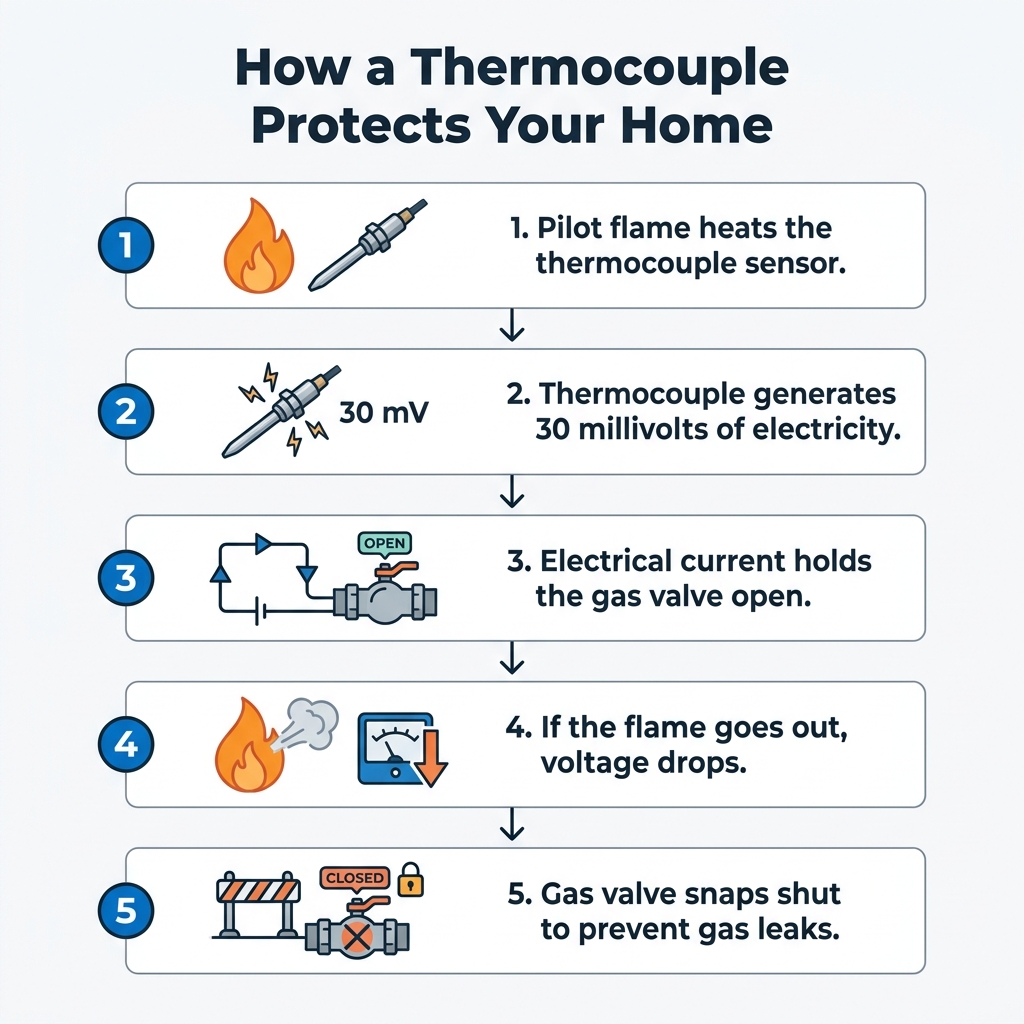
A thermocouple operates on a fascinating, straightforward principle of physics. It is made of two dissimilar metal wires welded together at one end. This welded tip sits directly in the path of the pilot flame. When the flame heats this metal junction, the temperature difference between the hot tip and the cooler base generates a tiny electrical current. As long as that current flows, your furnace knows it is safe to operate.
The 30-Millivolt Safety Signal
The electrical current generated by the thermocouple is incredibly small—typically around 30 millivolts. However, this low-voltage signal acts as a continuous "all clear" message to your heating system.
This electricity travels down a copper wire to a solenoid coil located inside the main gas valve. The magnetic field created by those 30 millivolts is just strong enough to hold a spring-loaded valve open, allowing gas to flow to the pilot and the main burners. The moment that voltage drops—whether the flame blows out or the sensor fails to register the heat—the magnetic field collapses. Without that magnetic pull, the spring violently snaps the gas valve shut, cutting off the fuel supply instantly.

The Hidden Impact of Summer Inactivity on Heating Systems
The Problem: You might wonder why this specific failure almost always happens on the very first cold night of the year. The answer lies in the long, dormant months your furnace spends sitting idle. From May through August, your heating components do nothing but wait in a dark, often dusty utility room or basement.
The Cause: During those months of inactivity, household air continues to circulate. Dust, pet dander, lint from the laundry room, and everyday airborne debris settle over the furnace interior. In our years of servicing Des Moines area homes, our team typically sees that the sudden transition from hot, humid summer air to early fall cold snaps catches these dirty systems completely off guard. The soot left over from the previous winter's combustion combines with the summer humidity and dust to form a stubborn, insulating layer of grime directly over the thermocouple sensor.
The Solution: This buildup acts like a thermal blanket. When you finally try to light the pilot in September, the flame hits the dirt layer instead of the metal sensor. Because the metal cannot get hot enough, it fails to generate the required 30 millivolts. The system assumes there is no flame, and the safety shutoff engages. The only reliable solution is a professional cleaning and inspection to remove this insulating barrier without damaging the delicate sensor tip.
Understanding the Gas Valve Safety Shutoff
When the pilot light goes out and refuses to stay lit, your first instinct might be frustration. However, that dark furnace is actively protecting your family. If the gas valve remained open while the pilot flame was extinguished, unburned natural gas or propane would continuously pump into your home, creating a severe health and explosion hazard.
Because the consequences of a gas leak are so high, the mechanical response of the gas valve is immediate and unforgiving. At Midwest Comfort Heating & Cooling, we take these safety mechanisms seriously. A pattern we see often in our local service calls involves homeowners detecting a faint gas odor near their utility area after a pilot failure. Recognizing the urgency, our technicians always prioritize these calls to identify gas line issues connected to failing valve components and resolve them safely and efficiently.
Not every pilot failure means the component is permanently broken, but distinguishing between a dirty sensor and a failed valve requires professional tools.
| Symptom | Likely Cause | Professional Action Required |
|---|---|---|
| Pilot lights but dies the second you release the button | Dirty or failed thermocouple | Voltage test and professional cleaning or replacement |
| Pilot flame is weak, yellow, or split | Clogged pilot orifice | Disassembly and cleaning of the pilot tube |
| Pilot stays lit, but main burners won't ignite | Faulty gas valve or bad control board | Comprehensive diagnostic and part replacement |
Repeatedly forcing the pilot button down or trying to bypass the safety switch is incredibly dangerous. If the system shuts down, it is telling you that a professional needs to evaluate the combustion process.
The Hidden Dangers of DIY Gas Furnace Troubleshooting
With countless video tutorials available online, it can be tempting to grab a wrench and a piece of sandpaper to try and fix a furnace issue yourself. When it comes to the thermocouple and the gas valve, we strongly advise a hard stop on DIY intervention. Tampering with these components poses a severe risk to your home and family.
- Fire and explosion risks: The thermocouple is directly threaded into the gas valve. Removing it to clean it requires manipulating gas connections. If these connections are not perfectly resealed, you risk a silent, slow gas leak in your home.
- Delicate component damage: The copper wire connecting the sensor to the valve is hollow and contains a specialized gas. Bending it too sharply or crimping it during a DIY cleaning will destroy the part entirely, turning a simple maintenance task into a mandatory replacement.
- Voided warranties: Modern safety codes and strict manufacturer warranties almost universally require licensed technicians for any repairs involving the gas train. Tampering with the valve can void your coverage instantly.
- Misdiagnosis: A homeowner might assume a dirty thermocouple is the culprit, only to miss a cracked heat exchanger or a failing draft inducer motor—issues that can lead to carbon monoxide exposure.
If your pilot light repeatedly fails, step away from the unit. Turn off the gas supply valve to the furnace and contact a licensed professional to handle the repair.
Why Proactive Maintenance is the Ultimate Preventative Solution
The best way to handle a late-night heating failure is to prevent it from happening in the first place. Relying on your system to just "figure it out" after sitting dormant all summer is a gamble that usually ends in a chilly house and an emergency service call.
Our team typically sees a massive spike in emergency calls during those early fall cold snaps when furnaces stop working entirely. While we are always ready to dispatch a technician to quickly diagnose a failed component and get the system running again before the house loses its residual warmth, we strongly recommend proactive care because it is far less stressful for homeowners.
During a comprehensive fall tune-up, our licensed technicians perform the exact steps needed to prevent early-season pilot failures. We carefully clean the summer dust off the thermocouple, test the millivolt output with a multimeter, clear the pilot orifice of any spider webs or debris, and verify that the gas valve is opening and closing with the correct pressure. Proper maintenance may also ensure your system meets the requirements for applicable generic energy efficiency programs or local utility rebates.
Enrolling in our Comfort Loyalty Program is the ideal way to ensure these critical components are professionally cleaned and tested before the fall weather turns cold. It guarantees your routine furnace maintenance happens on schedule, giving you the peace of mind that your heating system is clean, safe, and ready to perform the first time you ask it to.
Frequently Asked Questions About Furnace Pilot Lights
When the temperature drops and the furnace refuses to cooperate, homeowners often search for quick answers to understand what is happening in their basement. Here are detailed answers to the most common questions our team hears about pilot lights and safety shutoffs.
Why does my furnace pilot light go out after sitting all summer?
Dust and debris accumulate on the thermocouple sensor during the dormant summer months, creating an insulating barrier. When you try to start the furnace in the fall, this grime prevents the pilot flame from adequately heating the metal sensor.
Because the sensor cannot get hot enough, it fails to generate the tiny electrical current needed to signal the gas valve. The furnace's safety system registers this lack of voltage as a "no flame" situation and immediately shuts off the gas supply to protect your home. A professional cleaning is usually required to remove the baked-on summer dust and restore proper function.
What exactly does a furnace thermocouple do?
It is a critical safety sensor that detects whether the pilot flame is lit and burning hot enough to safely ignite the main burners. It sits directly in the pilot flame's path.
By converting the flame's heat into a small electrical current (roughly 30 millivolts), the thermocouple sends a continuous signal to the main gas valve. This low-voltage electricity magnetically holds the gas valve open. If the flame blows out, the heat stops, the electricity stops, and the valve snaps shut, preventing unburned gas from flooding your utility room.
Why is my furnace gas valve shutting off?
The gas valve shuts off as a protective measure to prevent unburned combustible gas from filling your home. It is a deliberate, mechanical safety response, not a random glitch.
This shutoff is triggered whenever the system detects a weak pilot flame, a dirty thermocouple, or a failing sensor. If you are experiencing repeated shutoffs, you may also want to understand why your gas furnace flame rollout switch trips during early fall testing, as multiple safety mechanisms work together to monitor your system's combustion process. A shutting gas valve means the furnace is actively preventing a dangerous situation.
How do you know if your thermocouple is bad?
The most common sign of a bad thermocouple is a pilot light that ignites easily while you hold the gas valve button down, but goes out the exact second you release the button.
However, it is nearly impossible for a homeowner to know if the part has permanently failed or if it is simply covered in microscopic soot. Our technicians use specialized multimeters to definitively test the millivolt output, determining if the thermocouple needs to be replaced or just professionally cleaned.
Is it safe to keep relighting a pilot light?
No. If a pilot light repeatedly fails to stay lit after one or two attempts, it indicates a safety mechanism is actively trying to prevent a gas leak.
Continuously forcing the pilot button down overrides the safety features and allows unburned gas to accumulate in the combustion chamber. If the burners suddenly ignite while excess gas is present, it can cause a dangerous miniature explosion known as a delayed ignition. If the pilot will not hold, turn off the gas supply to the furnace and call a professional immediately.
Restore Your Home's Warmth Safely
A failing pilot light is a serious safety issue, not just a temporary comfort problem. When your furnace refuses to stay lit on a cold September night, it is doing exactly what it was engineered to do: protecting your home from the dangers of unburned fuel.
Instead of struggling in the cold or attempting a risky DIY fix on a gas appliance, let our experts at Midwest Comfort Heating & Cooling handle the diagnosis. Schedule a professional inspection today to secure reliable winter heating solutions for your home. We will accurately test your thermocouple, clean away the summer debris, and ensure your furnace is safe, efficient, and ready to keep you warm all season long.
