


Don't Get Left in the Cold: A Comprehensive Look at Heating & Furnace Services


Discover the Essential Benefits of Regular Air Conditioning Maintenance
Regular maintenance of your air conditioning system ensures optimal performance and longevity. It helps prevent costly repairs while improving energy efficiency, keeping your home comfortable year-round.

Routine checks can significantly reduce energy bills and extend the life of your unit.


Why Every Des Moines Homeowner Needs Reliable Heating Services
Heating & furnace services are essential for maintaining a comfortable, safe home during Iowa's harsh winters. When your furnace fails on a freezing night or your energy bills suddenly spike, understanding your options for installation, repair, and maintenance can save you money and stress.
Quick Overview: What Heating & Furnace Services Include
- Installation & Replacement – Professionally sizing and installing new furnaces or heat pumps
- Routine Maintenance – Annual tune-ups that prevent up to 63% of repairs and extend equipment life
- Emergency Repairs – Fixing common issues like ignition failures, thermostat problems, and blower motor breakdowns
- System Optimization – Improving efficiency through duct sealing, filter changes, and smart thermostat installation
- Professional Assessment – Load calculations, safety inspections, and energy efficiency evaluations
Nearly half of the energy used in your home goes to heating and cooling, making a reliable, efficient heating system critical. For Des Moines homeowners, where winter temperatures regularly plunge below freezing, a well-maintained furnace isn't just about comfort—it's about safety and financial stability.
Whether your furnace is aging, your home heats unevenly, or you want to lower energy costs, understanding your options is key. This guide covers everything from choosing the right system to deciding between repair and replacement, helping you make informed decisions for your home.
For expert guidance on keeping your home warm all winter, explore our complete heating services or schedule a service call with our certified technicians.
Essential heating & furnace services terms:
Understanding Your Heating System: Types, Fuels, and Features
When the Iowa chill sets in, your home's heating system becomes your best friend. But not all heating systems are created equal, and understanding the different types, their fuel sources, and modern features can help us choose the perfect fit for your home and budget. From traditional furnaces to innovative heat pumps, each system has its unique way of keeping us warm.
Furnaces, Boilers, and Heat Pumps: How They Work
Let's explore the core differences between the most common home heating systems:
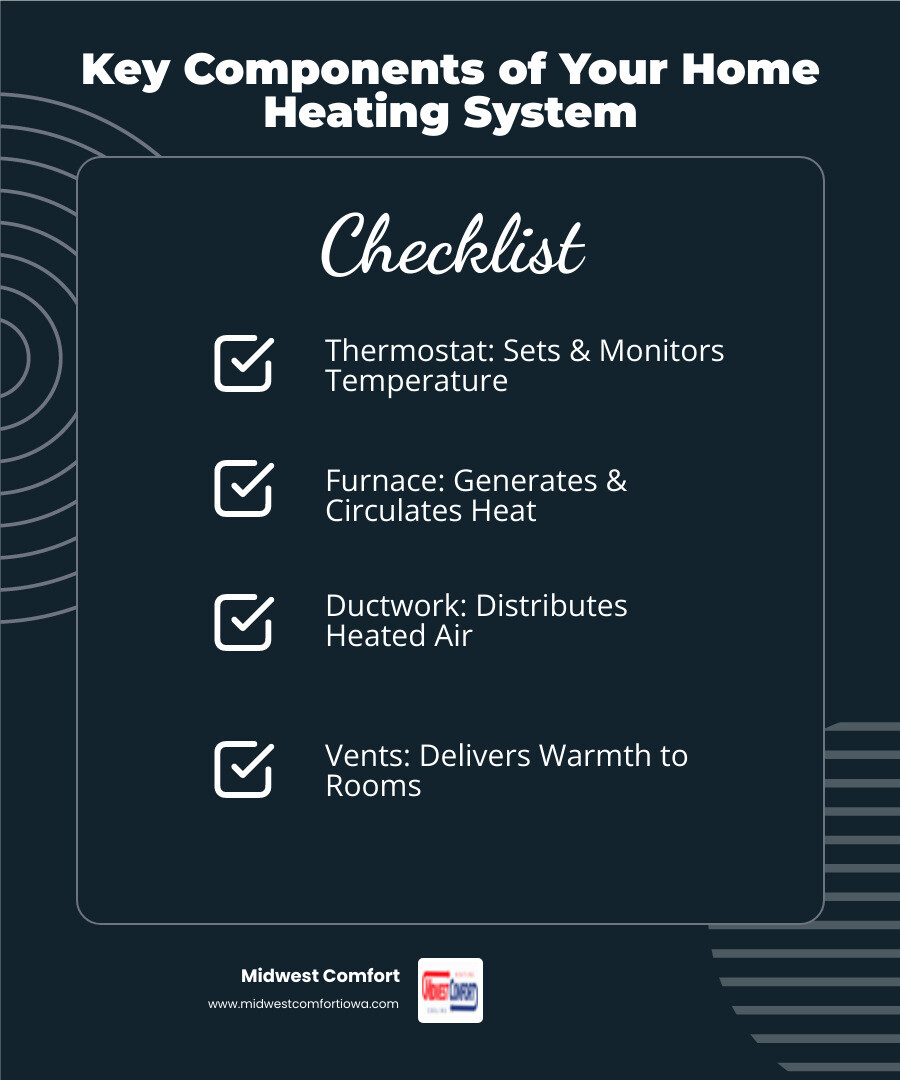
- Furnaces: As the most common system in the Des Moines area, furnaces use a forced-air system. They heat air with a burner and heat exchanger, and a blower distributes it through ducts and vents.
- Boilers: Boilers heat water (or create steam) that circulates through pipes to radiators or radiant floor systems. This provides a comfortable, even radiant heat, often found in older Des Moines homes. Simply put, furnaces heat air, while boilers heat water.
- Heat Pumps: Instead of creating heat, these versatile systems transfer it. In winter, a heat pump moves heat from the outside air indoors. In summer, it reverses the process, acting as an air conditioner. This makes them highly efficient, and modern units are effective even in cold climates. They can also be paired with a furnace in a "hybrid" system for maximum efficiency.
Fueling Your Warmth: A Comparison
The choice of heating system often goes hand-in-hand with the available fuel source. Here's a look at the common options in our service areas of Des Moines, Ankeny, Urbandale, and beyond:
- Natural Gas: This is the most common heating fuel for central heating systems in our area. Natural gas furnaces are popular due to their cost-effectiveness, high efficiency, and wide availability.
- Propane: A great alternative for homes without natural gas access, propane offers high efficiency and is stored in a tank on your property, offering flexibility for rural homes.
- Heating Oil: Oil furnaces heat by igniting a mist of oil and air. While less common in new homes, they remain a viable option for some homeowners.
- Electricity: Electric furnaces are an option where gas isn't feasible, but operating costs can be high. Electric heat pumps, however, are a much more energy-efficient solution.
Decoding Efficiency: What is AFUE and Why It Matters
When we talk about furnace efficiency, we're often talking about its AFUE rating. AFUE stands for Annual Fuel-Utilization-Efficiency, and it's measured as a percentage. This rating tells us how efficiently a furnace converts its fuel into heating energy.
For example, an 80% AFUE rating means 80% of the fuel becomes heat for your home, while 20% is lost. A higher AFUE number means greater efficiency and lower energy bills. While older furnaces from the 1970s had AFUE ratings around 65%, modern high-efficiency models can reach 97%. Upgrading to an ENERGY STAR certified furnace can significantly cut your annual energy bill.
Key Features in a Modern Furnace
Modern furnaces come packed with features designed to improve comfort, improve efficiency, and provide greater control. When we're looking at a new system for your home in Ankeny, Clive, or Johnston, here are some key features we consider:
- Variable-Speed Blowers: These blowers adjust their speed for a consistent flow of warm air, resulting in even temperatures, quieter operation, and improved efficiency.
- Variable Heat Output: Advanced furnaces can adjust their heat output to match your home's needs precisely, saving energy and providing consistent warmth.
- Dual Heat Exchangers: High-efficiency furnaces often use a secondary heat exchanger to extract more heat from combustion gases, significantly boosting the AFUE rating.
- Zoned Heating: This feature divides your home into different temperature zones, each with its own thermostat. This lets you heat only the areas you're using, saving energy and personalizing comfort.
- Smart Controls and Compatibility: Many new furnaces integrate with smart thermostats, allowing for remote control and learning algorithms that can save approximately $100 a year for homes with high heating and cooling bills.
Furnace Installation & Replacement: When and How
Even the most robust heating system won't last forever. Knowing when to replace your furnace and understanding the installation process is crucial for maintaining a warm and efficient home. We're here to guide you through every step, ensuring your new furnace is perfectly suited for your Des Moines area home.
Telltale Signs It's Time for a Replacement
Recognizing the signs that your furnace is on its last legs can save you from a cold night and unexpected breakdowns. While most furnaces last 15 to 20 years, their performance can decline well before that. Here are the key indicators we look for:
- Age of the Furnace: If your furnace is over 15 years old, it's approaching the end of its lifespan and is more likely to be inefficient and prone to breakdowns.
- Rising Energy Bills: A steady increase in your heating bills can signal that your furnace is losing efficiency and working harder than it should.
- Frequent Breakdowns and Repairs: If repair calls are becoming frequent and costly, investing in a new unit is often more economical in the long run.
- Uneven Heating: Cold spots in certain rooms can indicate your furnace is struggling to distribute heat effectively or is improperly sized.
- Strange Noises: Banging, rattling, or squealing noises can indicate mechanical problems or a failing motor.
- Yellow Pilot Light: A healthy pilot light should be blue. A yellow or flickering flame could signal a carbon monoxide issue, which is a serious safety concern.
If you're noticing any of these signs, it's time to consider a heating replacement. Our blog, When to Consider Heating Replacement, offers more insights, as does 4 Signs Your Heating System Requires Immediate Attention.
The Sizing Dilemma: Why Bigger Isn't Better
When it comes to furnaces, size absolutely matters. An oversized furnace can cause more problems than an undersized one. We perform a detailed "Manual J" load calculation to determine the right size furnace for your home, considering factors like square footage, insulation, and window types.
An oversized furnace can lead to:
- Short-Cycling: The furnace heats the home too quickly and shuts off, only to turn back on again shortly after.
- Wasted Energy: This frequent starting and stopping wastes fuel and energy.
- Increased Wear and Tear: The constant cycling puts extra stress on components, leading to a shorter lifespan.
- Uncomfortable Temperatures: It can also cause uncomfortable temperature swings throughout your home.
Proper sizing ensures your new furnace runs efficiently, provides consistent comfort, and lasts longer. We always ensure your new system is perfectly matched to your home's needs, as detailed in our guide, Choose Right Furnace Size Home.
The Professional Advantage vs. DIY Risks
While a DIY project might seem appealing, furnace installation is a job for professionals due to the complexities and potential dangers involved.
- Safety Hazards: Improper installation of gas lines, electrical wiring, or venting can lead to gas leaks, carbon monoxide poisoning, or fires. Professional installation ensures your family's safety.
- Reduced Efficiency: A poor installation can reduce a furnace's efficiency by up to 30%, increasing utility bills and shortening its lifespan.
- Voided Warranties: A DIY installation can void the manufacturer's warranty, leaving you to cover future repair costs.
- Code Compliance: Professionals ensure your installation meets all local building codes in Des Moines and surrounding communities.
- Peace of Mind: Hiring licensed, insured technicians gives you confidence that the job is done right. Our team is NATE-certified, ensuring adherence to best practices.
As our partners at Carrier emphasize, "Installing a furnace yourself is not recommended due to the complexity and potential dangers involved." For a deeper dive, check out their Furnace Install Guide: What To Know About Furnace Installation.
What to Expect During a Professional Furnace Installation
When you choose us for your furnace installation, we strive to make the process smooth and stress-free. Here's a general overview of what to expect:
- Assessment and Removal: We start with a Manual J load calculation to size your new furnace correctly. After discussing your options, we'll safely remove and dispose of your old unit.
- Preparation and Placement: We prepare the site to meet all safety codes and position the new furnace, making any necessary ductwork modifications for optimal airflow.
- Connections: Our experts connect all fuel lines, electrical wiring, and exhaust vents, ensuring every connection is secure and leak-free.
- Testing and Configuration: We configure the system and thermostat, then conduct rigorous tests on airflow, heating capacity, and all safety features.
- Final Walkthrough: After a final safety check and cleanup, we'll walk you through your new system's operation, answer all your questions, and ensure your home is left tidy.
A typical furnace installation takes a half-day to a full day. Our team provides reliable, energy-efficient solutions custom to your home, ensuring your furnace installation in Des Moines, IA, is simple and stress-free. For more details, visit our Furnace Installation Des Moines, IA page.
The Lifeline of Your System: Professional Heating & Furnace Services
Just like your car needs regular oil changes, your furnace needs consistent care to run smoothly. Professional heating & furnace services are the lifeline of your system, ensuring it operates safely, efficiently, and reliably through every Iowa winter.
Proactive Care: The Benefits of Regular Furnace Maintenance
We cannot stress enough the importance of regular furnace maintenance. It’s an investment that pays dividends in comfort, safety, and savings. In fact, 63% of furnace repairs can be prevented with furnace maintenance!
Here's why we champion proactive care:
- Prevents Repairs: Annual tune-ups catch small issues before they become expensive breakdowns.
- Extends Equipment Lifespan: A well-maintained furnace lasts longer, helping your system reach its full 15-20 year potential.
- Improves Energy Efficiency: A clean, properly adjusted furnace uses less fuel, which translates directly to lower energy bills.
- Ensures Safety: Our technicians check for potential hazards like carbon monoxide leaks.
- Maintains Warranty: Many manufacturer warranties require annual professional maintenance to remain valid.
What does a typical maintenance visit include?
- Checking and replacing/cleaning the furnace filter.
- Cleaning the blower compartment for optimal airflow.
- Cleaning and adjusting burners for efficient combustion.
- Inspecting and tightening all electrical connections.
- Inspecting the heat exchanger for cracks or damage.
- Checking gas pressure and flame operation for safety.
- Inspecting the igniter or pilot light.
- Inspecting ductwork for leaks and proper airflow.
- Calibrating the thermostat for accurate temperature control.
We've covered these topics extensively in our guides like Furnace Maintenance Des Moines, IA and Top Furnace Maintenance Tips.
Common Issues That Lead to Furnace Repair
Even with regular maintenance, furnaces can sometimes encounter problems. When your heat goes out in Windsor Heights or Polk City, here are some common issues we often diagnose and repair:
- Ignition or Pilot Control Problems: A frequent culprit when your furnace isn't producing heat, this could be a faulty igniter, a dirty pilot light, or a flame sensor issue.
- Thermostat Malfunctions: Sometimes the problem isn't the furnace but the device controlling it. A faulty thermostat can cause inconsistent heating or no heat at all.
- Clogged Filters: A dirty air filter is one of the most common and preventable problems. It restricts airflow, making your furnace work harder and potentially overheat.
- Blower Motor Failure: The blower motor circulates heated air. If it fails, you'll feel little to no airflow from your vents.
- Lack of Maintenance: Many issues can be traced back to a lack of regular maintenance, which is why proper care is so crucial.
When these issues arise, our team is ready to help. Learn more about How We Handle Furnace Repair and our specialized Furnace Repair Des Moines, IA services.
Finding a Qualified Partner for Your Heating & Furnace Services
Choosing the right HVAC contractor for your heating & furnace services in the Des Moines metro area is essential. Here's what to look for in a team you can trust:
- Licensed and Insured: Ensure the contractor is fully licensed and insured to protect you and your property.
- NATE-Certified Technicians: Look for NATE-certified technicians, who have proven their expertise through rigorous testing. Our team includes these highly trained professionals.
- Positive Local Reviews and Reputation: Check for positive local reviews and a strong reputation in your community.
- Transparent Process: A trustworthy partner provides clear explanations, detailed quotes, and answers questions without pressure.
- Comprehensive Service Offerings: Select a company offering a full range of services, from installation to maintenance, to handle all your heating needs.
We pride ourselves on our family-oriented approach, offering custom solutions and ensuring your home remains a comfortable haven.
Maximizing Efficiency and Achieving Optimal Comfort
Beyond the type of system and its maintenance, there are several ways we can optimize your heating system for peak performance and comfort, all while keeping those energy bills in check.
The Power of Smart Thermostats
Smart thermostats are powerful tools for energy management and comfort.
- Remote Control: Adjust your home's temperature from anywhere using a smartphone.
- Learning Algorithms: They can learn your schedule and automatically adjust temperatures to save energy when you're away or asleep.
- Energy Usage Reports: Receive detailed energy reports to identify more ways to save.
- Potential for Savings: Homes with high heating and cooling bills can save approximately $100 a year with an ENERGY STAR certified smart thermostat.
Beyond the Box: Sealing Ducts and Improving Insulation
Your furnace might be highly efficient, but if your ductwork is leaky or your insulation is poor, you're losing valuable heat.
- Duct Leaks: Leaky ducts are major energy wasters. Sealing and insulating them, especially in attics and crawlspaces, can improve your system's efficiency by 20% or more.
- Improving Insulation: Proper insulation in walls, attics, and crawlspaces keeps heat inside, so your furnace works less and saves energy. Simple steps like managing curtains can also help.
These simple steps, combined with regular maintenance, are among the 6 Common Ways to Increase Your Furnace Efficiency.
Exploring Incentives for High-Efficiency Upgrades
We understand that investing in a new, high-efficiency heating system is a significant decision. Fortunately, there are often incentives available to help offset the cost.
- ENERGY STAR Certified Equipment: Upgrading to ENERGY STAR certified equipment can cut your annual energy bill significantly by meeting strict federal efficiency guidelines.
- Federal Tax Credits: The federal government may offer tax credits for installing high-efficiency furnaces and heat pumps. It's worth researching current programs.
- Local Utility Rebates: Local utility providers in the Des Moines area often provide rebates for energy-efficient upgrades.
These incentives make it easier for homeowners in communities like Clive, Johnston, and Altoona to upgrade to more environmentally friendly and cost-saving heating solutions.
Frequently Asked Questions about Heating & Furnace Services
We often hear similar questions from homeowners in Des Moines and the surrounding Iowa communities. Here are some of the most common ones:
What is the typical lifespan of a furnace?
Most furnaces can last anywhere from 15 to 20 years. However, this lifespan is heavily dependent on factors like the quality of the unit, how often it's used, and most importantly, how well it's maintained. Regular maintenance is key to maximizing its longevity, while improper installation can shorten it.
How often should I have my furnace serviced?
We recommend having your furnace serviced annually. The best time for this is in the fall, before the heavy heating season begins. An annual tune-up ensures your system is ready to face the cold Iowa winter, operating safely and efficiently, and helping to prevent unexpected breakdowns when you need it most.
What does a new furnace warranty typically cover?
Warranty coverage can vary by manufacturer and installer, but generally, a new furnace warranty includes:
- Parts Warranty: This typically covers the cost of replacement parts for a certain period, often 10 years.
- Heat Exchanger Warranty: The heat exchanger is a crucial component, and its warranty can be longer, sometimes 20 years or even a limited lifetime.
- Registration Requirements: Many manufacturers require you to register your new furnace online within a specific timeframe (e.g., 60 days of installation) to receive the full warranty benefits. Failure to register might result in a shorter warranty period.
- Labor Warranties: While manufacturer warranties cover parts, the labor for repairs is usually covered by your installing contractor, and the duration can vary. We always discuss our labor warranty with you upfront.
Always review the complete warranty details provided by the manufacturer and your installer to understand what is covered and any limitations or exclusions.
Your Partner for Year-Round Comfort
As we've explored, understanding your home's heating & furnace services is about more than just staying warm; it's about comfort, safety, efficiency, and peace of mind. From choosing the right system and fuel source to ensuring proper installation and diligent maintenance, every step plays a crucial role in your home's well-being.
We believe in a proactive approach to heating, emphasizing regular maintenance to prevent issues and extend the life of your system. When replacement is necessary, we ensure your new furnace is perfectly sized and expertly installed, maximizing its efficiency and your comfort. We're dedicated to providing honest, high-quality, and cost-effective HVAC solutions to our neighbors in Des Moines, Ankeny, Urbandale, and all our service areas.
For comprehensive heating & furnace services you can trust, contact our team today. We're here to keep your home warm and cozy, no matter how frightful the weather outside may be.


Get Your HVAC Serviced Today


