
The Invisible Risk Waiting in Your Fall Transition
Your gas furnace has been sitting dormant since spring, but as temperatures drop, you are about to rely on it daily. That transition highlights the importance of testing your carbon monoxide detectors before heating season. Assuming your home is safe just because a plastic device is mounted on the wall is a dangerous gamble. Carbon monoxide is entirely undetectable by human senses, making functional heating systems and working safety alarms your only shield against a silent threat.
As we enter the September pre-heating season, our team at Midwest Comfort Heating & Cooling often sees homeowners run through a quick mental checklist: check the thermostat, change the air filter, and quickly press the button on the wall alarms. However, that superficial check leaves a massive gap in your household safety. Carbon monoxide (CO) is a natural byproduct of combustion. When a gas furnace operates perfectly, this exhaust is safely vented outside your home. But when components age, crack, or become obstructed, that exhaust can spill backward into your living spaces.
Because carbon monoxide has no smell, no color, and no taste, you cannot rely on your senses to warn you of a leak. You are completely dependent on the technological health of your detectors. If those detectors are outdated or malfunctioning, the gas can build up to dangerous levels without triggering a single warning beep. Preparing for the colder months means moving beyond basic assumptions and taking a hard, factual look at the equipment protecting your family. We always advise our customers that taking a proactive approach right now, before the first heavy freeze forces your furnace into continuous operation, is the most effective way to ensure a safe, comfortable winter.
Why the 'Test' Button Provides a False Sense of Security
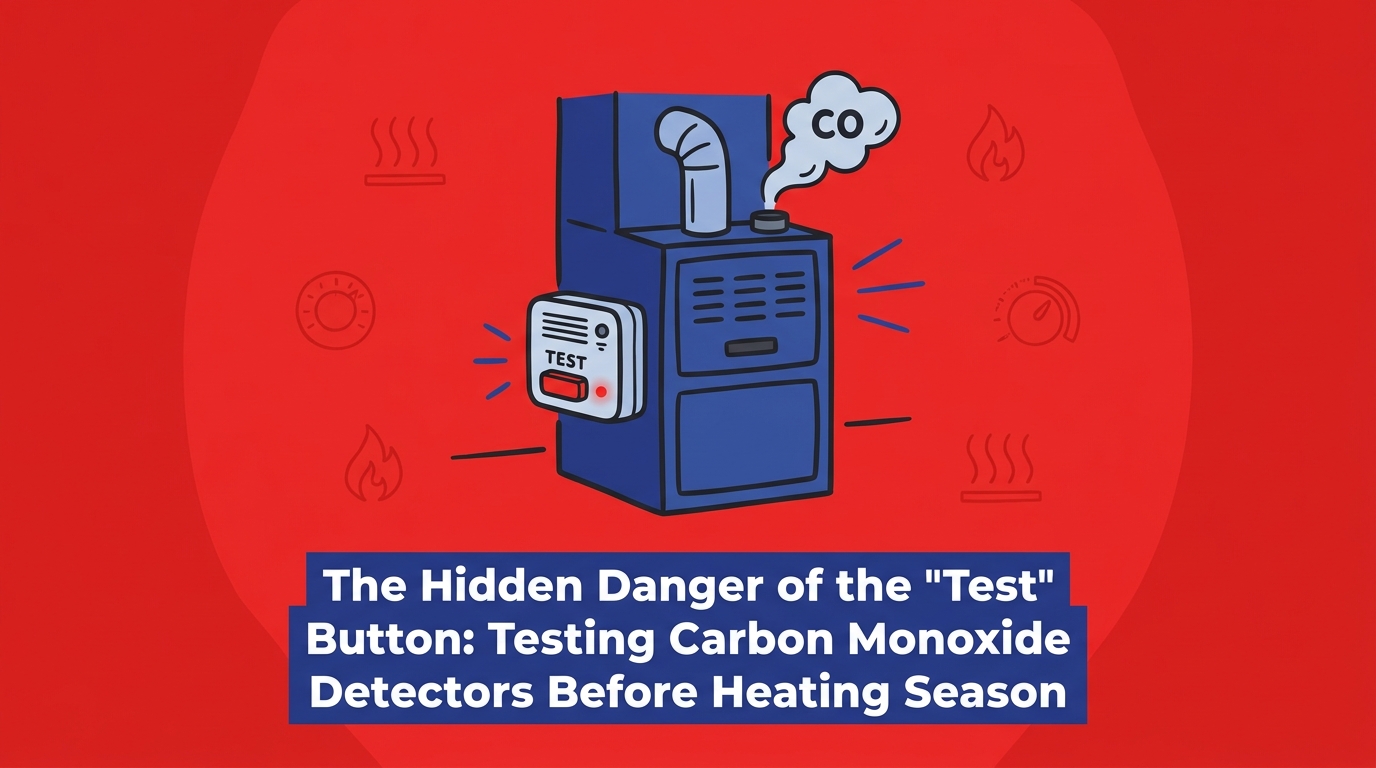
The Problem: Most homeowners believe that pressing the circular "Test" button on the front of their detector verifies that the unit is fully operational. When the device emits a piercing sequence of beeps, it feels like a confirmation of safety. In reality, that button is actively misleading you.
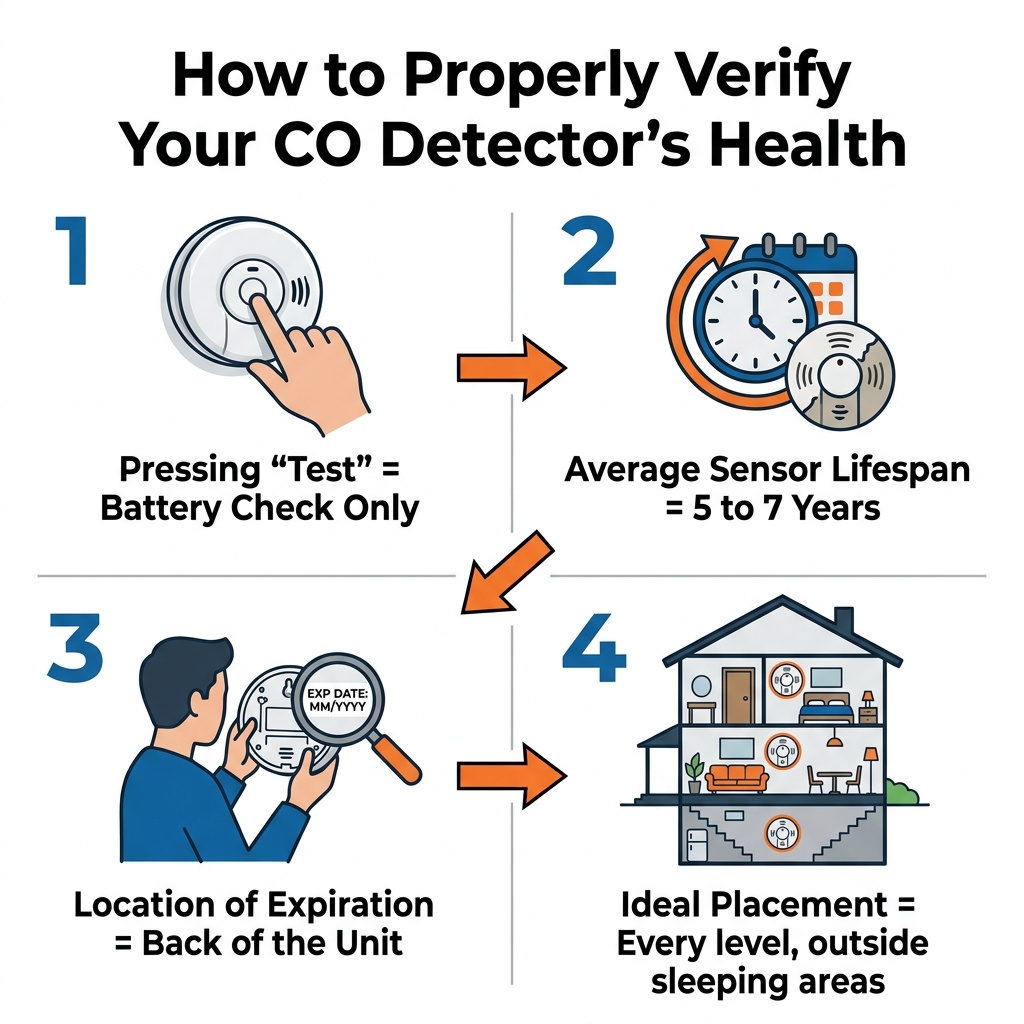
The Cause: Pressing the test button on a standard unit only completes a basic electrical circuit. It verifies two things: the battery has enough juice to power the device, and the internal horn is capable of making noise. It does absolutely nothing to test the chemical sensor's ability to detect carbon monoxide gas in the air. Modern detectors rely on electrochemical sensors—small components containing a chemical solution that reacts to carbon monoxide by generating an electrical current. Over time, this chemical electrolyte naturally dries up and degrades. Regardless of how often you change the batteries or how loud the horn sounds, the unit is bound by a 5-to-7 year typical sensor expiration. Once that electrolyte is depleted, the alarm will still beep loudly when you press the test button, but it will sit silently while carbon monoxide fills the room.
The Solution: You must decouple battery health from sensor health in your mind. A loud beep is only half the equation. To truly ensure your home is protected, you need to verify the physical age of the unit itself. In our years of inspecting Des Moines area homes, relying on a decade-old detector just because it still makes noise is one of the most common—and most dangerous—mistakes our technicians see during fall maintenance. Understanding the mechanical limitations of these devices empowers you to make smarter, safer decisions about when to replace them.
How to Find and Read Your Detector's Expiration Date
Physically inspecting your safety devices is a non-negotiable part of your autumn home maintenance routine. Because the chemical sensing element has a hard expiration date, you need to know exactly how old your units are. Here is how to properly check your equipment:
- Remove the detector from its mount: Depending on your model, this may involve twisting the unit counterclockwise off a ceiling bracket, sliding it upward off a wall plate, or simply unplugging it from a low wall outlet. Be prepared for the unit to beep briefly if it has a tamper-resistant feature.
- Locate the manufacturing sticker: Turn the device over and look at the back panel. You are looking for a stamped date or a printed sticker. It will usually say "Manufactured On" followed by a year and month.
- Calculate the expiration window: Add the manufacturer's specified lifespan to that date. While some newer models boast a 10-year lifespan, you must account for the 5-to-7 year typical sensor expiration found in the vast majority of units currently installed in homes. If the device was manufactured in 2018, its chemical sensor is likely already compromised.
- Look for an "Replace By" date: Many modern units take the guesswork out of the equation by printing a specific "Replace By" date right next to the manufacturing date. If this date has passed, the unit is obsolete.
- Take immediate action on missing dates: If the back of the unit is blank, the sticker has rubbed off, or the plastic is yellowed with age, you must assume the unit is expired. Do not gamble on an unknown timeline. Replace the detector immediately.

The Impact of Tightly Sealed Homes on Indoor Air Risks
As the weather shifts, the physical dynamics of your house change dramatically. We know firsthand how rapidly Des Moines average fall temperatures drop, leading homeowners to seal windows tightly, apply fresh weatherstripping, and close up any drafts. While buttoning up the house is excellent for energy efficiency and keeping the cold wind out, it creates a tightly sealed envelope that traps indoor air just as continuous furnace operation begins.
During the summer, homes naturally breathe. Open doors, cracked windows, and the constant cycling of air keep pollutants from concentrating. But in the late fall and winter, that natural ventilation stops. This lack of airflow directly impacts your indoor air quality and significantly accelerates the buildup of any leaked gases. If a furnace develops a venting issue or a cracked heat exchanger in November, the resulting carbon monoxide has nowhere to go. It remains trapped inside the heavily insulated walls of Des Moines area homes, concentrating much faster than it would in a drafty house.
This sealed-environment reality makes functional CO detectors critically important. You are introducing a combustion appliance into a closed loop. Proper ventilation strategies—such as utilizing mechanical ventilation systems or ensuring your furnace's flue pipe is completely clear of debris—are essential to maintaining a healthy environment. When your home is sealed tight against the freezing temperatures outside, your margin for error regarding indoor air hazards drops to zero. Your heating system must operate flawlessly, and your alarms must be perfectly calibrated to catch any deviations.
Contrasting Detectable Gas Leaks with Silent Carbon Monoxide
A common point of confusion for homeowners is the difference between a natural gas leak and a carbon monoxide leak. While both originate from gas-powered appliances and both require immediate professional attention, the way you detect them—and the immediate danger they pose—are entirely different.
| Characteristic | Natural Gas (Raw Fuel) | Carbon Monoxide (Exhaust) |
|---|---|---|
| Odor | Strong, distinct smell of rotten eggs (Mercaptan). | Completely odorless. No smell whatsoever. |
| Visual Signs | Sometimes a hissing sound near the pipe. | Invisible. No color, no fog, no sound. |
| Source | Leaking supply lines before combustion occurs. | Byproduct of incomplete combustion escaping the exhaust vent. |
| Detection Method | Human nose usually detects it first. | Requires a functional chemical sensor alarm. |
Natural gas in its raw form is actually odorless, but utility companies add a harmless chemical called mercaptan to it. This gives raw natural gas a distinct, sulfur-like "rotten egg" smell. This odor acts as a built-in alarm system. Just this past spring, one of our customers reached out after waking up to a faint gas odor inside their house. Because the smell was unmistakable, they called us immediately, and our team dispatched a technician the same day to fix the gas leak safely. The human nose is highly effective at catching raw fuel issues.
Carbon monoxide, however, is the exhaust produced after the gas is burned. It does not contain mercaptan. If CO is spilling into your living room, your nose will not alert you. Instead, the first signs of a carbon monoxide leak are often physical symptoms that mimic the flu. Residents in Des Moines area homes experiencing CO exposure frequently report dull tension headaches, unexplained dizziness, nausea, shortness of breath, and a general feeling of confusion or fatigue. Because these symptoms mirror common winter illnesses, they are easily dismissed. This is precisely why relying on a chemical sensor is mandatory—it is the only way to detect the hazard before physical symptoms escalate into a life-threatening situation.
Strategic Placement for Maximum Household Protection
Having functional, unexpired detectors is only the first step; where you mount them dictates how effectively they protect you. Carbon monoxide is roughly the same weight as normal air. Unlike hot air, which rises quickly, or raw propane, which sinks to the floor, CO mixes evenly throughout the ambient air in a room. This means strategic placement is less about height and more about proximity to the occupants.
To ensure your home is fully protected during the September pre-heating season, we recommend verifying your alarms against this placement checklist:
- Outside all sleeping areas: The most critical function of a CO detector is to wake you up if a leak occurs at night. Install an alarm in the hallway immediately outside of every bedroom cluster. If you sleep with the bedroom doors closed, consider placing an additional unit inside the bedroom itself.
- On every level of the home: A multi-story house requires multi-level protection. Ensure there is at least one working detector on the main floor, the second floor, and the basement.
- Near the attached garage: Vehicles warming up in an attached garage are a major source of carbon monoxide. Place an alarm inside the home, near the door that connects to the garage, to catch any exhaust seeping through the weatherstripping.
- In the basement near the furnace: Place a unit in the same general area as your gas furnace and water heater, but keep it at least 15 to 20 feet away to prevent false alarms from the tiny, normal bursts of exhaust that happen upon startup.
- Away from extreme humidity: Never install a CO detector inside a full bathroom. The heavy steam and humidity from daily showers will rapidly degrade the chemical sensor and cause false readings.
- Away from direct fresh air flow: Avoid mounting units directly next to exterior doors, open windows, or directly over supply air vents, as the fresh air drafts can blow the carbon monoxide away from the sensor, masking the true concentration in the room.
Why Professional Inspections Are Your First Line of Defense
It is vital to reframe how you view carbon monoxide detectors: they are not a preventative measure. An alarm sounding means a failure has already occurred, and toxic gas is already inside your living space. A detector is your absolute last line of defense. Your first line of defense is ensuring the gas appliances never leak in the first place.
The root cause of most residential carbon monoxide leaks is a compromised heat exchanger inside the furnace. The heat exchanger is the metal chamber where the actual combustion happens. It keeps the toxic exhaust gases completely separate from the clean air being blown through your vents. Over years of expanding and contracting with heat, this metal can experience fatigue and develop microscopic cracks. When the blower fan turns on, it can force air through these tiny cracks, altering the draft and pushing carbon monoxide out of the exhaust flue and into your ductwork.
Visual inspections by homeowners cannot detect these microscopic failures. Professional technicians utilize specialized diagnostic tools, including digital combustion analyzers and high-resolution inspection cameras, to evaluate the structural integrity of the heat exchanger and the draft of the flue pipe. At Midwest Comfort Heating & Cooling, our commitment to your family's safety means that every professional tune-up our team performs includes thorough safety checks for carbon monoxide leaks and proper venting. Relying on an alarm to catch a cracked heat exchanger is like relying on an airbag instead of using your brakes. Scheduling annual heating maintenance ensures that the system operating inside your home is structurally sound before the heavy winter workload begins.
The Value of Consistent System Care
Ongoing, structured care is the most reliable way to prevent sudden safety hazards. Furnaces do not typically fail overnight; they degrade slowly over multiple seasons. A minor venting alignment issue in October can become a major exhaust blockage by January. By participating in routine HVAC maintenance and loyalty programs, you ensure that a trained set of eyes evaluates your equipment year after year. Consistent care tracks the aging of your components, allowing our technicians to recommend replacing a fatigued part long before it turns into a carbon monoxide hazard in the middle of a winter night.
Frequently Asked Questions
Do carbon monoxide detectors expire?
Yes, carbon monoxide detectors absolutely expire. The internal chemical sensor that detects the gas naturally degrades over time, typically lasting between 5 to 7 years. Even if the battery is brand new and the test button beeps loudly, an expired sensor will not detect carbon monoxide.
How do I know if my carbon monoxide detector is working?
The only way to ensure the unit is truly functional is to verify it is within its active lifespan by checking the manufacturing date on the back. While pressing the test button confirms the battery and the speaker are operational, it does not verify the health of the chemical sensor. If the unit is past its expiration date, it is no longer working safely.
How often should you test carbon monoxide detectors?
You should press the test button on your detectors at least once a month to ensure the batteries are strong and the horn is audible. Additionally, you should replace the batteries every six months, typically when you change your clocks for daylight saving time. Always perform a visual check of the expiration date during your fall home preparation.
What does it mean when a carbon monoxide detector beeps?
The meaning of the beep depends on the pattern. A continuous, loud alarm indicates that carbon monoxide has been detected, and you should evacuate the home immediately and call emergency services. A short, single chirp every minute usually indicates a low battery, while a different intermittent chirp often signals that the device has reached its end-of-life and must be replaced.
Can a furnace tune-up prevent carbon monoxide leaks?
Yes, a comprehensive furnace tune-up is the best way to prevent leaks before they start. During a tune-up, a professional technician inspects the heat exchanger for microscopic cracks and verifies that the exhaust flue is drafting properly. Catching these structural issues early prevents the furnace from spilling exhaust gas into your home.
Where is the most important place to install a CO detector?
The most critical location for a detector is in the hallway immediately outside of all sleeping areas. Because carbon monoxide poisoning induces deep sleep and confusion, the alarm must be loud enough to wake you up. You should also ensure there is at least one working detector on every level of your home.
Protecting Your Home This Season
Testing the battery is only the first step in home safety; verifying the chemical sensor's lifespan is what actually saves lives. By checking your expiration dates and having our team perform a professional safety inspection for your furnace, you eliminate the guesswork. Take action today to ensure your family enjoys a safe, warm, and worry-free winter season.
