
Solving the Mystery of the Dropping Boiler Gauge in Older Homes: How We Diagnose Boiler Pressure Drops in Historic Des Moines Radiator Systems
You head down to the basement to check your heating equipment, only to find the gauge slowly creeping downward, leaving you wondering exactly how we diagnose boiler pressure drops in historic Des Moines radiator systems before the real cold hits. That strange, slow drop in pressure is a common anxiety for homeowners in older neighborhoods. You know the system is losing water somewhere, but there is no puddle on the floor. The immediate fear is that finding a hidden leak means tearing open original, century-old walls just to locate a single faulty pipe.
Fortunately, tracking down these elusive pressure drops does not require a sledgehammer. Modern professional diagnostics allow technicians to locate hidden issues non-destructively, preserving the architectural integrity of your home. By combining advanced technology with a deep understanding of legacy plumbing, experts can pinpoint exactly where your system is failing without turning your living room into a construction zone.
If you need immediate help with your heating services, our team specializes in boiler repair and replacement for older properties, ensuring your home stays warm and intact.
The Anatomy of Century-Old Radiator Infrastructure
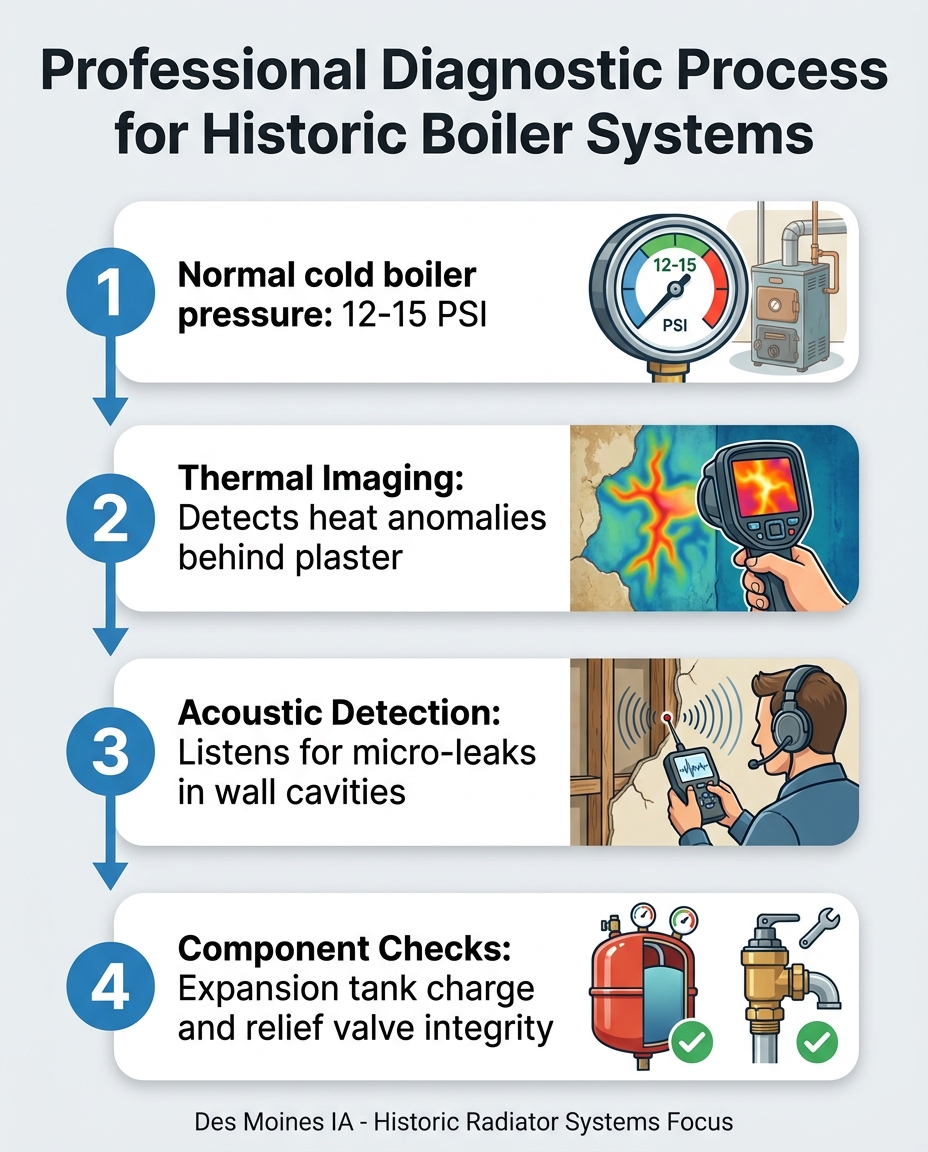
To understand why your boiler is losing pressure, you first have to understand how these legacy systems operate. In a healthy, properly functioning setup, normal residential boiler pressure typically sits between 12 and 15 PSI (pounds per square inch) when the water is cold. As the boiler heats the water to distribute warmth throughout your home, that pressure naturally rises. When the system cools down again, the pressure should return to that 12 to 15 PSI baseline. If it consistently drops below that mark, water is escaping the closed loop.
Historic cast iron radiator systems are famous for their durability. The heavy iron radiators themselves can easily function effectively for over 100 years. However, the supporting cast—the connecting pipe threads, the radiator valves, and the rubber or fiber seals—naturally degrade over decades of constant thermal expansion and contraction. Every time the system heats up, the metal expands; every time it cools, it shrinks. Over eighty or ninety years, this microscopic movement takes a toll on the joints.
A typical pattern we see in homes built between the 1910s and 1930s involves micro-leaks. These leaks are so small that the water escapes as steam or evaporates off the hot metal pipe long before it can form a visible puddle on your floor. You are left with a dropping gauge and no obvious culprit. This is exactly why keeping up with a routine HVAC maintenance plan tailored to older infrastructure is so critical. Regular checks catch these degrading seals before they compromise the entire system.
| System Component | Typical Lifespan | Common Failure Point | Visual Symptom of Failure |
|---|---|---|---|
| Cast Iron Radiator | 100+ Years | Internal sediment buildup or cracking | Cold spots on the unit |
| Radiator Valves | 30-50 Years | Degraded packing nuts and washers | Crusty mineral deposits near the knob |
| Pipe Threads | 70-90 Years | Corrosion from thermal expansion | Slow weeping or rust trails |
| Expansion Tank | 10-15 Years | Internal bladder failure | Rapid pressure spikes and drops |
Why Early Fall Diagnostics Prevent Winter Heating Failures
Timing is everything when dealing with radiant heat. Average low temperatures in Des Moines routinely drop below freezing by November, bringing a harsh reality to homes with vulnerable plumbing. A minor pressure drop in September might seem like a mere annoyance, but it can quickly turn into a catastrophic system failure or a frozen pipe emergency during the first deep freeze of the year.
When a boiler loses pressure, it loses its ability to circulate hot water to the highest points in your home. If the water stops flowing on a zero-degree night, those stagnant pipes can freeze and burst. Proactive pre-heating season checks allow technicians to secure the boiler's integrity before emergency repairs are required. Catching the problem during the early fall pre-heating season gives you the buffer needed to order specialized parts for older systems without sacrificing your family's comfort.
A typical pattern we see involves homeowners catching issues just in time. For instance, one local homeowner reached out on a busy Wednesday in early November when their heating system stopped working entirely. Because they called before the deepest freeze, a technician was able to arrive by noon, diagnose the failed part, and get the system running quickly the same day. Addressing these issues early ensures your system is ready for peak winter demand.
Key reasons to schedule early fall diagnostics:
- Parts availability: Components for older boilers often need to be specially ordered, which takes time.
- Preventing frozen pipes: Resolving pressure issues ensures continuous hot water circulation when temperatures plummet.
- Avoiding emergency fees: Fixing a slow leak in October is far less stressful than dealing with a total breakdown on Christmas Eve.
- System efficiency: A properly pressurized boiler uses less energy to heat your home, keeping utility bills manageable.
Non-Destructive Leak Detection for Lath-and-Plaster Walls
Finding a hidden leak in a modern home with drywall is relatively straightforward, but historic properties present unique hurdles. Navigating the aging piping infrastructure behind original lath-and-plaster walls—common in older Des Moines neighborhoods like Waterbury—requires specialized expertise. Plaster is thick, brittle, and historically significant; cutting into it blindly is the last thing you want to do.
This is where advanced professional technology changes the game. Instead of making exploratory holes, technicians use high-resolution thermal imaging cameras to scan your walls and ceilings. Because boiler water is hot, a leak inside a wall cavity will create a distinct heat signature. The thermal camera detects these temperature anomalies behind the plaster, allowing the technician to pinpoint the exact location of the escaping water without touching a hammer.
In cases where the leak is incredibly slow or the system is currently cold, professionals rely on acoustic detection methods. Highly sensitive listening devices can hear the microscopic hiss of pressure escaping from a pinhole leak inside a wall cavity. This level of diagnostic work requires specialized equipment and deep structural knowledge, which is why tracing a hidden boiler leak should never be attempted as a DIY project.
Our specialized expertise in navigating the unique challenges of older radiator systems in historic Des Moines homes ensures that we find the problem without damaging your legacy infrastructure. We treat your home's historic fabric with the respect it deserves.

Tracking Down Hidden Culprits in the Boiler Room
While a leak behind a wall is the biggest fear, the reality is that many pressure drops originate right in the basement. Before scanning the rest of the house, a thorough diagnostic begins at the boiler itself. One of the first components evaluated is the pressure relief valve. This vital safety device is designed to open and release water if the system pressure gets dangerously high. However, older valves can develop a weak spring or a degraded seal, leading to intermittent weeping. A weeping valve might release just a few drops of water at a time—often evaporating on the hot boiler jacket before hitting the floor—but over a week, it is enough to drop the gauge to zero.
Connecting these precise diagnostics to the broader goal of providing affordable boiler repair in Des Moines is crucial. By accurately identifying the root cause first, homeowners avoid paying for the "parts cannon" approach, where a technician blindly replaces parts until the problem stops.
Evaluating the Expansion Tank
The expansion tank is another primary suspect when pressure fluctuates wildly. As water heats up, it expands in volume. Because water cannot be compressed, that extra volume needs a place to go, which is exactly what the expansion tank provides. Inside the tank is a rubber bladder surrounded by an air charge. Professionals check for improper air charges in the tank using specialized gauges.
If the rubber bladder fails, the tank becomes "waterlogged." When a waterlogged system heats up, the expanding water has nowhere to go, causing the pressure to spike rapidly. This forces the relief valve to dump water to prevent an explosion. When the system cools back down, it is now short on water, resulting in a severe pressure drop. Diagnosing this requires isolating the tank and measuring the internal air pressure.
Inspecting Radiator Valves and Bleeders
Moving up into the living spaces, technicians meticulously inspect the hidden pipe joints and radiator valves for slow leaks. On historic cast iron radiator systems, the packing nuts on the shut-off valves are notorious for drying out and shrinking over the decades.
Identifying degraded packing nuts requires a trained eye, as the evidence is often just a slight mineral crust or a rusty stain rather than active dripping. The importance of professional resealing over DIY tightening cannot be overstated. Taking a wrench to a century-old cast iron valve in an attempt to tighten a leak can easily crack the brittle metal, turning a minor repair into a major localized flood.
Preserving Des Moines' Architectural Heritage During Repairs
Maintaining a historic home is a labor of love, and the professionals you hire should share that preservation mindset. A commitment to honest, accurate diagnostics means taking the time to pinpoint the exact issue rather than immediately recommending unnecessary wholesale replacements. If a single radiator valve is leaking, the solution is to rebuild or replace that specific valve, not to rip out the entire radiant heat network.
Targeted repairs preserve the historic character and the original heating mechanisms of legacy homes. The heavy cast iron radiators in these properties provide a quality of radiant heat that modern forced-air systems simply cannot replicate. Keeping them operational is often the best choice for both comfort and property value. This preservation-first mindset is why we build long-term relationships with homeowners. One local customer has relied on our team for over a decade of twice-a-year maintenance, knowing that when minor emergencies pop up, the response is quick and the focus remains on keeping their original systems running efficiently.
Of course, there comes a time when a boiler vessel itself cracks or becomes genuinely beyond repair. When that happens, professionals help homeowners transition smoothly. Modern, high-efficiency boilers can be retrofitted to work beautifully with historic cast iron radiators. By using tools like a heating system replacement estimator, homeowners can plan for these upgrades without surprises. Our typical pattern involves transparent communication about what is strictly necessary to restore reliable heat, ensuring you never feel pressured into a decision.
Frequently Asked Questions About Boiler Pressure Loss
Why does my boiler keep losing pressure with no visible leak?
A boiler can lose pressure without a visible leak if the water is escaping as steam or evaporating immediately upon hitting a hot surface. This often happens with microscopic leaks at pipe joints, degraded packing nuts on radiator valves, or a weeping pressure relief valve. The water evaporates before it can pool on the floor, leaving the dropping gauge as the only clue.
How do professionals find a hidden leak in a historic radiator system?
Professionals use non-destructive technology like high-resolution thermal imaging cameras and acoustic listening devices. Thermal cameras detect the heat signature of hot boiler water escaping behind plaster walls, while acoustic tools listen for the high-frequency hiss of a micro-leak. This allows technicians to pinpoint the exact location without cutting exploratory holes in historic walls.
Is low boiler pressure dangerous for my home?
While low pressure won't cause your boiler to explode, it is dangerous for your home's infrastructure during the winter. Low pressure prevents hot water from circulating to the upper floors of your house. If the pipes in those unheated zones freeze and burst, it can cause devastating water damage to your property.
How often should you have to add water to a boiler?
In a healthy, closed-loop residential system, you should rarely need to add water—perhaps once a year during your annual maintenance check. If you find yourself manually opening the fill valve to add water every few weeks or months just to keep the system running, you have an active leak that requires professional diagnosis.
Why does boiler pressure drop specifically when the system is cold?
Water naturally contracts as it cools, which lowers the overall pressure in the system. However, if the pressure drops below the normal cold baseline (usually 12 to 15 PSI) during the early fall pre-heating season, it indicates that water volume has been lost. A failing expansion tank can also exacerbate these hot-to-cold pressure swings.
Secure Your Historic Home's Heating System Before the Freeze
Dealing with a dropping gauge on your historic cast iron radiator systems doesn't have to be a source of constant stress. Finding hidden leaks in older properties doesn't have to mean destroying your beautiful original plaster walls or ripping out the architectural details that make your house a home. With the right diagnostic tools and a preservation-first approach, the root cause can be isolated quickly and cleanly.
Do not wait until the first major freeze to find out if your radiant heat can keep up. Address that dropping pressure gauge now, while the weather is still manageable. When you understand exactly how we diagnose boiler pressure drops in historic Des Moines radiator systems, you can confidently take the next step. Talk to a local expert who understands century-old infrastructure to schedule a non-destructive diagnostic today, ensuring your home stays warm and protected all winter long.
