
That Musty Odor: Diagnosing Late-Summer AC Smells
You walk into your home on a humid afternoon, the thermostat clicks on, and suddenly you are hit with a damp, unpleasant smell blowing from the vents. The reality of mold growth in AC drain pans during late summer is a frustrating problem that catches many homeowners off guard. When faced with this sudden "dirty sock" smell, your first instinct is likely to assume the air filter is overdue for a replacement. However, while a clogged filter can cause airflow issues, a pungent, mildew-like odor usually points to a much deeper problem hidden inside your cooling system.
By the time August arrives, your air conditioner has been working hard for months. The smell you are noticing is often a direct indicator of biological growth thriving in a constantly damp condensate pan. This pan sits beneath your evaporator coil, catching the moisture that your system pulls from the indoor air. When this dark, wet environment goes uncleaned, it becomes the perfect breeding ground for organic buildup. Addressing this issue requires more than a simple filter swap. It requires a baseline understanding of how comprehensive air conditioning services mitigate these hidden issues, clear out the sludge, and restore fresh air to your living spaces.
The Mechanics of Moisture: Why Your AC Drain Pan Never Dries Out
To understand why your air conditioner develops odors, you have to look at the physics of how it cools your home. Your system does not just lower the temperature; it also dehumidifies the air. When warm, humid indoor air blows across the freezing cold evaporator coil, the moisture in that air condenses into water droplets. This is the exact same process that causes water to bead up on the outside of a cold glass of ice water on a hot day. These droplets then drip down into the condensate drain pan located right below the coil.
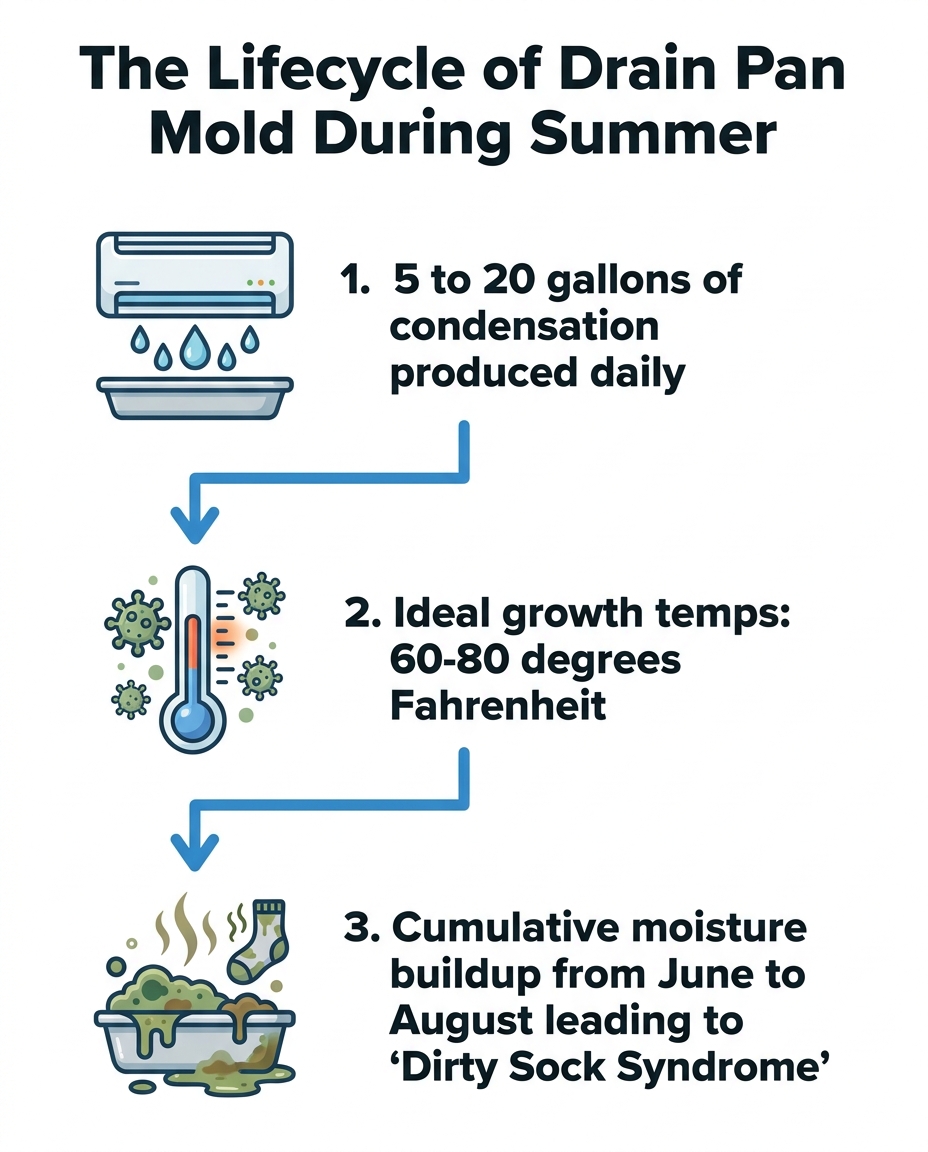
During peak cooling months, a typical central air conditioner can produce anywhere from 5 to 20 gallons of condensation per day. In the Des Moines area, the intense heat and humidity of the local climate require AC units to run long, continuous cycles. Because the system is constantly pulling moisture from the air to keep you comfortable, the internal components never get a chance to completely dry out. This constant flow of water means the drain pan remains continuously wet day after day.
Biological growth thrives when three specific conditions are met: a dark environment, constant moisture, and temperatures between 60 and 80 degrees Fahrenheit. The inside of your air handler perfectly matches all three of these criteria. As long as the system is running, the environment remains ideal for unwanted growth.
How Condensation Becomes a Breeding Ground
The water dripping into your drain pan is not perfectly clean. As air moves through your system, microscopic airborne dust and dirt particles bypass the filter and settle into the standing water. This combination of standing water and household dust creates a nutrient-rich sludge inside the pan. Furthermore, the complete lack of UV light inside the enclosed air handler accelerates microbial multiplication. Without natural sunlight to inhibit it, the biological growth spreads rapidly across the surface of the pan and into the drain lines.
August as the Tipping Point for Biological Growth
You might wonder why your air conditioner smelled perfectly fine in June, only to develop a terrible odor in late summer. The answer comes down to the cumulative effect of seasonal humidity. The buildup of organic matter in your drain pan is not a sudden, random breakdown. It is a slow, compounding issue that builds up over the entire cooling season. By the time August arrives, your drain pan has been subjected to months of heavy, continuous usage and non-stop moisture.
Cumulative moisture buildup: Throughout the early summer, the condensation begins to form a thin, invisible biofilm inside the pan. As the weeks pass, this film catches more dust and grows thicker.
High dew point impact: By late summer, the cumulative high dew points in the 60s and 70s have created maximum continuous wetness inside the system. The air conditioner is working overtime to combat the heavy, sticky air outside, generating maximum condensation.
Reaching critical mass: Eventually, the accumulated biofilm reaches a critical mass. This is the exact moment when the sudden onset of noticeable odors occurs. The biological growth has multiplied to the point where the smell is strong enough to be picked up by the blower fan and distributed throughout your home.
This tipping point almost always coincides with the heaviest strain on your cooling system. Just when you need your air conditioner the most to survive the August heat, the internal buildup reaches its peak, resulting in a smelly and potentially restricted system.

Dirty Sock Syndrome: Differentiating Between a Clogged Filter and a Moldy Pan
When a strange smell starts blowing from the vents, the most common decision point for a homeowner is trying to figure out if it is a simple maintenance task or a job for a professional. The term "Dirty Sock Syndrome" is used in the HVAC industry to describe the pungent, stale, sweaty odor that occurs when biological growth takes over the condensate pan and evaporator coil. To make the right decision for your home in the Des Moines area, you need to know the difference between a filter issue and a drain pan issue.
| Symptom or Sign | Clogged Air Filter | Moldy Drain Pan (Dirty Sock Syndrome) |
|---|---|---|
| Type of Odor | Dry, dusty, or slightly burning smell. | Pungent, damp, musty, or sweaty smell. |
| Timing of Odor | Smells briefly when the heat turns on, or constantly smells like stale air. | Smell is strongest right when the AC blower first kicks on. |
| Airflow Impact | Noticeably weak airflow coming from all vents in the house. | Airflow may feel normal, but the air smells heavily of mildew. |
| Visual Cues | A thick blanket of gray dust and debris covering the filter media. | Standing water, sludge, or a jelly-like substance in the drip pan. |
Changing your air filter is a vital part of routine maintenance, but it will not resolve odors originating from the drain pan. The filter sits before the evaporator coil in the airflow path. If the smell is coming from the damp pan beneath the coil, the freshly filtered air simply picks up the musty odor immediately after passing through the clean filter. If you put in a brand-new filter and the house still smells like dirty gym socks an hour later, you have clear signs that the smell is coming from deeper within the HVAC system.
How Hidden Condensate Mold Impacts Your Indoor Environment
The Problem: The mechanical issue of a dirty drain pan does not stay confined to the air handler. Your HVAC system is the respiratory system of your home. Every time the cooling cycle starts, the blower fan pushes air directly past the damp, mold-filled pan before circulating it into your living spaces.
The Cause: Because the biological growth is sitting directly in the primary airflow pathway, the moving air easily picks up microscopic spores and volatile organic compounds (VOCs) released by the sludge. This continuous circulation spreads the contaminants from room to room, degrading the air you breathe and causing your entire house to smell musty, especially in late summer when the buildup is at its worst.
The Solution: General EPA guidelines on indoor moisture management emphasize that controlling dampness is the most effective way to manage indoor air quality. You cannot simply mask the smell with air fresheners; you must remove the source of the moisture and the biological growth. By implementing comprehensive indoor air quality solutions, such as professional coil cleaning and UV light installations, you can neutralize the organic matter before it has a chance to multiply and spread through your ductwork.
The Domino Effect of a Clogged Condensate Drain Line
If the biological growth in your drain pan is left unaddressed, the consequences quickly escalate from a bad smell to a serious mechanical failure. The drain pan is designed to catch water and funnel it out of your home through a narrow PVC pipe known as the condensate drain line. However, the sludge and biofilm growing in the pan do not stay put. As water continuously flows, it washes chunks of this thick, jelly-like substance down into the pipe.
Migration and Blockage: Over the course of the summer, this sludge migrates into the narrow condensate drain line, sticking to the walls of the pipe. Eventually, the buildup causes the line to clog completely.
Water Backup: Once the line is blocked, the 5 to 20 gallons of water your system produces daily has nowhere to go. It begins to back up into the drain pan. If your system is equipped with an emergency safety switch, the rising water will trip the sensor and shut down your air conditioner entirely to prevent a flood.
Water Damage Risks: If the safety switch fails or is not installed, the pan will quickly overflow. This leads to severe water damage around the indoor unit, soaking drywall, ruining flooring, and creating even more significant moisture problems in your home. If you notice a visual cue like pooling water near your indoor unit, it is a direct connection to an internal blockage. Understanding what your AC condensate puddle is trying to tell you about your drain line is critical to stopping water damage before it destroys your surrounding property.
Why Chemical Pours Fail: The Need for Comprehensive System Maintenance
When homeowners in the Des Moines area notice a bad smell or a slow-draining condensate line in August, they often turn to the internet for quick fixes. A common piece of DIY advice is to pour bleach or vinegar directly down the drain line. While this might seem like a fast and inexpensive solution, it is highly risky and ultimately ineffective for long-term system health.
- Chemicals cause corrosion: Harsh chemicals like bleach are highly corrosive. When poured into the system, they can easily splash onto the metal evaporator coil or other internal components, causing the metal to rust and degrade prematurely. Over time, repeated bleach pours can even break down the plastic joints of the PVC drain line, leading to hidden leaks inside your walls.
- Liquids bypass the main problem: Pouring a cup of liquid down the narrow drain pipe does nothing to physically remove the thick, sticky biofilm attached to the wide, flat surface of the drain pan itself. The liquid simply flows right past the bulk of the biological growth, leaving the source of the odor completely untouched.
- The need for physical removal: To truly eliminate Dirty Sock Syndrome, the system requires a professional deep-cleaning. This entails safely opening the air handler, physically extracting the biological growth from the pan, and using specialized, non-corrosive treatments to clean the evaporator coil.
- Clearing hidden components: A professional technician will also use specialized tools to vacuum out the entire length of the condensate drain line, ensuring that no sticky residue is left behind to start a new clog next week.
A typical pattern we see involves homeowners scheduling a routine maintenance check because their AC and furnace simply are not running in top shape. During these visits, technicians perform thorough maintenance that goes far beyond a basic filter swap. They inspect the hidden components, clean the drain pan, address the homeowner's questions, and ensure the system is draining perfectly. This thorough approach leaves the customer feeling confident that their equipment is running safely and efficiently. Enrolling in a comprehensive AC maintenance plan ensures these deep-cleaning tasks are handled proactively before the late-summer odors ever have a chance to develop.
Resolving Late-Summer AC Odors with Professional Care
Dealing with a sudden, musty smell from your vents is never a pleasant experience, especially when you rely heavily on your cooling system to stay comfortable in the Des Moines area. Remember that a pungent odor is a clear, undeniable signal that your system requires more than just a new air filter. It is a sign that months of continuous condensation have finally caught up with your equipment.
Addressing the biological growth in your drain pan immediately is the only way to protect your indoor air quality and prevent the sludge from causing a severe clog or expensive water damage. By taking action now, you can eliminate the source of the odor and restore fresh, clean airflow to your home. We encourage you to explore professional maintenance options to keep your system running cleanly and efficiently, ensuring your home remains a comfortable, healthy environment for your family.
Frequently Asked Questions
Why does my AC smell musty in late summer?
A musty smell in late summer is typically caused by biological growth inside your air conditioner's condensate drain pan. Throughout the cooling season, the system constantly produces moisture, keeping the pan dark and damp. By August, this constant wetness allows organic matter to multiply, resulting in a strong, mildew-like odor blowing through your vents.
How do you know if there is mold in your AC drain pan?
The most obvious sign is a pungent, damp smell that hits you the moment the air conditioner turns on. You may also notice weak airflow, a sticky or jelly-like substance in the drain pan if you inspect the indoor unit, or water pooling around the base of the system due to a clogged drain line.
Is mold in the AC drain pan dangerous?
While we cannot provide medical advice, biological growth in the drain pan can significantly degrade your indoor air quality. As the blower fan pushes air past the contaminated pan, it circulates spores and odors throughout your living spaces, which can aggravate allergies and create an uncomfortable, stale environment.
Why does my house smell like a dirty sock when the AC turns on?
This specific odor, often called "Dirty Sock Syndrome," happens when bacteria and biological growth build up on the indoor evaporator coil and inside the condensate drain pan. When the system cycles on, the fan blows air directly over this damp, smelly buildup, distributing the stale, sweaty odor into every room of your house.
Can I just pour bleach down my AC drain line to fix the smell?
Avoid pouring bleach down your AC drain line. Bleach is highly corrosive and can damage the metal components of your system, as well as degrade the plastic PVC pipes over time. Furthermore, a liquid pour will not physically remove the thick sludge attached to the drain pan, meaning the smell will likely return quickly.
Will changing my air filter fix a musty AC smell?
Changing your air filter will not fix a musty smell if the odor is originating from the drain pan. The filter is designed to catch dry dust and debris before the air hits the cooling coil. If the damp pan beneath the coil is filled with biological growth, the freshly filtered air will simply pick up the bad odor on its way into your ductwork.
