
Why Knowing the Signs of Carbon Monoxide Risk From a Gas Water Heater Could Save Your Life
The signs of carbon monoxide risk from a gas water heater include yellow or orange pilot light flames, soot or dark staining around the exhaust vent, rust on the vent pipe, heavy condensation on nearby windows, and a stale or heavy feeling in the air — along with physical symptoms like headaches, dizziness, or nausea that improve when you leave the house.
Here's a quick reference:
| Warning Sign | What It Means |
|---|---|
| Yellow or orange pilot light | Incomplete combustion, possible CO production |
| Soot or dark staining near vent | Exhaust gases leaking into the home |
| Rust or corrosion on vent pipe | Venting system may be compromised |
| Heavy window condensation | Moist exhaust gases not properly venting outside |
| Stale or heavy indoor air | Poor combustion airflow or backdrafting |
| Flu-like symptoms without fever | Possible CO exposure — leave immediately |
| Pets acting lethargic indoors | Animals are often affected by CO before humans |
Your gas water heater works quietly in the background every day. Most homeowners never think twice about it. But when something goes wrong with the venting or combustion system, it can produce carbon monoxide — a colorless, odorless gas that the CDC links to more than 400 unintentional deaths in the U.S. every year. Many of those deaths involve malfunctioning or improperly vented fuel-burning appliances, including gas water heaters.
The reason CO is so dangerous is simple: you cannot see it, smell it, or taste it. By the time symptoms appear, exposure may already be serious. Early symptoms mimic the flu — headache, nausea, dizziness — so many people don't connect them to their water heater at all.
For families in Des Moines, where homes range from older builds with aging vent systems to tightly insulated newer constructions, knowing what to watch for can make all the difference.
Understanding the Dangers of Carbon Monoxide
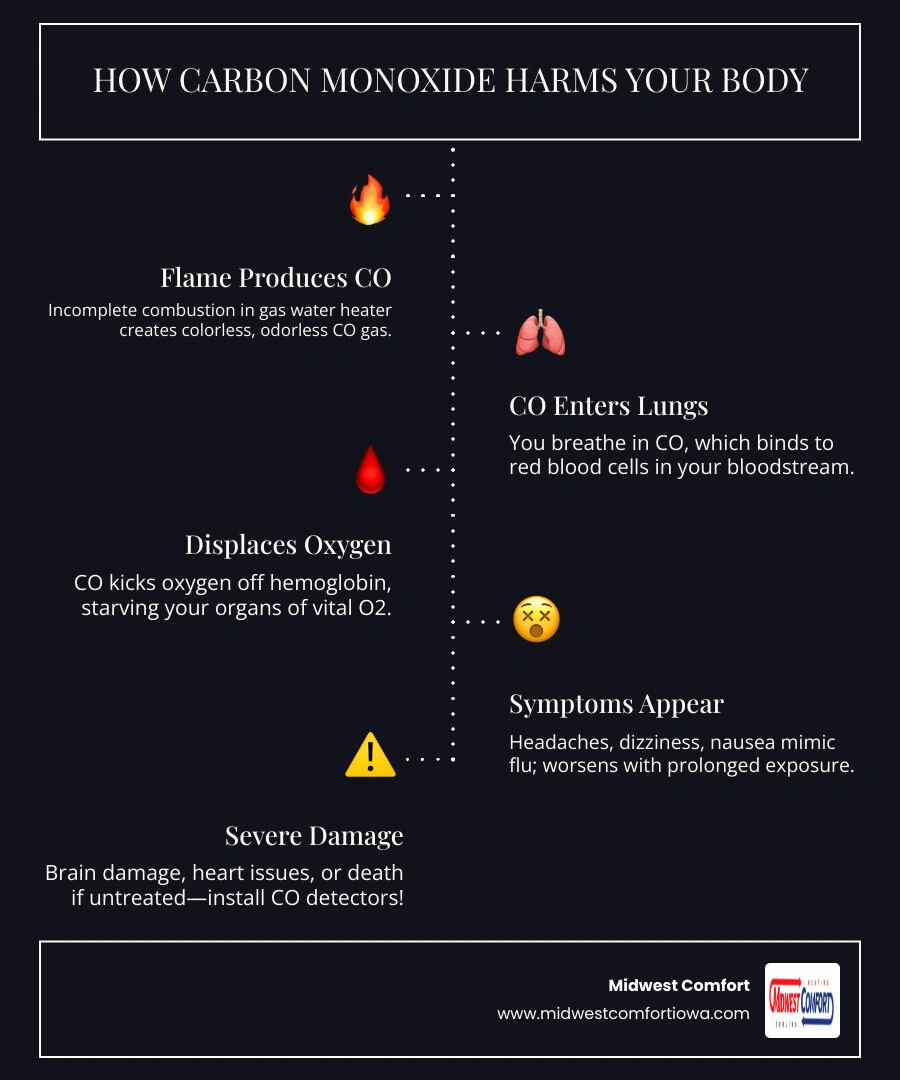
Carbon monoxide (CO) is often called the "silent killer" because it bypasses our natural senses. It is a tasteless, colorless, and odorless gas that is a byproduct of incomplete combustion. In a perfectly functioning water heater, the gas burns cleanly and the exhaust is safely funneled through a vent pipe and out of your home. However, if there isn't enough oxygen for the flame or if the vent is blocked, CO can build up inside your living space.
When we breathe in CO, it enters our bloodstream and hitches a ride on our red blood cells, effectively kicking oxygen out. This oxygen deprivation is what makes the gas so lethal. It doesn't just make you feel sick; it can lead to permanent brain damage or heart complications because your vital organs are essentially suffocating.
This is why the importance of water heater repair cannot be overstated. Certain populations are even more vulnerable to these effects. Infants and children breathe more rapidly than adults, meaning they take in more gas in a shorter period. The elderly and those with existing heart or lung conditions also face higher risks. Even our pets are "early warning" indicators; because of their smaller size and faster metabolisms, they often show signs of lethargy or illness long before the humans in the house do.
Visual and Environmental Signs of Carbon Monoxide Risk From a Gas Water Heater
Since you can't smell the gas itself, you have to look for the "fingerprints" it leaves behind. Your water heater will often give off physical clues that it is struggling to breathe or vent properly.
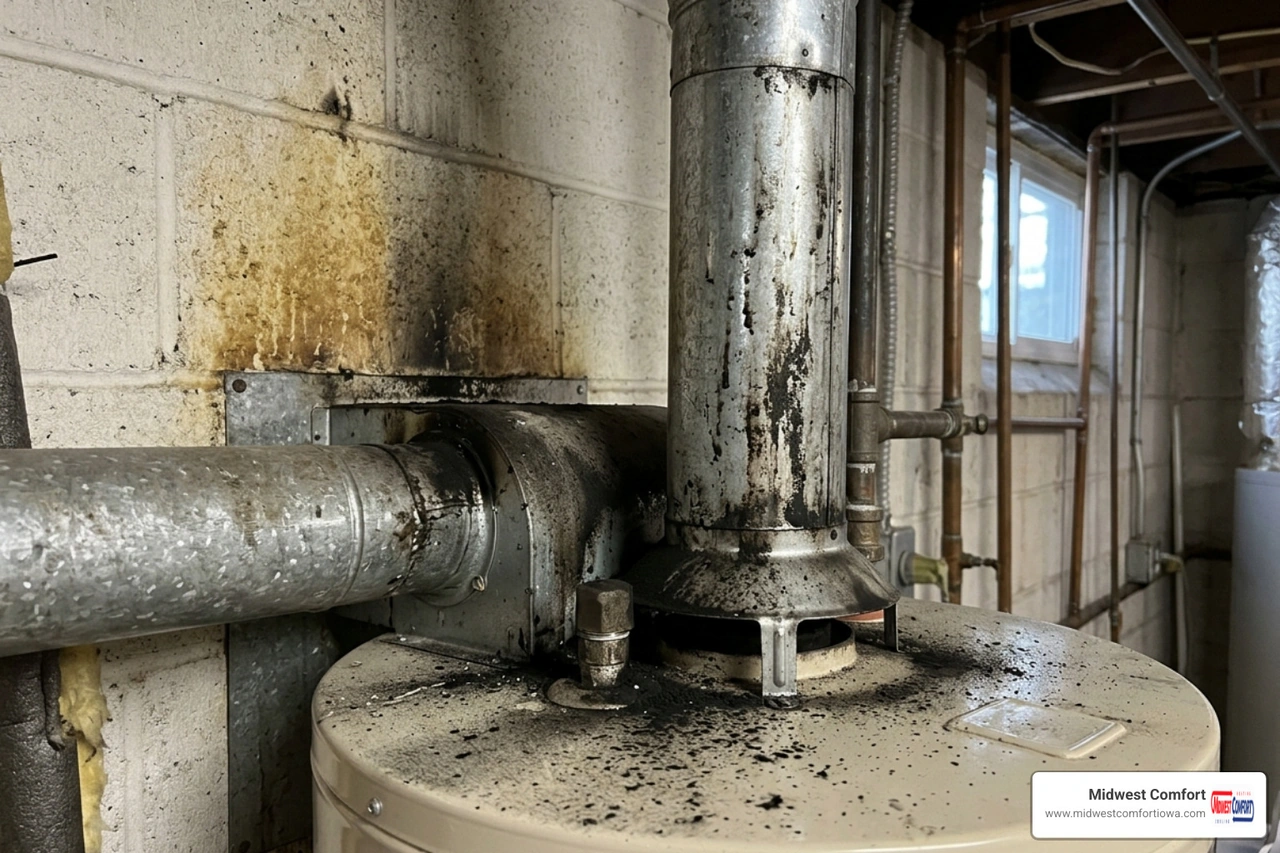
One of the most immediate things to check is the pilot light or burner flame. A healthy flame should be a crisp, steady blue. If you see a flickering yellow or orange flame, it’s a major red flag. This indicates an improper gas-to-air ratio, meaning the fuel isn't burning completely and is likely producing high levels of CO.
You should also look for soot. If you notice yellow-brown residue or black soot stains on the wall above the heater or around the draft hood (the metal "hat" on top of the unit), exhaust gases are spilling back into the room instead of going up the flue. Similarly, check for melted plastic rings around the water inlet and outlet pipes. If these are distorted or charred, it means hot exhaust gases are "backdrafting" and heating up the top of the tank to dangerous levels.
Corrosion is another key indicator. Because exhaust gases from burning gas are naturally acidic, they can cause rapid rusting if they linger. Seeing heavy rust on the vent pipe or the top of the heater is one of the clearest warning signs of a failing water heater.
Visual Signs of Carbon Monoxide Risk From a Gas Water Heater
Beyond the tank itself, the burner assembly can tell a story. If the metal around the burner looks discolored or heat-damaged, it suggests the unit is straining. This often happens when there are flue obstructions. In our experience serving the Des Moines area, we've found everything from bird nests to debris from crumbling chimney liners blocking vents.
Furthermore, keep an eye out for signs of sediment buildup in water heater tanks. While sediment usually affects heating efficiency, severe buildup can actually interfere with the burner's ability to operate cleanly, indirectly increasing the risk of poor combustion.
Environmental Signs of Carbon Monoxide Risk From a Gas Water Heater
The air around your water heater can also provide clues. Because combustion exhaust contains a lot of moisture, a water heater that isn't venting properly will act like a humidifier. If you notice heavy window condensation in the utility room or nearby areas—looking more like someone just boiled a large pot of water—it’s a sign that exhaust is staying indoors.
If the air feels "stale," heavy, or uncomfortably humid whenever the water heater is running, you are likely experiencing backdrafting. This is often caused by negative air pressure. In modern, tightly sealed homes in suburbs like Ankeny or Waukee, running a powerful kitchen exhaust fan or a clothes dryer can actually pull air down the water heater vent to replace the air being pushed out, bringing CO with it. Recognizing these signs you need water heater repair is the first step in keeping your home's atmosphere safe.
Recognizing Physical Symptoms in Humans and Pets
Because CO poisoning feels so much like the flu, it is incredibly easy to ignore until it's too late. The key differentiator is the absence of a fever. If you find yourself suffering from chronic headaches, nausea, or dizziness that seems to magically disappear when you go to work or step outside for a walk, your home environment is likely the culprit.
Common symptoms include:
- Confusion and Disorientation: You might feel "foggy" or have trouble making simple decisions.
- Shortness of Breath: Even while resting, you may feel like you can't catch your breath.
- Physical Weakness: A sudden loss of muscle control or extreme fatigue.
- Rapid Heartbeat: Your heart may race as it tries to compensate for the lack of oxygen in your blood.
Don't forget to watch your pets. If your normally active cat is suddenly refusing to move or your dog is acting unusually weak, they might be reacting to CO levels that haven't quite reached the threshold to affect you yet. Interestingly, some homeowners notice these issues alongside water heater temperature fluctuations causes like a failing thermostat or burner, which can lead to the unit running longer and producing more gas.
Prevention and Maintenance Strategies for Des Moines Homeowners
The best way to handle a CO risk is to prevent it from ever happening. In April 2026, the standards for home safety are higher than ever, and we recommend a multi-layered approach.
First, you must have working CO detectors. These are not the same as smoke detectors! A smoke detector looks for particles; a CO detector looks for gas.
| Feature | Battery-Operated CO Detector | Hardwired CO Detector |
|---|---|---|
| Installation | Easy, "peel and stick" or plug-in | Requires professional wiring |
| Power Source | Batteries only | Home's electrical system with battery backup |
| Reliability | Fails if batteries die | Most reliable during power outages (with backup) |
| Placement | Flexible | Fixed locations |
Pro Tip: We recommend detectors with a digital display that can show low levels of CO (starting at 5 ppm) before they reach the "danger zone" of 70-90 ppm where standard alarms finally trigger. Place them on every floor, especially near sleeping areas and about 5 feet high (breathing level).
Annual inspections are your second line of defense. A professional can check the venting system for leaks and ensure the gas-to-air ratio is perfect. If you are in Polk City or Grimes and notice your unit acting up, scheduling a water heater repair Ankeny IA service can catch small venting issues before they become life-threatening.
Finally, know when to replace your water heater. Most gas units last 10–12 years. If yours is older, consider a tankless water heater Urbandale IA upgrade. Many tankless models use "direct vent" technology, which pulls air from outside and pushes exhaust back out through a sealed pipe, significantly reducing the risk of indoor CO leaks.
Frequently Asked Questions about Water Heater Safety
What color should my water heater pilot light be?
Your pilot light should always be a steady, crisp blue. This indicates complete combustion, meaning the gas is getting the perfect amount of oxygen to burn cleanly. A yellow or orange flame is a "lazy" flame; it isn't burning hot enough or clean enough, which is a primary cause of carbon monoxide production. If you have a tankless water heater Ankeny IA, you might not have a standing pilot light, but the internal burner should still show blue during operation.
Where is the best place for a CO detector?
Detectors should be installed on every level of the home, including the basement. The most critical placement is within 10–15 feet of every bedroom door so the alarm is loud enough to wake you up. Since CO is slightly lighter than air (but generally mixes evenly), placing them at breathing level—about 5 feet off the floor—is ideal. Avoid placing them directly next to the water heater or stove, as tiny, harmless amounts of CO produced during startup could cause "nuisance" alarms.
Can a noisy water heater indicate a CO leak?
Indirectly, yes. When water heater makes popping noises, it’s usually due to sediment at the bottom of the tank. This sediment acts as an insulator, forcing the burner to stay on much longer to heat the water. An overworked burner is more likely to experience "flame rollout" or poor combustion, which can lead to airflow restrictions and CO risks.
Conclusion
At Midwest Comfort, we believe your home should be your sanctuary, not a place of hidden danger. As a family-owned business serving the greater Des Moines area—from Johnston to Pleasant Hill and everywhere in between—we treat your family's safety like our own.
Carbon monoxide is a serious threat, but it is one that can be entirely managed with the right knowledge and professional support. Whether you need a routine safety check or a full water heater installation Ankeny IA, our team is here to provide honest, high-quality service. Don't wait for the alarm to sound; look for the visual signs today and breathe easier tonight.
