
The September Surprise: Why Your Heat Pump Doesn't Feel Like Your Old Furnace
September in the Des Moines area is notorious for its sudden weather whiplash. One afternoon you are enjoying a mild breeze with the windows open, and by the very next morning, temperatures have plummeted into the crisp 40s. When that first September cold snap hits, you naturally walk over to the thermostat and switch your system from cooling to heating. Within minutes, air begins flowing from the vents. You hold your hand up to the register, expecting a blast of intense heat, but instead, you feel something entirely different. If you are wondering why your heat pump blows lukewarm air during the first fall cold snap, you are experiencing one of the most common sensory adjustments for modern homeowners.
That initial feeling of mildly warm or even slightly cool air can immediately trigger panic. It is incredibly common to assume that the system is broken, the reversing valve is stuck, or that you have developed a massive refrigerant leak over the summer. However, in the vast majority of cases, this lukewarm sensation is actually a sign of a perfectly healthy system operating exactly as it was designed to. Understanding the difference between normal operation and a genuine mechanical failure is the key to maintaining your peace of mind as the seasons change.
Before you rush to schedule emergency heating services, it helps to look at the science behind how modern heating technology interacts with the human body. The perceived temperature of the air coming out of your vents is heavily influenced by your own physiological baseline, combined with the specific thermodynamic properties of heat pump technology.
Understanding the 98.6-Degree Expectation Gap
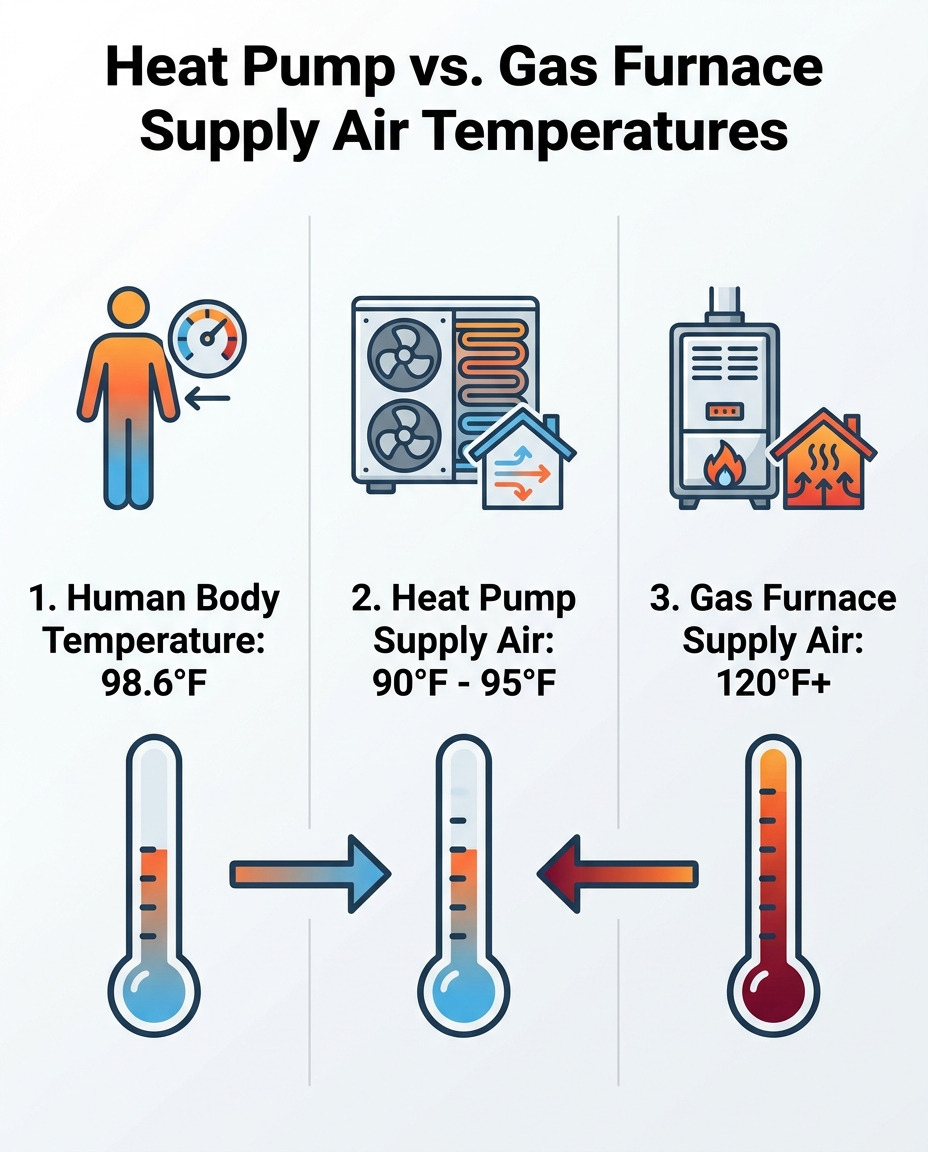
To understand why the air feels lukewarm, we have to start with basic human biology. The average human body temperature sits right around 98.6 degrees Fahrenheit. Our skin temperature is typically slightly lower, hovering in the low 90s depending on the ambient room temperature and our level of activity. When we feel air blowing across our skin, our nervous system judges that air as "hot" or "cold" based entirely on how it relates to our own body temperature.
Here is where the expectation gap occurs: standard heat pump supply air ranges from 90 to 95 degrees Fahrenheit when operating normally in early fall conditions. Because this 90 to 95 degree supply air is lower than your core body temperature and very close to your skin temperature, it does not create a sensation of intense heat. In fact, if the air is moving quickly out of a vent, the slight wind chill effect can cause the moisture on your skin to evaporate, making that 90-degree air feel distinctly cool to the touch.

This biological reality is why so many homeowners question their heat pump services immediately after installation. It is difficult to trust that air feeling lukewarm against your hand can actually warm up a chilly living room. However, your living room is not 98.6 degrees; it is likely sitting around 65 degrees during a cold snap. Introducing a steady volume of 90-degree air into a 65-degree space will absolutely raise the ambient temperature of the room until it reaches your thermostat's set point. It just does so through a gradual, continuous process rather than a sudden, overwhelming blast.
The Science of Sensible vs. Latent Heat
Another factor at play is the difference in how various systems handle humidity. During the early fall, indoor air can still hold a moderate amount of moisture. Heat pumps are incredibly efficient at moving sensible heat (the heat you can measure with a thermometer) without aggressively stripping all the latent heat (moisture) out of the air. Because the air retains a comfortable level of humidity, it doesn't have the harsh, bone-dry feeling that often accompanies a traditional furnace cycle. This softer, more humidified warmth feels less aggressive, further contributing to the perception that the system isn't working as hard as it should be.
Why the Transition from Gas to Heat Pump Feels So Different
For generations, Des Moines area homes have relied heavily on traditional natural gas furnaces to combat the bitter cold of Midwest winters. If you grew up in a home with a gas furnace, your brain has been conditioned to associate "heating" with a very specific sensory experience. When a gas furnace kicks on, it ignites a physical flame, heating a metal heat exchanger to extreme temperatures. The blower motor then forces air over that glowing metal, delivering a blast of air that often exceeds 120 degrees Fahrenheit.
Because 120+ degree gas furnace air is significantly hotter than your 98.6-degree body temperature, holding your hand over a furnace vent feels instantly, undeniably hot. You have been trained to expect this blast furnace effect. When you transition to a modern heat pump, you are moving from a system that generates heat through combustion to a system that transfers heat using refrigerant. This fundamental shift in technology requires a shift in comfort expectations.
| Heating Characteristic | Traditional Gas Furnace | Modern Heat Pump |
|---|---|---|
| Supply Air Temperature | 120°F - 140°F | 90°F - 100°F |
| Heating Method | Combustion (burning fuel to create heat) | Heat Transfer (moving existing heat indoors) |
| Cycle Style | Short, intense blasts of high heat | Long, steady cycles of moderate heat |
| Sensory Experience | Instantly hot to the touch | Lukewarm or mildly cool to the touch |
To better understand this transition, it is helpful to look at cold climate heat pump performance in Iowa winters. Modern cold-climate systems are designed to operate like the cruise control on your car. Instead of flooring the accelerator (blasting 120-degree air) and then slamming on the brakes (shutting off completely), a heat pump gently applies the throttle. It runs for longer periods at a lower, steady output. This eliminates the drastic temperature swings—often called the "cold blow" effect—that happen between furnace cycles. While the air coming from the vent doesn't feel like a hair dryer, the overall ambient temperature of your home remains far more consistent and comfortable from room to room.
Is Your Heat Pump in Defrost Mode?
While 90 to 95 degree supply air is the standard output, there is another very specific operational state that can cause your system to blow temporarily cooler air: defrost mode. As we move deeper into fall and the first September cold snap gives way to October frosts, the outdoor temperatures will begin dropping closer to freezing, especially overnight.
Even when it is 35 degrees outside, your heat pump is still extracting ambient heat from the outdoor air and moving it inside. To do this, the refrigerant inside the outdoor coils must be colder than the outside air. When the outdoor air contains moisture, that moisture condenses on the freezing-cold coils and turns into frost. If left unchecked, this frost would build up into a solid block of ice, completely suffocating the outdoor unit and preventing it from absorbing any heat at all.
The Defrost Cycle Timeline
To protect itself, your system is equipped with an automated defrost cycle. When sensors detect a buildup of frost on the outdoor coils, the system temporarily reverses its operation. It shifts back into cooling mode, taking the warm air from inside your house and sending it outside to melt the ice off the coils. During this brief period, you may experience a few distinct symptoms:
- Cooler indoor air: Because the system is temporarily acting like an air conditioner to melt the outdoor ice, the air coming out of your indoor vents will feel noticeably cooler for a few minutes.
- Strange outdoor noises: You might hear a loud "whoosh" sound as the reversing valve shifts directions, followed by the outdoor fan shutting off while the compressor continues to run.
- Steam from the outdoor unit: As the frost melts rapidly, it is completely normal to see steam or vapor rising from the top of the outdoor cabinet.
Defrost mode is a critical, built-in protection mechanism, not a malfunction. The cycle typically lasts anywhere from 5 to 15 minutes. Once the ice is melted, the reversing valve shifts back, and the system resumes blowing its normal, steady warmth into your home. If you notice cool air, check the time. If it resolves itself within a quarter of an hour, your system is functioning perfectly.
How to Tell the Difference Between Normal Operation and a Refrigerant Leak
While lukewarm air and temporary defrost cycles are completely normal, there are times when cool air indicates a legitimate mechanical issue. The most common fear homeowners have is a refrigerant leak. Heat pumps rely on a precise, pressurized charge of chemical refrigerant to absorb and release heat. If a leak develops in the copper lines or the evaporator coil, the system loses its ability to transfer heat effectively.
Because diagnosing a sealed refrigerant system requires specialized gauges, EPA certification, and advanced training, it is never a DIY project. However, there are clear, non-DIY indicators that can tell you when it is time to call in a professional. If you are experiencing any of the following symptoms alongside cool air, you may have a genuine issue that requires attention:
- The thermostat never reaches its set point: The ultimate test of a heat pump is ambient room temperature. If you set your thermostat to 70 degrees and the system runs continuously for hours but the room never gets past 64 degrees, the system is failing to transfer adequate heat.
- Continuous ice on the outdoor unit: While a light coating of frost is normal before a defrost cycle, a thick, solid block of ice that encases the entire unit and never melts away is a major red flag. This often points to low refrigerant levels or a failing defrost control board.
- Hissing or bubbling noises: A noticeable hissing sound coming from the indoor air handler or the outdoor compressor can indicate a pressurized leak in the refrigerant lines.
- Unusually high energy bills: If the system is constantly struggling to heat the home because it lacks the necessary refrigerant, it will run non-stop, causing a severe spike in your electrical usage.
Mechanical failures can happen to any system, regardless of its age. For instance, during a recent winter freeze, one local homeowner noticed their heating system stopped pushing warm air entirely. Technicians quickly diagnosed the issue as a faulty blower motor rather than a refrigerant leak, provided a straightforward quote, and replaced the component to restore proper airflow. Because major repairs like blower motors or repairing coil leaks can be unexpected, taking advantage of flexible financing options can help you address necessary fixes before the severe winter weather truly sets in.
Catching Hidden Inefficiencies Before the Winter Freeze
The transition period of early fall is the most critical time for your heating system. Ignoring a heat pump that struggles during a mild September cold snap is a risky gamble. If the system is low on refrigerant, dealing with a failing capacitor, or suffering from restricted airflow due to a clogged filter, those minor inefficiencies will compound rapidly when the deep, sub-zero Iowa winter finally arrives. A system working at 80% capacity might keep you comfortable when it is 45 degrees outside, but it will completely fail you when the temperature drops to negative 10.
This is why bridging the gap between casual troubleshooting and proactive, preventative maintenance is so important. A professional tune-up goes far beyond just listening to the unit run. During a comprehensive inspection, technicians verify the exact electrical draw of the compressor, measure the subcooling and superheat of the refrigerant to ensure the charge is perfectly balanced, and test the reversing valve to guarantee it will shift into defrost mode when needed.
Enrolling in the Comfort Loyalty Program is the most trusted solution for Des Moines homeowners looking to catch real inefficiencies before they turn into midnight emergencies. Routine maintenance ensures that every component is calibrated for the grueling season ahead. During a recent early November chill, another homeowner's furnace stopped working entirely, requiring an urgent part replacement. Initially scheduled for a late afternoon visit, a technician named Mick was able to arrive by noon, diagnosed the specific failing component, and returned with the part to get the system up and running quickly. While fast repairs are wonderful, a routine HVAC maintenance plan is designed to catch those exact types of failing components weeks before they actually break down.
Frequently Asked Questions About Heat Pump Air Temperatures
Why is my heat pump blowing lukewarm air?
Heat pumps output air between 90 and 95 degrees, which is lower than the normal human body temperature of 98.6 degrees. Because the air coming from the vents is cooler than your skin, it feels lukewarm or slightly cool to the touch. This is a normal part of the heat transfer process, and as long as the system is running, it is effectively raising the ambient temperature of your home to meet the thermostat setting.
What is the normal output temperature of a heat pump?
Normal supply air temperature for a heat pump ranges from 90 to 100 degrees Fahrenheit, depending on the outdoor weather conditions. This provides a steady, efficient, and continuous heat compared to the aggressive 120+ degree blast of a traditional gas furnace. The lower output temperature is perfectly calibrated to maintain comfort without wasting energy.
How do I know if my heat pump has a refrigerant leak?
Signs of a refrigerant leak include the system running constantly without ever reaching the temperature set on your thermostat, thick ice encasing the outdoor unit that fails to melt during a defrost cycle, or audible hissing sounds near the equipment. Because refrigerant is heavily regulated, diagnosing and repairing a leak requires a licensed professional with specialized pressure gauges and leak-detection tools.
Is it normal for a heat pump to blow cool air when the heat is on?
Yes, it is temporarily normal if the system has entered its automated defrost mode. When frost builds up on the outdoor coils in cold weather, the system briefly reverses into cooling mode to send warm air outside and melt the ice. This cycle usually lasts 5 to 15 minutes, during which the indoor vents may blow cooler air. If it blows cold air continuously for hours, it requires a professional inspection.
How do I know if my heat pump is working correctly in winter?
The most accurate way to verify your system is working correctly is to check your ambient room temperature against your thermostat setting. If your home successfully maintains the 68 or 70 degrees you have set on your thermostat, the system is working exactly as intended, regardless of how lukewarm the air might feel when you hold your hand directly over the vent.
Ensure Your Heat Pump is Ready for the Iowa Winter
Understanding why your heat pump blows lukewarm air during the first fall cold snap ultimately comes down to resetting your expectations. The 90 to 95 degree supply air is a sign of normal, high-efficiency operation, not a system failure. By recognizing the difference between the steady warmth of a heat pump and the aggressive blast of a traditional gas furnace, Des Moines area homes can enjoy a more consistent, comfortable indoor climate.
However, if you notice that your home is failing to reach the set temperature, or if the system is running continuously without making a dent in the indoor chill, it is time to seek professional help. Don't wait until the mild days of early fall turn into the freezing nights of deep winter. Schedule a comprehensive inspection today to verify your system's health, ensure your refrigerant levels are perfectly balanced, and guarantee your home stays warm and protected all season long.
