


How Electric Water Heaters Offer Simpler Installation


Discover the Essential Benefits of Regular Air Conditioning Maintenance
Regular maintenance of your air conditioning system ensures optimal performance and longevity. It helps prevent costly repairs while improving energy efficiency, keeping your home comfortable year-round.

Routine checks can significantly reduce energy bills and extend the life of your unit.


Why Knowing How Electric Water Heaters Offer Simpler Installation Matters for Des Moines Homeowners
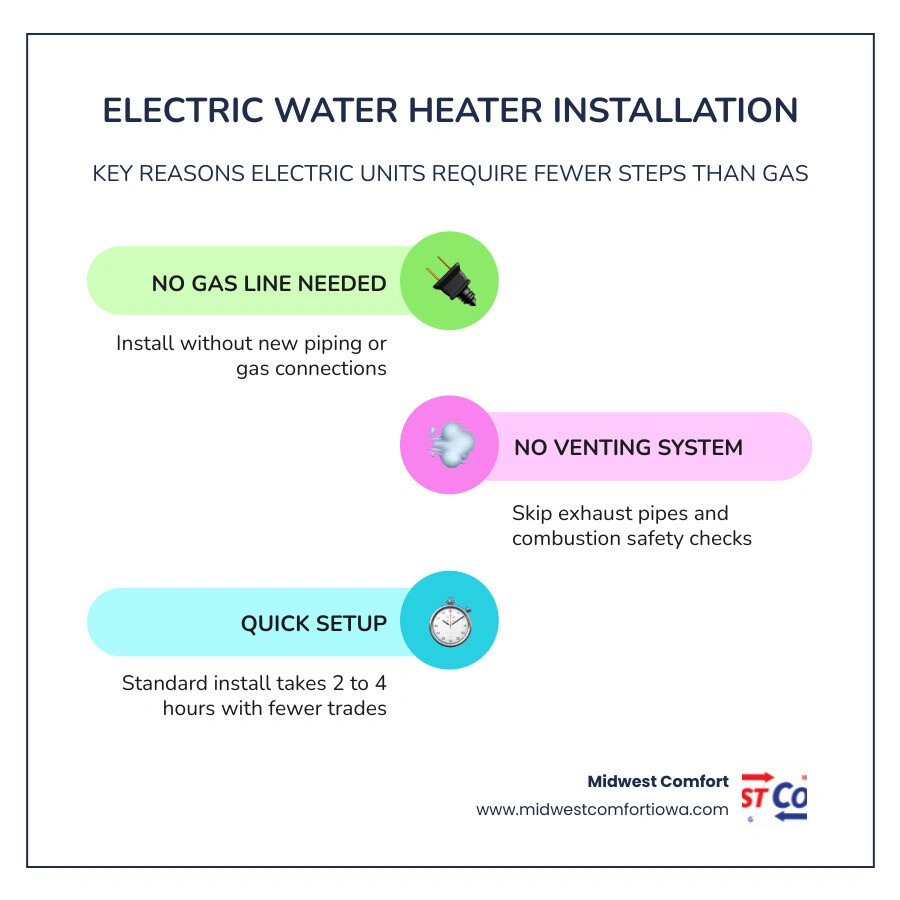
How electric water heaters offer simpler installation comes down to a few key advantages: they require no gas lines, no combustion venting, and no exhaust infrastructure — making them one of the most straightforward water heating upgrades a homeowner can make.
Here is a quick breakdown of why electric water heater installation is simpler:
- No venting required — electric units produce no combustion gases, so there is nothing to exhaust
- No gas line needed — homes without existing gas service can install electric models without costly new piping
- Flexible placement — without vent pipes or gas connections, electric units fit in tighter spaces like closets or utility rooms
- Fewer trades involved — most installations only require a licensed plumber and an electrician, not a gas specialist
- Faster installation — professional installation typically takes 2 to 4 hours for a standard electric tank unit
For many Des Moines homeowners, choosing a new water heater feels overwhelming. There are multiple fuel types, tank sizes, and installation requirements to sort through — and the wrong choice can mean unexpected infrastructure costs or a unit that simply does not fit your home's setup.
The good news is that electric water heaters cut through much of that complexity. Because they do not rely on combustion, they skip the venting systems, gas piping, and burner components that make gas water heater installation more involved. According to industry sources, electric units also convert 90 to 95 percent of their energy directly into heat, compared to 60 to 70 percent for gas models — meaning you get a cleaner, more efficient system that is also easier to put in.
Whether you are replacing an aging tank or upgrading to a modern hybrid heat pump model, understanding what electric installation actually involves helps you plan smarter and avoid surprises.
How electric water heaters offer simpler installation basics:
- gas vs electric tankless water heater differences
- gas vs electric water heater comparison for homeowners
Why Electric Water Heaters Offer Simpler Installation Compared to Gas
When we evaluate home comfort upgrades for our neighbors in Des Moines, Ankeny, and Waukee, we always look at the big picture. Choosing a water heater is not just about the unit itself; it is about the physical changes your home must undergo to accommodate it.
Traditional gas water heaters rely on combustion to heat your water. This process generates heat quickly, but it also produces dangerous exhaust byproducts, including carbon monoxide. To keep your family safe, a gas water heater requires a dedicated venting system to carry these gases safely out of your home. Additionally, it requires a secure, professionally run natural gas or propane line.
Electric water heaters, on the other hand, use electric resistance elements or advanced heat pump compressors to transfer heat directly to your water. Because there is no flame, there is no combustion. This fundamental difference is the primary reason why electric units are dramatically simpler to install.
To help visualize these differences, we have put together a comparison of the typical installation requirements for both systems:
| Installation Requirement | Gas Water Heaters | Electric Water Heaters |
|---|---|---|
| Venting System | Required (Atmospheric or Power-Vent) | None Required |
| Fuel Source | Natural Gas or Propane Line | Electrical Circuit (240V or 120V) |
| Combustion Air Clearance | Strict minimum room volume requirements | Minimal clearance (primarily for servicing) |
| Safety Devices | Gas shut-off, sediment traps, draft hoods | Electrical disconnect, double-pole breakers |
| Placement Flexibility | Limited by chimney/exterior wall access | Highly flexible; can go in closets or crawlspaces |
For a deeper dive into how these fuel sources impact your daily usage and utility bills over time, check out our comprehensive Gas vs. Electric Water Heater Comparison for Homeowners.
No Venting or Gas Line Infrastructure Required
The absence of a venting system is a massive advantage when installing an electric water heater. For a gas unit, installers must route heavy-duty exhaust pipes through your roof or out of an exterior wall. If your utility room is located in the center of your basement, this can mean cutting through finished ceilings, joists, and drywall just to create a pathway for the vent.
Furthermore, older atmospheric gas heaters require a constant supply of fresh indoor air to fuel the burner. If your utility room is too small, the heater can starve for oxygen, leading to backdrafting—where carbon monoxide is pulled back into your living spaces instead of exiting through the flue.
Electric water heaters eliminate these concerns entirely. Because they do not produce exhaust, they require zero venting infrastructure. This not only preserves your home's indoor air quality but also protects your physical structure from unnecessary holes and penetrations. You also avoid the need to run, test, and maintain gas lines, removing any risk of fuel leaks or combustion hazards in your home.
Understanding How Electric Water Heaters Offer Simpler Installation in Tight Spaces
In many homes across Johnston, Clive, and Grimes, space is at a premium. If your water heater is tucked away in a tiny hallway closet, under a staircase, or in a tight basement corner, a gas unit might not even be a viable option due to strict clearance and air-volume codes.
Electric tank units do not require a constant supply of combustion air, meaning they can operate safely in tightly enclosed spaces. They do not need to be raised off the floor on stands—a safety requirement that was historically mandatory for older gas water heaters to keep open flames away from potential flammable vapors on garage or basement floors.
For homeowners looking to maximize their square footage, electric tankless water heaters offer the ultimate space-saving solution. Because they do not need to be vented, these compact, wall-mounted units can be tucked away in small closets, utility rooms, or even under sinks where a gas tankless unit simply could not go due to exterior venting limitations. To understand the differences in design, space requirements, and performance between these on-demand options, take a look at our guide on Gas vs. Electric Tankless Water Heater Differences.
Home Infrastructure and Electrical Requirements
While electric water heaters eliminate the need for gas lines and flues, they do rely on your home's electrical grid. Before replacing an old unit or switching fuel sources, it is essential to evaluate your home's existing infrastructure to ensure a smooth, code-compliant setup.
Every home has a unique layout, and our team works to ensure your electrical and plumbing systems are perfectly matched to your new appliance. For a step-by-step look at how we evaluate local homes for these upgrades, you can read our Water Heater Installation Guide Des Moines IA.
Electrical Panel Capacity and Wiring
Most traditional tank-style electric water heaters operate on a 240-volt dedicated circuit. This requires a double-pole breaker in your main electrical panel, typically rated for 30 amps. To safely carry this electrical load, installers run heavy-duty 10-gauge solid copper wire directly from the breaker panel to the water heater's junction box.
If you are replacing an existing electric water heater, this infrastructure is likely already in place. However, if you are converting from gas to electric, we will need to verify that your breaker panel has the physical space and the overall amperage capacity to support the new load.
Fortunately, as we move through 2026, home electrification has become much easier thanks to innovative technology. If your electrical panel is fully loaded and you want to avoid a costly service upgrade, you might consider a 120-volt plug-in hybrid heat pump water heater. These highly efficient units draw a small amount of power—similar to a standard household refrigerator—and can plug directly into a standard 120-volt grounded outlet. This breakthrough technology allows you to enjoy the benefits of an electric hybrid system without touching your main electrical panel.
On the other end of the spectrum, if you are installing a whole-home electric tankless water heater, your electrical needs will be much higher. Because these units heat water instantly as it flows, they require a significant amount of power. A larger electric tankless unit can require up to four separate 40-amp 240V breakers and multiple runs of heavy-gauge wire. Verifying your home's electrical capacity is always the first step we take before recommending these systems.
Plumbing Connections and Thermal Expansion
Once the electrical path is established, the plumbing connections must be completed. Modern plumbing codes in Iowa require specific materials and safety devices to protect both your home and the municipal water supply.
One critical detail is the use of dielectric unions. When copper plumbing pipes connect directly to the steel tank of a water heater, a process called galvanic corrosion can occur, rapidly rusting the connection and causing premature leaks. Dielectric unions use a non-conductive plastic barrier to keep the two metals separate, ensuring a long-lasting, leak-free joint. We also utilize high-quality, flexible PEX or copper connectors to reduce system vibration and make future servicing easier.
Another essential component of a modern, code-compliant installation is the thermal expansion tank. In the past, water systems were "open," meaning that as water heated up and expanded inside your tank, the excess pressure could simply push back out into the municipal water main.
Today, the Safe Drinking Water Act requires backflow preventers or check valves to be installed at your water meter, creating a "closed" plumbing system. When water is heated, it expands. Because it has nowhere to go in a closed system, this thermal expansion causes rapid pressure spikes. Over time, these spikes place immense stress on your water heater's inner lining, your faucets, and your washing machine hoses, often leading to premature leaks or running toilets at night.
Installing a properly sized thermal expansion tank on the cold water supply line gives this expanding water a safe place to go, protecting your entire plumbing system from pressure damage.
Professional Installation Timeframes, Safety, and Warranties
When your water heater is failing, you do not want to wait days for a solution. One of the greatest benefits of a simpler installation process is that it directly translates to a faster, safer, and more reliable setup on installation day.
Upgrading your system not only restores your hot water but also brings long-term peace of mind. To learn more about how a seamless installation protects your home from water damage and lowers your monthly energy bills, take a look at the Benefits of Water Heater Replacement.
How Electric Water Heaters Offer Simpler Installation Timelines and Safety
Because electric water heaters do not require complex vent routing or gas line modifications, a standard professional installation is highly efficient. For our experienced technicians, a straightforward electric tank replacement typically takes between 2 to 4 hours from start to finish. This includes safely draining and removing your old unit, positioning the new tank, making the plumbing and electrical connections, and thoroughly testing the system.
Safety is our absolute priority during every installation. Working with 240-volt electricity and high-pressure water requires strict adherence to professional protocols:
- Power Verification — We always turn off the power at the main circuit breaker and verify the lines are dead using a non-contact voltage tester before touching any wiring.
- Proper Grounding — The water heater must be securely grounded by connecting a bare copper ground wire to the green grounding screw to prevent electrical shock hazards.
- Temperature and Pressure (T&P) Relief Valve — This critical safety valve automatically opens if the tank's internal temperature or pressure exceeds safe limits. We install a dedicated discharge pipe that terminates within 6 inches of the floor drain, ensuring that if the valve ever opens, superheated water is discharged safely downward without spraying anyone nearby.
Long-Term Maintenance, Lifespan, and Renewable Energy Integration
Once your electric water heater is installed, keeping it running efficiently is incredibly simple. Unlike gas units, which require regular inspections of burners, gas valves, and exhaust flues, electric models have a much simpler maintenance routine.
To keep your system in peak condition, we recommend:
- Annual Tank Flushing — Draining a few gallons of water from the bottom drain valve once a year removes accumulated sediment, preventing it from coating the lower heating element and reducing efficiency.
- Anode Rod Inspection — The sacrificial anode rod is a metal rod inside the tank that attracts corrosive elements in the water, rusting so your tank doesn't. Checking this rod every few years and replacing it when the wire core is exposed can easily double the lifespan of your tank.
- Air Filter Cleaning — If you choose a hybrid heat pump water heater, you will want to rinse the small air filter on top of the unit every 6 to 12 months to maintain optimal airflow and efficiency.
With proper care, a standard electric water heater typically lasts 10 to 15 years, outlasting many gas models which are subject to the high-heat stress of gas burners.
Additionally, electric water heaters are uniquely suited for the future of clean energy. As more homeowners in Waukee, Clive, and Ankeny install residential solar panels, electric water heaters can act as "thermal batteries." By heating your water during peak daylight hours when your solar panels are producing excess electricity, you can store that thermal energy for use in the evening, effectively heating your water for free and reducing your reliance on the electrical grid.
In 2026, federal incentives and local utility programs also offer substantial tax credits and rebates for installing high-efficiency hybrid heat pump water heaters, making the transition to electric cleaner and more rewarding than ever.
Frequently Asked Questions About Electric Water Heater Installation
Do I need a permit to replace my electric water heater in Des Moines?
Yes, most municipalities across the Des Moines metro area—including West Des Moines, Ankeny, Johnston, and Waukee—require a permit for water heater replacements. Because the installation involves vital home systems (plumbing and electrical), securing a permit ensures that the work complies with the National Electrical Code (NEC) and local plumbing regulations.
When you work with a professional team like Midwest Comfort, we handle the entire permitting process for you. We pull the necessary municipal permits and schedule the post-installation safety inspection, ensuring your system is fully compliant, safe, and that your manufacturer warranty remains completely protected.
Can I switch from a gas water heater to an electric model?
Absolutely! Converting from gas to electric is a very common choice for homeowners looking to simplify their utility rooms, eliminate combustion risks, or transition to a fully electric home.
The conversion process involves:
- Safely Capping the Gas Line — A professional must securely cap and seal the old gas supply line leading to the water heater.
- Sealing the Old Vent — The existing exhaust flue must be safely sealed or capped to prevent draft issues or outdoor air from entering your home.
- Running Electrical Infrastructure — An electrician will run a dedicated 240V line from your main electrical panel to the water heater location. Alternatively, you can opt for a 120V plug-in hybrid model to avoid major panel modifications.
While the initial conversion requires a few extra steps, the long-term simplicity of an electric system makes it a highly rewarding upgrade.
How does a hybrid heat pump water heater installation differ from standard electric?
While standard electric water heaters use resistance elements to generate heat, hybrid heat pump models use a compressor to pull heat from the surrounding air and transfer it to the water. This process makes them up to 70 percent more efficient, but it does introduce a couple of unique installation requirements:
- Airflow and Room Volume — Because they pull heat from the surrounding air, hybrid units need access to a certain volume of space to operate efficiently—typically at least 450 cubic feet of open air (about the size of a small utility room). If installed in a tight closet, they may require louvered doors or simple ducting to ensure proper airflow.
- Condensate Management — As the heat pump cools and dehumidifies the air, it produces condensation. The installation must include a small drain line to carry this water to a nearby floor drain, or a compact condensate pump to route it out of the room.
Despite these minor additions, hybrid water heaters install very similarly to standard electric tanks and require no gas lines or external combustion venting.
Conclusion
At the end of the day, how electric water heaters offer simpler installation is a major factor in why so many homeowners in the Des Moines area are making the switch. By skipping the complexities of combustion venting, gas line additions, and strict air-clearance codes, electric units provide a streamlined, highly flexible, and incredibly safe path to reliable hot water.
Whether you are living in Ankeny, Waukee, Clive, or right here in Des Moines, your home comfort is our top priority. As a family-owned business, Midwest Comfort is dedicated to providing honest, high-quality, and cost-effective home comfort solutions tailored specifically to your family's needs. We make the installation process completely hassle-free, taking care of every detail from professional sizing to permits and code compliance.
If you are ready to upgrade your home with a simpler, cleaner, and highly efficient water heating system, we are here to help.
Schedule professional water heater services with Midwest Comfort today, and let our family keep your family comfortable!


Get Your HVAC Serviced Today


