
Mini Split Benefits for Homes Without Ductwork: What Des Moines Homeowners Need to Know
The mini split benefits for homes without ductwork are clear and significant — and if your Des Moines home runs on a boiler, radiators, or electric baseboard heat, you already know the frustration of sweltering summers with no good way to cool down.
Here is a quick look at the core benefits:
- No ductwork needed — installation requires only a small hole in the wall, not a full renovation
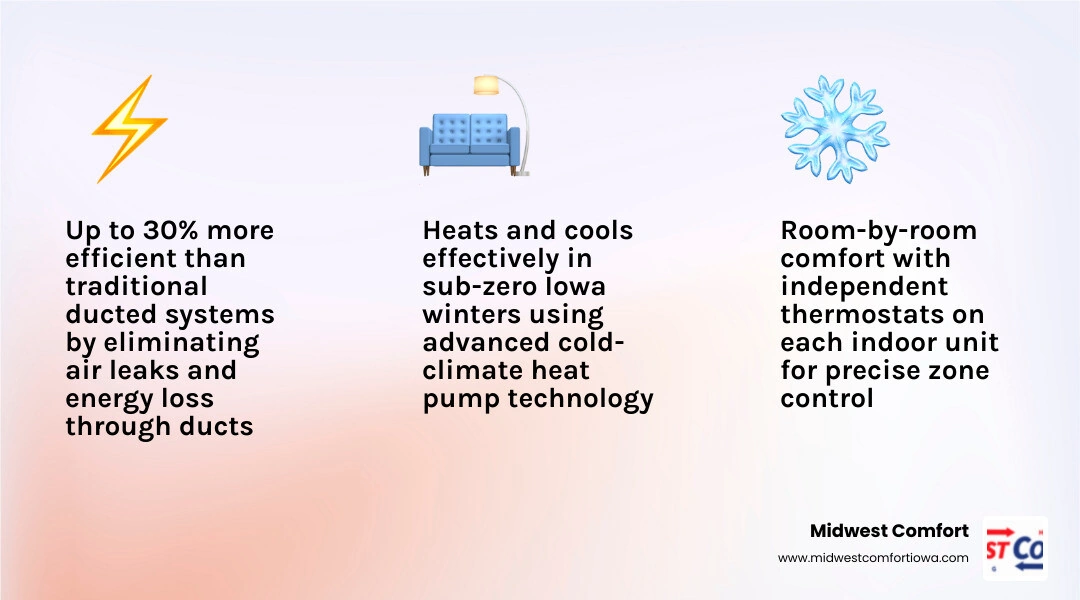
- Up to 30% more efficient — traditional ducts can waste more than 30% of conditioned air through leaks and heat transfer
- Room-by-room comfort — each indoor unit controls its own zone independently
- Year-round performance — modern heat pump models both heat and cool, even in sub-zero Iowa winters
- Quieter than you expect — indoor units can run as quietly as 19–24 decibels, softer than a whisper
- Better indoor air quality — washable filters on each unit help reduce dust and allergens without pushing them through old ducts
- Faster to install — a single-zone system typically goes in within one day
Many older Des Moines homes were built long before central air conditioning was standard. Retrofitting ductwork into those homes means cutting into walls, ceilings, and floors — often at great expense and disruption. A ductless mini-split sidesteps all of that. One outdoor compressor, one or more sleek indoor units, and a small conduit connecting them through the wall. That is essentially the whole system.
The result is efficient, flexible, and surprisingly comfortable heating and cooling — without tearing your home apart to get it.
Relevant articles related to mini split benefits for homes without ductwork:
- ductless mini split benefits for iowa homeowners
- how ductless systems save energy with zone control
- how mini splits solve hot and cold spots in your home
What Is a Ductless Mini-Split and How Does It Work?
To truly appreciate the advantages of ductless technology, it helps to understand how these systems operate. Unlike traditional central heating and cooling systems that rely on a network of metal ducts hidden behind your walls, a ductless mini-split delivers conditioned air directly into individual rooms.
The system consists of two main physical components:
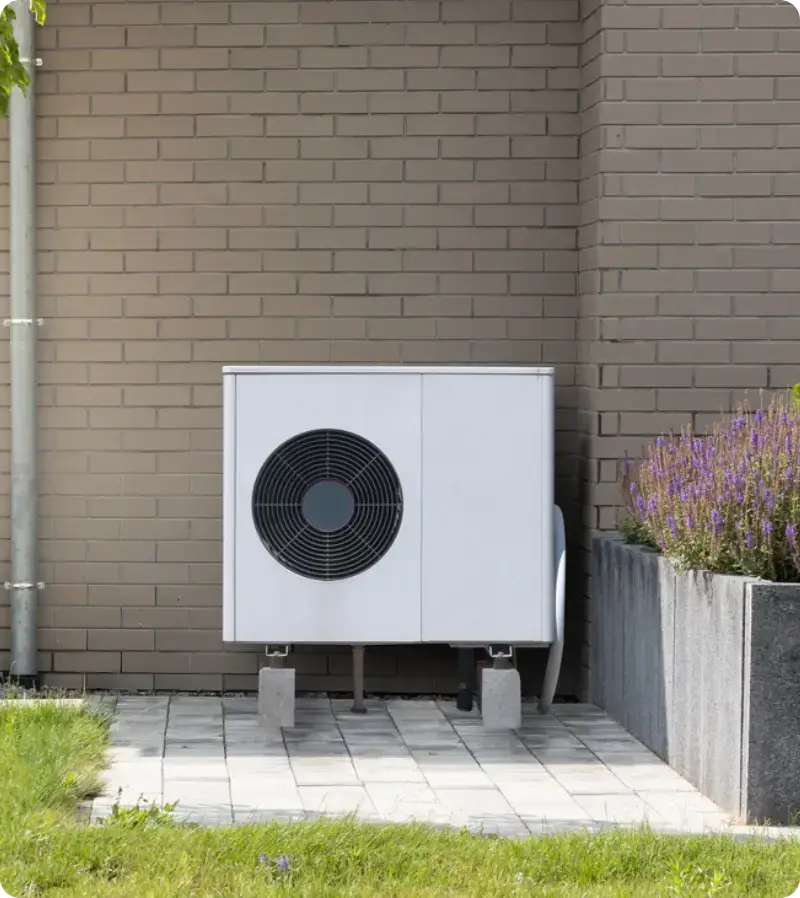
- An Outdoor Compressor/Condenser: This unit sits outside your home, quietly doing the heavy lifting of releasing heat (in cooling mode) or capturing ambient heat from the outdoor air (in heating mode).
- One or More Indoor Air Handlers: These are sleek, compact units mounted directly on your wall, ceiling, or floor inside the living space. They blow conditioned air directly into the room.
These two units are linked by a thin, flexible conduit that runs through a small, three-inch hole drilled in your exterior wall. This conduit houses the power cable, communication wiring, copper refrigerant lines, and a condensate drain line.
Because the indoor and outdoor components communicate directly, we can avoid the massive energy losses associated with long duct runs. In cooling mode, the refrigerant absorbs heat from your indoor air and pumps it outside. In heating mode, the process reverses: the system extracts heat from the outdoor air—yes, even when it is freezing outside—and transfers it indoors.
This simple, elegant engineering is what makes Mini Split Air Conditioners such an exceptional choice for retrofitting properties without existing duct infrastructure.
Key Mini Split Benefits for Homes Without Ductwork
For properties in Des Moines, Ankeny, or Waukee that rely on hydronic heating (steam or hot water radiators), radiant floor panels, or space heaters, finding a viable cooling solution has historically been a challenge. Many homeowners resort to noisy, inefficient window units that block natural light and present home security risks.
A ductless mini-split completely changes this dynamic. By delivering heating and cooling directly to individual zones, these systems offer a level of performance and luxury that window units and traditional ducted systems simply cannot match. Let us look at how the mini split benefits for homes without ductwork compare directly to a standard central AC setup:
| Feature | Ductless Mini-Split Systems | Traditional Central AC Systems |
|---|---|---|
| Ductwork Required | None (Uses small 3-inch wall penetration) | Extensive network of metal ducts throughout the home |
| Energy Loss | Virtually 0% (Direct air delivery) | 20% to 30% due to duct leaks and uninsulated spaces |
| Temperature Control | Zoned (Independent room-by-room thermostats) | Single thermostat (Leads to hot/cold floors) |
| Operating Noise | Whisper quiet (19 to 24 dB indoors) | Moderate to loud (Rushing air and clunking vents) |
| Aesthetics | Visible wall/ceiling units, compact footprint | Hidden vents, but requires bulky duct chases |
| Heating Capability | High-efficiency heat pump (Dual comfort) | Separate furnace required in most configurations |
By eliminating the need for ducts, homeowners can enjoy premium comfort without sacrificing closet space or architectural charm to build bulky duct chases. You can read more about these distinct advantages in our guide on Ductless Mini Split Benefits for Iowa Homeowners.
Eliminating Energy Loss and Improving Efficiency
One of the most compelling mini split benefits for homes without ductwork is the dramatic reduction in monthly utility bills. According to the U.S. Department of Energy, duct losses can account for more than 30% of a home's total energy consumption for space conditioning. When cool or warm air travels through dusty, leaky metal ducts—especially those running through unconditioned attics or crawlspaces—a massive portion of that energy is lost before it ever reaches your living room.
Ductless systems deliver air directly to the room, eliminating duct loss entirely. Additionally, they utilize advanced inverter-driven variable-speed compressors. Traditional HVAC systems operate like a light switch: they are either running at 100% capacity or completely turned off. This constant cycling on and off consumes a tremendous amount of electricity, much like stop-and-go city driving.
In contrast, inverter technology works like cruise control. The compressor ramps up to reach your desired temperature, then scales down to run continuously at a low, highly efficient speed to maintain that temperature. This allows premium ductless mini-splits to achieve elite efficiency levels—up to 35 SEER2 for cooling and up to 30 HSPF2 for heating. To explore how these smart motors slash your carbon footprint, check out our breakdown on How Ductless Systems Save Energy with Zone Control.
Solving Hot and Cold Spots with Zone Control
Do you have a sunroom in Johnston that feels like a greenhouse in July? Or perhaps an upstairs bedroom in Clive that remains stubbornly hot while your main floor is freezing? Standard central air conditioning systems rely on a single thermostat to regulate temperature for the entire house, which inevitably leads to uneven comfort.
Ductless mini-splits solve this problem through true zoned comfort. A single outdoor compressor can power multiple indoor air handlers (often up to five or more), and each indoor unit is controlled by its own dedicated thermostat or remote.
This means you can:
- Keep your home office cool during the day while leaving empty guest bedrooms unconditioned.
- Set different temperatures for family members who prefer warmer or cooler sleeping environments.
- Shut off units in rooms that are not currently in use, cutting down on unnecessary energy consumption.
This targeted approach ensures that every corner of your home remains perfectly comfortable, regardless of the season. Learn more about how this technology brings balance to your home in our article on How Mini Splits Solve Hot and Cold Spots in Your Home.
Understanding the Mini Split Benefits for Homes Without Ductwork in Cold Climates
A common misconception is that ductless mini-splits are only useful for summer cooling. In reality, most modern mini-splits are high-performance heat pumps designed to provide both heating and cooling year-round.
For years, older heat pump technology struggled to keep up when Midwestern temperatures dipped below freezing. However, the latest generation of cold-climate heat pumps features advanced vapor injection technology. This allows them to extract ambient heat from the freezing outdoor air and pump it indoors even in extreme conditions. Many premium models can operate at 100% heating capacity down to 5°F and continue providing reliable, efficient warmth at temperatures as low as -13°F or lower.
For homes in Des Moines, Grimes, or Norwalk that rely on expensive electric baseboard heat or older oil boilers, switching to a ductless heat pump can be up to four times more efficient than your existing heating system. It provides a reliable, all-electric comfort solution that keeps your home cozy during severe Iowa winters without relying on fossil fuels. Discover how this dual-action comfort works in our article on Comfort with a Mini Split AC System.
Simple Maintenance and Indoor Air Quality Mini Split Benefits for Homes Without Ductwork
Indoor air quality is another area where ductless systems shine. Over time, traditional ductwork becomes a breeding ground for dust, pet dander, pollen, mold spores, and other allergens. Every time your central system kicks on, it circulates these particles throughout your entire house.
Ductless mini-splits eliminate this risk entirely because there are no ducts to collect debris. Each indoor unit features its own multi-stage filtration system, including washable mesh filters that capture airborne particles right at the source. This localized filtration is incredibly easy to maintain: you simply pop open the front panel of the air handler every few weeks, rinse the filter under a tap, let it dry, and slide it back in.
Furthermore, mini-splits are incredibly quiet. Because the noisy compressor and fan components are located outside, the indoor air handlers operate at whisper-soft levels—often between 19 and 24 decibels. That is quieter than rustling leaves or a library reading room. For a deeper look at local air quality benefits and system selection, view our comprehensive Best Mini Split Des Moines Guide.
Comparing Mini-Splits to Central Air Systems
When deciding how to bring modern climate control to a home without ductwork, homeowners typically face two choices: retrofitting a traditional central air system or installing a ductless mini-split.
Retrofitting central AC into an older home is an invasive, labor-intensive process. It requires carpenters to cut open historic plaster walls, drop ceilings, and build out wooden bulkheads to hide bulky metal ductwork. This not only alters the architectural character of historic homes in areas like Windsor Heights or Des Moines, but it also takes weeks of disruptive construction.
A ductless mini-split installation, by contrast, is remarkably non-invasive. Our technicians only need to drill a small, three-inch hole through the exterior wall to connect the indoor and outdoor units. A single-zone system can typically be installed in less than a day, preserving the historic integrity and beauty of your home. For a detailed breakdown of these two approaches, read our Central AC vs Ductless Mini Split Comparison.
When Is a Mini Split Better Than Central AC for Iowa Homes?
While central air conditioning remains a popular choice for newer homes built with existing ductwork, a ductless system is almost always the superior choice for:
- Historic Homes: Properties built before the mid-20th century that utilize hot water radiators or steam heat.
- Home Additions: Finished basements, attics, sunrooms, or bonus rooms over the garage where extending existing ductwork would strain your main HVAC system.
- Slab Homes: Homes built directly on concrete slabs that lack crawlspaces or attics to run traditional ducts.
By choosing a ductless system, you avoid unbalancing your home’s existing heating system while gaining precise control over your comfort. You can read more about when to choose ductless over central systems in our article When Is a Mini Split Better Than Central AC.
Frequently Asked Questions about Ductless Systems
Can a mini-split system heat my home during freezing Iowa winters?
Yes! Modern cold-climate mini-split heat pumps are designed specifically to handle harsh Midwestern winters. Thanks to advanced inverter technology and enhanced vapor injection, these systems can maintain high heating capacities even when outdoor temperatures plunge well below zero. They serve as an incredibly efficient, all-electric alternative to traditional furnaces and baseboard heaters.
How long does it take to install a ductless mini-split?
One of the best parts of going ductless is the quick installation timeline. A single-zone system (one outdoor unit and one indoor wall head) can typically be installed by our professional team in a single day with minimal disruption to your daily routine. Multi-zone systems serving three to five rooms usually take between one and two days, depending on the complexity of the line run.
Are there tax credits or rebates available for installing mini-splits in 2026?
Yes, there are excellent financial incentives available in 2026. Under the federal Inflation Reduction Act, homeowners can qualify for tax credits covering up to 30% of the project cost (capped at $2,000 per year) for qualifying high-efficiency heat pump installations. Additionally, many local Iowa utility companies offer substantial rebates for upgrading to energy-efficient ductless systems.
Conclusion
If your home lacks traditional ductwork, you do not have to settle for noisy window units or undergo invasive home renovations to stay comfortable. The mini split benefits for homes without ductwork provide a clear, modern path to quiet, energy-efficient, and highly customizable comfort. Whether you are looking to condition a historic property in Des Moines, a new addition in Ankeny, or a master bedroom in Waukee, a ductless system delivers premium performance tailored to your lifestyle.
At Midwest Comfort, we are proud to provide honest, high-quality, and cost-effective HVAC services throughout Central Iowa. As a family-owned business, we bring a warm, family-oriented approach to every home we visit, offering tailored solutions and flexible payment options to fit your budget.
If you are ready to explore how a ductless system can transform your living space, check out our guide on Mini Split Benefits for Additions Garages and Bonus Rooms or Schedule your professional installation with Midwest Comfort today! Let our family keep your family comfortable all year long.
